
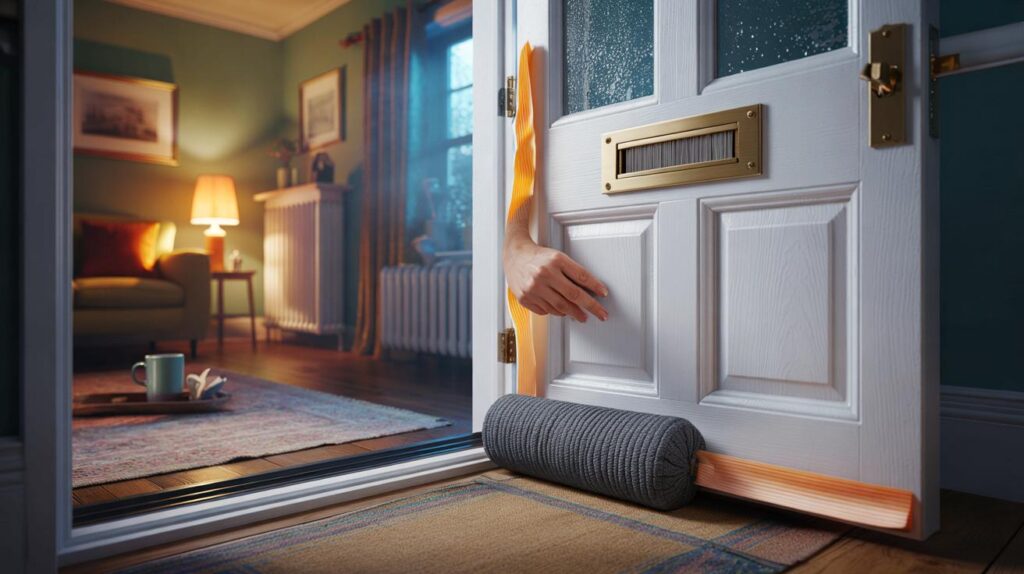
Energy bills nibble at the budget, and that one icy room becomes the family’s no-go zone. A small fix on a Saturday afternoon can change the whole feel of a home. Right now, a £10 gadget from Home Bargains is doing exactly that.
It was the kind of British evening where the hallway greets you with a polite slap of cold. Coats go on hooks, boots clatter into a tray, and the living room door never quite closes, letting a quiet draught whisper across your ankles. I watched a neighbour peel a strip of rubber from a plastic backing, press it along the door frame, and slide a weighted draught excluder into place. We talked slippers and smart meters. She laughed about the price of a takeaway versus a packet of seals. An hour later, the house felt, well, thicker somehow. Softer. The air settled like a blanket. The kettle sounded louder without the hiss of a sneaky breeze. Something tiny had made the room feel twice as big. A simple fix, shyly brilliant.
The £10 fix that seals the warmth in
Walk into any British semi and you’ll find the culprits: gaps under doors, skinny old frames, a letterbox that behaves like a tiny wind tunnel. Home Bargains has a no-fuss answer people have been snapping up — a draught-stop kit for around a tenner, with self-adhesive foam or rubber seals and a door sweep or a chunky “sausage” for the gap at the bottom. It’s not pretty in a techy way. It’s simple in the way a scarf is simple. And it works because it’s obvious. We’ve all had that moment when the heat’s on, the thermostat’s pleading, and the room still feels like a bus shelter.
Here’s what it looks like in real life. Mary, a renter in Stockport, stuck seal strips along a rattly living-room window and shoved a draught excluder against the hall door. Her smart meter showed the living room cooling at a slower rate overnight — roughly half a degree less drop by morning — and the gas boiler cycled on less often. The win wasn’t just the numbers; it was that she no longer parked herself under a blanket at 4pm. Energy Saving Trust guidance backs the logic: stopping uncontrolled air sneaking in can trim tens of pounds from a year’s heating. For a **keeps the heat in** fix that costs less than a burger and chips, the payback starts fast.
Why does a strip of rubber change the mood of a house? Heat drifts towards cold, and warm air rises, pulling cooler air in from every little gap — the old “stack effect.” Seal the frame and the pressure calms down; warm air hangs around instead of racing up and out. Less draught means less convective chill on your skin, which is why 19°C suddenly feels like 20. Turning the thermostat up a notch fights the symptom. Stopping the draught quietens the problem at its source and lets your radiators do their job in peace.
How to fit it right in ten calm minutes
Start with the obvious leaks. Close the door, slip a piece of paper through the gap, and gently tug it. If it slides freely, that’s your target. Wipe the frame with a bit of washing-up liquid and warm water, then dry it. Cut the self-adhesive seal to length, peel a little backing at a time, and press it along the frame so it touches, not crushes, the door. Pop the draught excluder along the threshold and check you can still open and close without scraping. Set a timer if you like — this is a **ten minutes** job.
Go steady on compression. Too tight and the door sticks; too loose and the breeze laughs at you. If you’ve got trickle vents or an older home that breathes, leave those doing their job so your rooms don’t get muggy. A slim brush strip on the letterbox stops gusts without jamming the post. Renter? Choose a removable seal and keep the offcuts with the receipt. You can ease it off with a hairdryer before you move. Let’s be honest: nobody actually does that every day.
There’s a nice side benefit: rooms feel quieter when you cut out whistling gaps. And if you want to double down, you can add radiator reflector foil behind rads on external walls to stop heat sinking into brick, or hang a heavier curtain over a draughty door. It can feel, within an evening, like someone turned winter down a step.
“Ten quid and 15 minutes, and my front room doesn’t boss me around anymore,” says Kerry, 38, from Leeds. “I can sit by the window with a brew without hugging a hot water bottle. It’s not fancy. It’s just warm.”
- Pick the right thickness: thin for tight frames, chunkier for big gaps.
- Do the paper test on doors and the candle test (steady flame) around frames.
- Pair strips with a weighted draught sausage for under-door gaps.
- Keep ventilation you need: bathroom and kitchen should still breathe.
- Stack small wins: seal, heavier curtains, and radiator foil on outside walls.
Why this £10 tweak matters this winter
There’s a bigger picture here, beyond one cheap gadget. Warmer rooms mean less arguing over the thermostat, fewer half-hearted layers, and a living space you actually use. It’s not about perfection or perfectionist DIY. It’s about control returning to your hands for the cost of a couple of coffees. Share it with a neighbour who’s been shivering in their own home. Ask your gran if her back door howls when the wind gets up. Small, repeatable tweaks accumulate. A tenner on seals today, a curtain liner next week, a timed heating schedule that matches when you’re home. The trick isn’t to overhaul your house. It’s to stop heat escaping from the basic places we, weirdly, never found time to fix. That’s where comfort lives — in the margins.
| Key points | Details | Interest for reader |
|---|---|---|
| What the gadget is | Home Bargains draught-stop kit: self-adhesive seals plus a door sweep or weighted excluder, typically around £10. | Low cost, high impact; easy to grab on a weekend shop. |
| How it works | Seals gaps to slow air leakage, calm the stack effect, and reduce convective chill so rooms feel warmer at lower settings. | Immediate comfort boost without touching the boiler. |
| Who it suits | Renters and homeowners in draughty UK properties; quick, reversible, and pairs with curtains or radiator foil. | Practical, renter-friendly, and layered with other small upgrades. |
FAQ :
- Will a £10 kit really make a difference?Yes, if you’ve got noticeable gaps. Cutting draughts slows heat loss and often makes 19–20°C feel genuinely cosy. Not magic, just physics working in your favour.
- Is it renter-friendly?Go for removable adhesive seals and a weighted draught excluder. Warm the strip with a hairdryer when removing to soften residue and keep the landlord happy.
- What about condensation and ventilation?Don’t block trickle vents or bathroom/kitchen extraction. Seal unwanted gaps, keep designed ventilation, and you reduce draughts without trapping moisture.
- Can I use it on windows as well as doors?Yes. Slimmer seals suit window sashes and frames. Do the candle test around the edges; if the flame wobbles, that’s where to add a strip.
- How long will the seals last?Quality rubber or foam strips typically last a couple of winters. Wipe them when you clean, replace sections that compress flat, and they’ll keep performing.



Picked up the Home Bargains kit for £9.99 and stuck the seals round our back door. The living room actually feels “thicker” like you say, and the boiler isn’t cycling as much. For a tenner, that’s a solid win. Cheers for the nudge!