
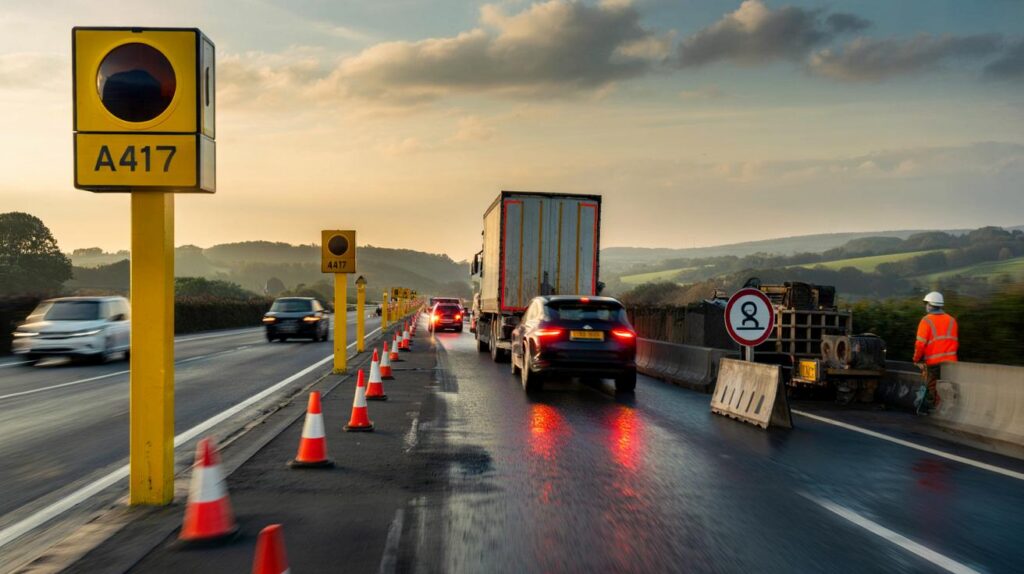
Think you know the rules at roadworks? Thousands of motorists didn’t—and the penalties now landing on doormats are eye‑watering.
More than 13,000 drivers have been issued £100 fixed penalties after failing to clock a new 40mph limit through the A417 “Missing Link” roadworks in Gloucestershire. National Highways and local road safety chiefs say the enforcement aims to protect roadworkers and reduce crashes on a stretch that carries heavy daily traffic.
What changed on the roadworks stretch
Temporary speed restrictions have been introduced along the A417 while major upgrades progress on the so‑called “Missing Link”. The limit drops to 40mph through the construction zone, with signage and safety equipment in place and enforcement cameras active. Officials stress the change is not cosmetic: it reflects narrower lanes, altered layouts, reduced shoulders and the presence of people and machinery close to live traffic.
Since the limit came in, 13,000 motorists have been caught above 40mph. Many appear to have assumed the usual roadworks figure of 50mph, sailed past the first sign behind a tall vehicle, or relied on sat‑nav speeds that hadn’t updated. National Highways says staying at 40mph adds less than a minute to typical journeys, yet avoids the cost and the risk.
13,000 drivers penalised for breaching a temporary 40mph limit through the A417 works: £100 and three points for many offenders.
Why the limit matters
Roadworks reshape a familiar road into an unfamiliar one. Cones move, barriers narrow lanes and work crews step into harm’s way. A minor lapse at 40mph is survivable more often than the same mistake at higher speed. Local safety leaders warn that pushing for an extra minute can put drivers, passengers and roadworkers in the path of serious injury.
Speeding remains a factor in a large proportion of collisions nationally. Officials argue that lower speeds inside worksites cut the odds of a crash and trim the severity when one happens. The reduction also builds in margin for wet weather, poor visibility and sudden lane shifts.
Driving at 40mph through the works adds seconds, not miles; it removes risk, fines and points in one simple move.
How enforcement works at the roadworks
Average speed cameras have been deployed to monitor compliance along the affected section. Rather than catching a single moment, they calculate your average between camera points. Briefly braking for each mast won’t help; smooth, consistent driving within the limit will.
- Don’t assume all roadworks are 50mph: read the first sign you meet.
- Watch for yellow‑backed speed signs and repeated reminders on lamp columns or gantries.
- If a high-sided vehicle blocks your view, confirm the limit at the next repeater.
- Sat‑nav speed displays can lag behind temporary changes: trust the roadside signs.
- Average cameras time you over distance: bursts of acceleration between masts won’t cancel out.
What a £100 penalty means for you
For many drivers caught at modest speeds over the limit, the standard outcome is a £100 fixed penalty and three points on the licence. At higher speeds, a court appearance can follow, with fines linked to income and the prospect of more points or a ban. In some cases, and depending on speed and local policy, police may offer a speed awareness course instead of points, but this is not guaranteed.
| Situation | Typical outcome | Notes |
|---|---|---|
| Exceeding a temporary 40mph limit by a small margin | £100 fixed penalty + 3 points | Offer of a course may be possible depending on speed and eligibility |
| Higher excess speed in the roadworks | Likely court summons | Fines can rise and additional points or a disqualification can follow |
| Endorsement on licence | Insurance impact | Premiums can increase for three years or more |
Will this happen elsewhere
Yes. Temporary limits and average speed cameras are now common at major projects across the strategic road network. Agencies favour average enforcement because it smooths traffic, reduces sudden braking and improves compliance without constant police presence. The lesson is portable: if you encounter a temporary limit on any A‑road or motorway, take it at face value and settle at that speed early.
How to protect your licence on changing roads
Plan five extra minutes into any journey that crosses a construction zone. Scan high and far for the first speed sign as soon as cones appear. Set cruise control or a speed limiter at the posted number and keep it there. Hold a longer gap, anticipate lane closures and resist the urge to tuck back into old speeds just because the road looks familiar.
Where signs differ, the lowest posted limit applies. Look for the end‑of‑restriction sign before you resume normal pace. In rain or spray, treat the temporary limit as a ceiling, not a target. If you’re unsure, err on the side of caution for a mile and check for the next repeater to confirm.
A quick reality check on journey time
The time penalty for 40mph over a short worksite is tiny. Over two miles, driving at 50mph takes about 2 minutes 24 seconds. At 40mph it takes about 3 minutes. That difference—roughly 36 seconds—costs less than a single traffic light cycle in town, but it can be the difference between a clean licence and three points.
Two miles at 40mph costs around 36 seconds compared with 50mph. Three points last far longer.
What’s next for drivers in Gloucestershire
The A417 “Missing Link” scheme remains a live construction site, with crews working to complete a long‑planned upgrade on a busy corridor. Road safety partners say they would prefer the cameras to sit idle, because that would mean drivers are respecting the 40mph restriction. Until cones come down and permanent limits return, expect enforcement to stay visible and consistent.
If you regularly use this route, build the 40mph zone into your routine and allow a little extra time. Keep your number plates clean, make sure your speedometer is easy to read at night, and adjust for weather. If you do receive a notice, check it promptly: missing deadlines can close off options such as a course offer, and late responses can escalate costs.
Finally, remember the purpose of the change. Temporary limits protect workers who operate inches from traffic and safeguard drivers navigating unfamiliar layouts. The safest—and cheapest—choice is the simple one: read the sign, set your speed and keep it steady until you see the restriction end.



13,000 in one go sounds like a cash grab. Were the 40mph signs actually visible at night, or hidden behind HGVs?