
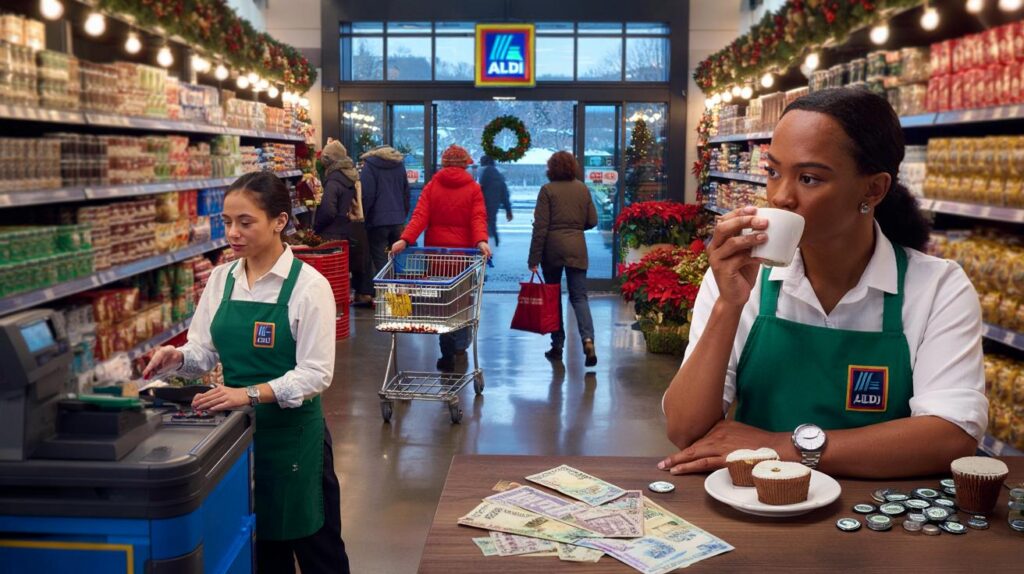
Bills are rising, diaries are filling, and the tills will soon be ringing. A supermarket shake-up may change your plans.
Aldi has fired the starting gun on festive recruitment, pledging a minimum £14 an hour for many London-area staff, paid breaks for all colleagues, and 4,500 permanent store roles before Christmas. The move sets a new pay marker on the high street and heaps pressure on rivals ahead of the peak shopping season.
What the £14 rule means for you
The discounter says it is the first UK supermarket to bring in a £14-per-hour benchmark. Store Assistants will start on £13.02 an hour across the UK, rising to £14.35 within the M25, with rates in London topping £14 in the run-up to Christmas. The chain’s policy of paying for breaks applies nationwide.
Aldi says paid breaks add more than £1,425 a year to the average colleague’s pay packet, on top of the hourly rate.
The timing matters. Seasonal demand spikes in late November and December, and retailers usually scramble for staff. By moving early with a headline rate and a clear benefits line, Aldi improves its odds of landing experienced hands before Black Friday stock hits the shop floor.
Rates at a glance
| Area | Starting hourly pay | Breaks policy |
|---|---|---|
| National (outside the M25) | £13.02 | Paid for all colleagues |
| London and within the M25 | £14.35 | Paid for all colleagues |
Who is being hired, and where
The retailer plans to recruit 4,500 permanent store colleagues in the run-up to December. The roles are designed to keep shelves full, queues short, and service consistent across a packed trading calendar and into 2026.
- Store Assistants handling tills, replenishment and customer queries
- Managerial roles for team leadership and store operations
- Cleaners to maintain standards during extended opening hours
While the chain has not published a site-by-site list, recruitment typically follows stores with high footfall, recent openings or planned launches. Aldi intends to open roughly one new store a week until the end of the year, supporting its longer-term ambition of 1,500 UK sites. New locations often spark local hiring waves within weeks of launch.
Why Aldi is moving now
Aldi is the country’s fourth-largest grocer by market share, competing head-to-head with Lidl, Tesco, Sainsbury’s, Asda and Morrisons for basket spend and talent. Seasonal peaks bring two problems for retailers: shifting stock at pace and keeping enough trained staff on the shop floor. Pay clarity helps on both fronts.
4,500 hires and a store-a-week rollout signal an aggressive push for capacity as Christmas trading approaches.
The message to candidates is direct: permanent contracts, clear hourly rates, and paid breaks that translate into cash, not just slogans. The timing also adds pressure on rivals to respond with their own uplifts or retention bonuses, especially in London and the commuter belt.
Festive opening hours and planned closures
Aldi will shut all UK stores on Christmas Day and Boxing Day, reopening on Saturday 27 December. Shops will trade as normal from 27 to 31 December. Doors will close again on New Year’s Day, Thursday 1 January, with a reopening on Friday 2 January 2026. The schedule mirrors recent years, when the chain granted an extended break so staff could spend time with family.
Three non-trading days over the holidays: Christmas Day, Boxing Day and New Year’s Day.
For customers, that means planning big shops before 24 December and between 27 and 31 December. For staff, the days off are pre-set, simplifying rota planning and travel over the festive period.
How the paid break adds up
Aldi’s claim of more than £1,425 a year in paid breaks is a headline figure. The equivalent hourly boost varies with contracted hours. Here is an illustration using typical patterns:
| Contracted hours per week | Annual hours (approx.) | Hourly uplift from £1,425 | Effective hourly (national) | Effective hourly (M25) |
|---|---|---|---|---|
| 20 hours | 1,040 | £1.37 | £14.39 | £15.72 |
| 30 hours | 1,560 | £0.91 | £13.93 | £15.26 |
| 37.5 hours | 1,950 | £0.73 | £13.75 | £15.08 |
These are rough calculations for illustration only. Actual take-home pay depends on contracted hours, overtime and location. The key point: paying for breaks turns into a measurable cash benefit, not just an abstract perk.
What this means for the wider grocery pay race
Setting a £14 bar in London ratchets up pressure across the sector. Regional pay bands already vary, but headline figures influence perceptions. If competitors match the £14 line inside the M25, national rates could become the next battleground, especially in towns with tight labour markets and new store openings.
There is also the pull of the National Living Wage, which sits below Aldi’s advertised entry rates. The gap gives the discounter room to argue for better recruitment and retention, particularly when cost-of-living pressures remain acute for families and students seeking flexible shifts.
Thinking of applying? A quick checklist
- Shift fit: can you work early starts, late finishes and weekend peaks during December?
- Travel time: test your commute at the time you would start and finish.
- Right to work: keep documents ready to avoid delays.
- Role match: store assistants lift, restock, and serve under time pressure.
- Pay bands: check whether your store falls within the M25 rate.
- Breaks and benefits: clarify how paid breaks appear on your payslip.
- Festive rota: ask how 24, 27–31 December and 2 January shifts are allocated.
Budget sense check
If you are weighing up offers, run a quick monthly comparison. Using the national starting rate, 30 hours per week yields roughly £1,693 a month before tax when including the illustrative break value above. Inside the M25 the same pattern lands nearer £1,853 before tax on the same basis. Factor in travel costs, parking, and childcare to see the true gap between roles.
Why the closures could help both shoppers and staff
Shutting on Christmas Day, Boxing Day and New Year’s Day sends a clear message on work-life balance. It also concentrates demand into predictable windows, which can actually make staffing and stock planning cleaner. Customers know when to do the big shop. Teams know when they will be off. Less churn usually means calmer stores on the days that matter most.
The bottom line for you
For candidates, the offer is straightforward: permanent roles, a clear hourly rate that leads the pack in many areas, and paid breaks that translate into real money. For shoppers, the recruitment push and store-a-week rollout mean fuller shelves and shorter waits, even when trolleys pile up in late December. For rivals, the £14 signal will be hard to ignore as the festive hiring race tightens.
£13.02 nationally, £14.35 inside the M25, 4,500 jobs, three festive closure days — the Christmas plan is set.
If you are on the fence, run the numbers against your commute and schedule, then apply early. Seasonal demand builds fast, and the best shifts tend to go to those who are first through the door.



Paid breaks worth £1,425 a year is a real boost. I’m definitley tempted—does Aldi offer any fast-track training for experienced assistants?
£14.35 inside the M25 sounds solid, but how many guaranteed hours per week? Without stable rotas, the headline rate might not stretch far.