
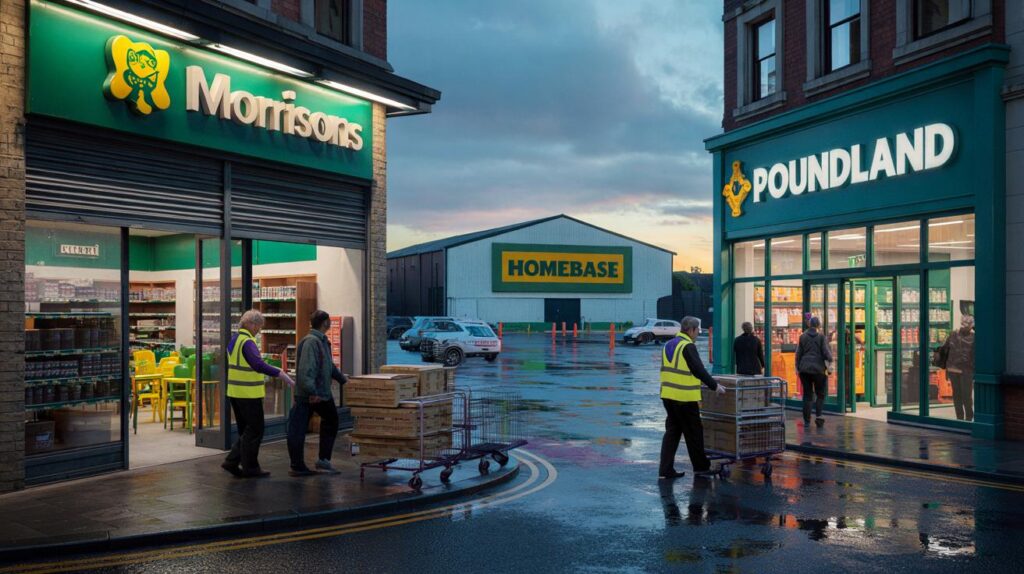
A new wave of high street change is gathering pace, prompting shoppers to rethink routines and check where everyday essentials will come from.
Across the UK, three household names are reshaping their store networks. Morrisons, Poundland and Homebase together plan or have confirmed 201 closures in 2025, affecting supermarkets, convenience outlets, cafés and DIY sheds in every corner of the country. The scale will be felt on shopping trips, travel time and local footfall.
What’s closing and where
Morrisons will shut a tranche of Morrisons Daily convenience stores and a long list of in-store cafés. Service counters and pharmacies are also being trimmed. Poundland, now owned by US investment firm Gordon Brothers after a £1 sale by Pepco earlier this year, expects more than 50 closures by year end, with a cluster of sites going in October and November. DIY chain Homebase, which entered administration, has already shuttered 65 branches and transferred others to rivals after a sale to CDS Superstores, owner of Wilko and The Range.
In 2025, a combined 201 closures across Morrisons, Poundland and Homebase will reshape local shopping for millions of people.
Why the cuts are happening
Retailers are grappling with higher energy bills, rising wages and tough rent and rates. Shoppers are mixing online orders with fewer, more targeted trips, squeezing smaller, less profitable locations. Executives have responded by consolidating sites, cutting duplication and quitting units with weak footfall.
Convenience formats that expanded fast during the pandemic now face demand normalising. Café and counter space inside supermarkets has been judged less productive than core aisles. DIY demand cooled after the home-improvement boom, leaving some big-box stores oversized for current trade.
What each chain is doing
Morrisons is focusing investment on larger, busier stores and on price battles with discounters, while pruning cafés, select convenience outlets and some specialist counters. Expect more grab-and-go food and fewer labour-intensive services.
Poundland is tidying up its estate after a change of ownership. The plan targets overlapping sites, higher-cost leases and underperforming units, while doubling down on strong retail parks and busy high streets.
Homebase has cut deeply following administration. A number of branches found new operators, including Sainsbury’s and B&Q in select sites, while remaining stores now sit within CDS Superstores’ portfolio alongside Wilko and The Range.
| Retailer | Type of closures | Numbers cited | Notes |
|---|---|---|---|
| Morrisons | Convenience stores, cafés, service counters, pharmacies | At least 69 named sites so far | 17 convenience stores and 52 cafés listed; more counters also affected |
| Poundland | High street and retail park branches | 50+ expected in 2025 | 13 additional closures scheduled in October and November |
| Homebase | Large-format DIY and garden stores | 65 closed | Some sites transferred to rival chains; CDS Superstores now owns the brand |
| Total | Across all three retailers | 201 stores | Combined impact nationwide in 2025 |
Key places already named
Not every location is going, but many towns and cities face change. Examples from retailer lists include:
Morrisons and cafés
- Bath (Moorland Road), Wokingham (Peach Street), Romsey and Poole convenience stores
- London Wood Green, Glasgow Newlands, Leeds Horsforth and Watford Ascot Road cafés
- East Kilbride (two cafés), Sidcup Westwood Lane and Helensburgh cafés
Poundland
- Cardiff, Leicester and Tunbridge Wells high street sites
- Hull St Andrew retail park, Peterborough Orton Gate and Sunderland Pallion retail park
- Swiss Cottage, Blackpool Cherry Tree Retail Park, Deal and Carlisle (dated closures listed)
- Sidcup, Peckham and Launceston also scheduled
Homebase
- Bradford, Cheltenham and Coventry
- Romford, Truro and Leeds
- Milton Keynes, Orpington, Omagh and Londonderry
Homebase has closed 65 stores after administration, while new owners say around 70 branches have been saved or reassigned.
What it means for shoppers
The changes touch everyday routines. Pharmacy closures mean prescriptions will move to nearby branches or to GP-nominated alternatives. Supermarket cafés vanishing reduces warm spaces and low-cost meal options used by families and older customers. DIY closures may add travel time for bulky materials and click-and-collect orders.
- Gift cards: spend them early at closing stores or use them online where accepted; ask staff about cut-off dates.
- Prescriptions: request an electronic transfer to a new pharmacy and check opening hours before you travel.
- Returns: keep receipts; closing stores usually honour standard return windows, but deadlines can change during wind-down.
- Click and collect: switch to home delivery or redirect to an alternative branch if a pickup point is shutting.
- Parking and travel: factor in fuel and parking costs when your nearest option moves further away.
- Deals: watch for clearance markdowns at closing branches, especially on bulky DIY and seasonal lines.
Impact on staff and town centres
Closures often lead to redundancy consultations, though some teams transfer to nearby stores or successor occupiers. Local councils will watch footfall closely. Empty units can drag on neighbouring trade, but backfilling by discounters, gyms or health services can stabilise streets if leases are re-cut quickly.
How to check your local store status
Look for in-store posters with final trading dates and adjusted opening hours. Customer service teams can confirm last days for cafés and counters, separate from main store closures. Local community groups often share reliable updates on temporary relocations or alternative services for prescriptions and returns.
Planning ahead: practical steps
Families using supermarket cafés for low-cost meals could map alternatives within a short bus ride, including libraries and community hubs that host warm spaces in winter. DIY shoppers can price up delivery for heavy items; many chains waive charges over a threshold, which can beat two car trips. If your regular store is on the list, try a weekly plan that reduces travel—combine pharmacy, grocery and discount-shop stops into one route to save fuel and time.
For household budgets, monitor price-matching promises and own-label ranges as you switch stores. If you rely on a particular product stocked by a closing branch, note the barcode and ask for substitutions at the new location. Where closures reduce choice, smaller independents sometimes step in; they may charge more on some lines but offer sharper service and fast special orders, which can offset the extra cost for one-off projects or niche items.



Does anyone know if the Sidcup Poundland is on the final list? The article mentions Sidcup scheduled — but is there a date yet? Trying to plan returns and a click-and-collect.
Another round of “efficiencies” that really means longer bus rides and higher costs for families. Closing pharmacy counters is short-sighted; healthcare access isn’t a profit center. We’ll all pay for this later.