
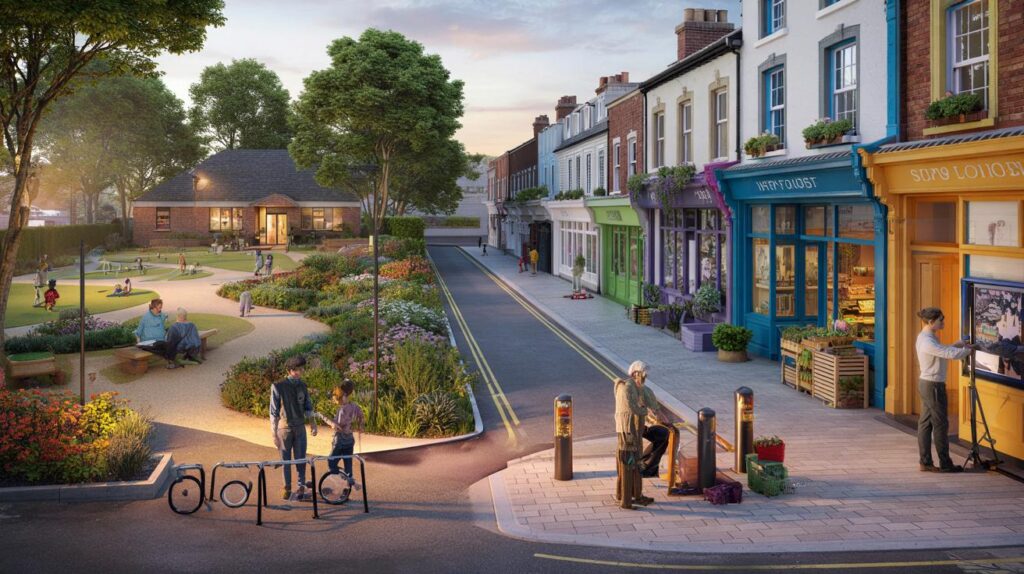
From play areas to shuttered shopfronts, money and new powers are heading to Sussex streets where small changes matter.
Two Sussex communities have been named in a £292 million push to renew neighbourhoods across the South East, with long-term cash for Wick and Toddington in West Sussex and a quick, visible boost for Hastings in East Sussex. The government says local people will decide what gets fixed first and what comes next.
What Wick and Toddington are set to receive
Wick and Toddington will share up to £20 million over ten years through the Pride in Place programme. The funding lands in steady annual instalments, geared to projects chosen by residents and local groups. The focus sits on the basics that shape everyday life: safe streets, welcoming parks, a high street people want to visit, and reliable community venues.
Up to £20 million over a decade for Wick and Toddington, directed by residents to revive everyday local assets.
Typical schemes could include upgrading play areas, reopening or modernising community halls, improving lighting and seating in public spaces, and giving small high-street premises a second life as social or cultural spaces. The programme also points to youth facilities and leisure as priority areas that build “pride” and cut antisocial behaviour.
These coastal neighbourhoods sit close to Littlehampton’s town centre and the A259 corridor, where footfall, public realm quality and access to services often determine whether a street feels welcoming or worn down. Regular, predictable funding lets community groups plan multi-year projects rather than chase short-term grants.
What Hastings will see first
Hastings will get a £1.5 million capital injection via the new Pride in Place Impact Fund. It’s designed for visible improvements fast: tidier, greener public spaces, safer routes to shops and schools, and community assets that can reopen and stay open.
Hastings receives £1.5 million now for practical upgrades to parks, high streets and local facilities that residents use daily.
Hastings has long carried the burden of high deprivation for a South East town. Small, targeted works—fixing broken frontages, planting and lighting, making seafront and town-centre links more inviting—can shift how people feel about their streets and how often they use them. Expect council-led consultations and pop-up engagement sessions to prioritise early schemes.
The bigger picture: where the £292 million fits
This week’s announcement sits within a wider £5 billion plan launched by Prime Minister Keir Starmer under the banner Pride in Place. In total, 169 areas nationwide will receive up to £20 million each over a decade, while 95 places get an immediate £1.5 million for quick wins.
In the South East, the government highlighted 22 places: 14 earmarked for long-term funding and eight for immediate capital, a list that also includes Fratton West, Leigh Park, Sheppey East, Slough, Portsmouth and Thanet. Ministers describe the shift as a move from competitive bidding to predictable, locally led renewal.
New rules that put people in charge
- Local decision-making: residents help shape plans and pick projects, rather than chasing central pots.
- High street action: powers to take over long‑boarded shops and bring them back into use.
- Community protection: authorities can curb nuisance businesses that blight neighbourhoods.
- Saving beloved assets: communities get first refusal to buy pubs, halls and leisure sites before they disappear.
What this means on your street
For Wick and Toddington, the ten-year span matters. £2 million a year can deliver phased improvements street by street, so a park spruce-up isn’t a one-off, and a community building can be modernised properly rather than patched. Residents can push for small but telling fixes: dropped kerbs for prams and chairs, better lighting where people feel unsafe, sheltered seating at bus stops, and safe routes that keep children off busy roads.
In Hastings, the £1.5 million can unblock stalled schemes—think shopfront grants to cut vacancy, seating and greenery in wind-blasted corners, and repairs that let a community venue open its doors through winter. Speed matters here: the Impact Fund aims to show results within months, not years.
Who said what in Whitehall
Keir Starmer framed the plan as a choice to back “renewal over decline” and put decisions in the hands of neighbours, volunteers and parents. Housing and communities secretary Steve Reed stressed that priorities should come from people who use the parks, halls and high streets. The chancellor Rachel Reeves tied the cash to wider economic aims, arguing that cutting red tape and trusting local judgment speeds up change.
How the South East package adds up
| Area | Funding type | Amount | Timescale |
|---|---|---|---|
| Wick and Toddington (West Sussex) | Pride in Place (long-term) | Up to £20m | Ten years (c. £2m per year) |
| Hastings (East Sussex) | Impact Fund (immediate) | £1.5m | Near-term works |
| South East total (selection noted by government) | Mixed | 14 areas up to £20m; 8 areas £1.5m | Ten-year and immediate |
How residents can shape the spend
Expect councils and community partners to run workshops, online surveys and neighbourhood walkabouts before finalising priorities. If you have a project in mind—say, a plan to reopen a closed hall or a design for a safe cycle link—start gathering support now. Map the benefit: who gains, what it costs, who will run it after the ribbon-cutting. Long-term programmes look for staying power, not just a photo opportunity.
Groups considering buying a local asset should prepare early. You’ll likely need a business plan, a basic condition survey, a volunteer roster and a route to revenue—room hire, events, or services that keep the lights on. Match funding can help stretch the grant and signal commitment.
Risks, trade‑offs and what to watch
Not every idea will make the cut. Renewal can stir tension if one area sees fast upgrades while another waits. Clear criteria—safety, usage, health, and economic impact—help keep decisions fair. There’s also a balance to strike between sprucing up public spaces and tackling deep‑rooted issues like damp housing or skills gaps. Residents can push for joined‑up plans so new play areas arrive alongside youth services, and tidier high streets come with proper support for traders.
Vacancy and antisocial behaviour often cluster. The promised powers to take over long‑boarded units and curb nuisance businesses could shift the dial, but they work best with active management: meanwhile uses, pop‑up cultural activity, and affordable workspace to keep footfall steady across the week.
What comes next
The government says the Pride in Place rollout builds on work already live in 75 locations, with every project led by local priorities. For Wick and Toddington, that means a decade-long pipeline residents can track. For Hastings, visible wins should land first, with scope to anchor larger bids later if momentum grows.
Keep an eye on three markers of progress: fewer empty shops, higher park usage and safer, busier streets after dark. If those numbers move in the right direction, the Sussex schemes will show how targeted cash—guided by people who know every shortcut and pinch point—can remake daily life, one corner at a time.



Finally some long-term cash for Wick and Toddington—ten years means real planning, not quick fixes. Can we prioritise safe routes to schools and lighting around the parks first? 🙂