
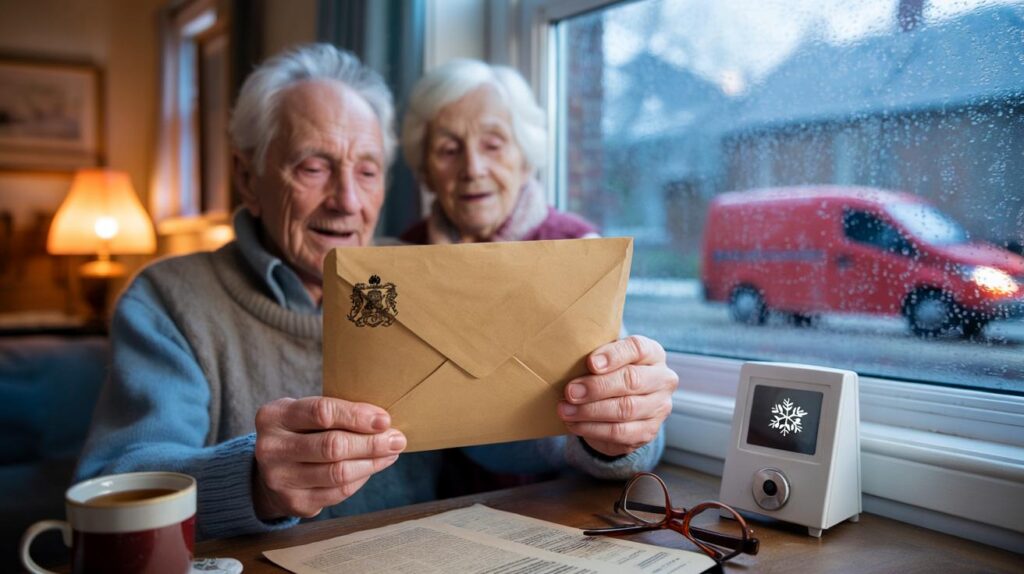
From Wednesday, official envelopes start arriving about winter energy help, raising hopes for relief as temperatures slide.
The Department for Work and Pensions is posting notices telling state pensioners what they could receive to help with heating costs. The rollout begins midweek, with most letters expected through October and November and payments following automatically before Christmas.
What the letter means for you
The Winter Fuel Payment returns for the vast majority of older people in England and Wales after last winter’s rule change cut many out. A government reversal means around nine million pensioners are now set to qualify in 2025, with awards worth up to £300 depending on age and circumstances during a defined “qualifying week”.
Letters begin this week. You do not need to apply if you get one. Payments will arrive automatically in November or December.
If you were born before 22 September 1959 and your annual income is £35,000 or less, you are in scope for a payment to help meet heating bills. The amount depends on when you were born and your household situation during 15–21 September 2025, the week used to assess entitlement.
Who gets what: the key thresholds
The age bands the DWP uses line up with the higher payment for those aged 80 or over. Here is how the core amounts are set out this year:
| Birth date | Age by qualifying week | Typical payment |
|---|---|---|
| 22 Sep 1945 to 21 Sep 1959 | 66 to 79 | £200 |
| Before 22 Sep 1945 | 80 or over | £300 |
Some people see a lower or shared award, especially where a couple both qualify and are not on an income-related benefit such as Pension Credit. The DWP letter spells out your exact figure, which in practice can range from £100 to £300.
Any Winter Fuel Payment you receive will not reduce your other benefits.
The qualifying week and why it matters
Eligibility hinges on your status during a single week: 15–21 September 2025. You must have reached State Pension age (currently 66 for men and women) by the end of that week and normally live in England or Wales.
What counts during those seven days
- Your date of birth determines whether you fall into the £200 or £300 band.
- Your living arrangements affect whether a payment is shared with a partner who also qualifies.
- Being on certain income-related benefits can change how the money is paid to your household.
Tax treatment: who keeps it and who pays it back
For pensioners with income above £35,000 a year, HMRC will automatically recover the Winter Fuel Payment through PAYE or when you submit a Self Assessment tax return. For those at £35,000 or below, you keep the support in full.
If your income exceeds £35,000, expect HMRC to claw back the support via tax rather than asking you to repay it separately.
Timelines: from letter to payment
Mailings start Wednesday and continue through October and November. The DWP says payments then land in bank accounts automatically during November and December, timed to coincide with colder weather and higher bills. You do not need to phone or apply if the letter confirms you are eligible.
No letter by late November?
- Check whether you met the qualifying week rules and State Pension age cut-off.
- Look again at your post in case the letter arrived under a generic DWP header.
- If you still think you’re eligible, the department advises checking whether you need to make a claim.
How household circumstances change what you get
Amounts differ if you live with another person who also qualifies. Where both partners are eligible and not receiving an income-related benefit, the Winter Fuel Payment can be split. If someone in the household is aged 80 or over, the overall amount is higher.
The payment is designed to support the household’s heating costs, not just an individual’s bill. That is why the official guidance sometimes refers to the award as “per household”, even though age and personal circumstances drive the calculation.
Why many missed out last winter — and who is back in
A change to eligibility rules meant millions did not receive the payment last winter. Ministers have reversed course for 2025, restoring the scheme for the vast majority who meet the age and residence conditions. The government expects around nine million pensioners to benefit across England and Wales, bringing the support closer to its long-standing reach.
Practical tips to make the most of the help
- Plan your energy direct debits around the expected November or December payment window.
- Keep the DWP letter for your records. It confirms your amount and the basis for it.
- Watch for scams. The DWP will not ask you to provide bank details by text or email to receive this money.
- If you are close to the £35,000 income mark, consider how other taxable income might affect whether HMRC recovers the payment.
Related support you could combine with the payment
Pension Credit can boost weekly income and unlock other help, including automatic cost-of-living support when available. If you are living on a modest income, a quick eligibility check can be worthwhile because Pension Credit can also change how Winter Fuel Payment is paid to your household.
Energy suppliers still run hardship funds and payment plans. Contacting your provider early can smooth cash flow, especially if your usage spikes before the DWP money arrives. Local councils may also offer discretionary support during cold snaps; keep an eye on announcements as temperatures drop.
A worked example to show how this plays out
Patricia, 82, lives in Cardiff and is not on Pension Credit. She was over State Pension age by 21 September 2025 and lives with her spouse, who is 79 and also qualifies. Because someone in the household is 80 or over, the letter shows a £300 award. The couple see their payment arrive in late November. Their combined income is below £35,000, so they keep the full amount.
By contrast, George, 70, from Kent, earns £39,000 from part-time work and his pension. He qualifies for a £200 Winter Fuel Payment based on his birth date, but HMRC later recovers that amount through his tax code. George still benefits from short-term cash flow support over winter but should expect his PAYE code to adjust in the new year.



No letter yet—anyone else?
So HMRC will claw it back if your income’s over £35k. Isn’t that basically a short-term loan dressed up as help? Kinda defeats the point for middle earners, no?