
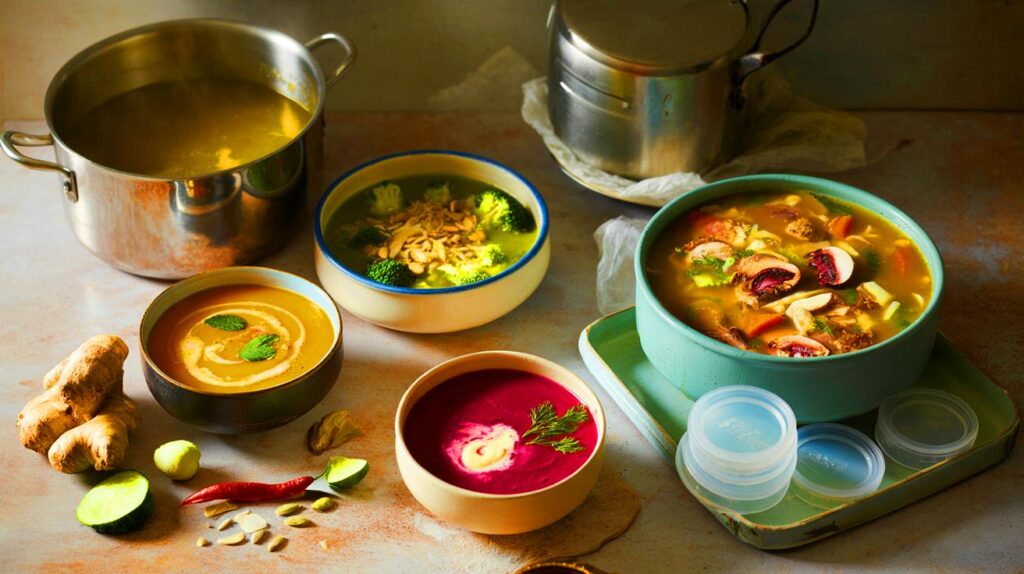
Frosty mornings are back, budgets feel tight, and big pans beckon. Four nutrient-packed soups offer warmth, thrift and speed.
Home-cooked soup scales well, freezes cleanly, and sorts lunches for weeks. Here’s what to batch-cook now, with costs, timings and health gains.
Why soup wins in cold months
Soup concentrates flavour from humble ingredients. A single pot turns veg, pulses and lean meat into filling meals with minimal waste. Seasonality keeps costs down. Freezers do the heavy lifting.
- Lower energy density helps portion control without hunger.
- Simple way to rack up vegetables, fibre and lean protein.
- Quick to cook, easy to scale and reliable to freeze.
- Great vehicle for herbs, spices and leftovers.
- Typically 35p–£1.60 per bowl using UK supermarket staples.
Make once, eat six times: batch-cooked soup turns a single hour at the hob into a week of hot lunches.
Pumpkin and ginger: fibre, beta-carotene and a zesty kick
Autumn pumpkins bring colour and affordable bulk. They carry beta-carotene, potassium and fibre. Ginger adds warmth, aroma and a peppery lift. A little chilli and citrus brightens the bowl.
Method in brief: sweat chopped onion or shallot in a splash of olive oil until sweet. Stir in grated ginger and mild chilli. Add peeled pumpkin chunks. Cover with vegetable stock. Simmer until tender. Finish with a swirl of reduced-fat coconut milk and a squeeze of lime. Blitz smooth if you like.
Batch notes
- Cost per serving: about 70p with coconut milk; less with semi-skimmed milk.
- Active time: 15 minutes. Simmer: 35–40 minutes.
- Freezes well for 3 months; thaw in the fridge overnight.
Pumpkin pulp in, peels out: roast the skins crisp and crumble on top for zero-waste crunch.
Mushroom and chicken: vitamin D when sunlight fades
Short days mean lower sun exposure and less cutaneous vitamin D. Edible mushrooms provide ergocalciferol, and brief pre-cooking sunlight can nudge levels higher. Tender chicken thighs add protein and depth.
Method in brief: brown chicken thighs and set aside. In the same pot, soften shallots, carrot and garlic. Deglaze with stock. Simmer the chicken in the broth until shreddable. Pan-sear a mix of fresh and rehydrated dried mushrooms separately for texture. Combine in bowls with chopped soft herbs.
Batch notes
- Cost per serving: £1.40–£1.60 depending on mushrooms and chicken.
- Active time: 20 minutes. Simmer: 30–40 minutes.
- Ideal for freezing once cooled; reheat to piping hot. Add herbs fresh.
Sunbathe your mushrooms: 15–30 minutes on a sunny sill can boost their vitamin D before cooking.
Broccoli and cheese: green comfort with calcium
Broccoli packs fibre, vitamin C and sulforaphane precursors. A modest amount of cheese gives body and calcium without overwhelming the greens. Keeping florets vivid protects flavour and texture.
Method in brief: gently fry onion, celery and diced broccoli stem in a little butter and olive oil. Add stock and simmer until tender. Drop in florets for the final 3–5 minutes to keep their colour. Blend with a handful of grated mature cheese. Top with toasted seeds or croutons.
Batch notes
- Cost per serving: about £1.00 with cheddar; 85p if using less cheese and extra milk.
- Active time: 15 minutes. Simmer: 20 minutes.
- Freeze without croutons; stir in extra cheese after reheating to keep it silky.
Beetroot borscht‑style: nitric oxide support and deep flavour
Beetroot brings natural nitrates, which the body converts to nitric oxide. That compound helps regulate vascular tone and blood flow. The earthy sweetness pairs well with tangy dairy or citrus.
Method in brief: simmer diced beetroot with onion and stock until soft. Blend in roasted tomato and garlic for acidity. Season with dill or parsley. Serve with a small dollop of yoghurt or crumbled feta for contrast.
Batch notes
- Cost per serving: 70–90p using fresh beetroot.
- Active time: 15 minutes. Simmer: 35–45 minutes.
- Freeze in shallow containers; stir well after reheating to restore a smooth texture.
Regular beetroot intake has been linked with modest blood pressure reductions in adults, according to controlled trials.
At‑a‑glance batch planner
| Soup | Headline nutrient | Active time | Simmer time | Cost/portion | Freezer life |
|---|---|---|---|---|---|
| Pumpkin & ginger | Fibre, beta‑carotene | 15 min | 35–40 min | ~£0.70 | Up to 3 months |
| Mushroom & chicken | Protein, vitamin D | 20 min | 30–40 min | ~£1.50 | Up to 3 months |
| Broccoli & cheese | Fibre, calcium | 15 min | 20 min | ~£1.00 | Up to 3 months |
| Beetroot borscht‑style | Dietary nitrate | 15 min | 35–45 min | ~£0.80 | Up to 3 months |
Your two‑hour Sunday cook plan
- 0:00–0:10: Set out four pots, boards and containers. Boil kettles for quick stock. Preheat oven if roasting tomatoes or beet skins.
- 0:10–0:25: Start pumpkin pot first. While it softens, brown chicken thighs in pot two. Soften onions for broccoli in pot three.
- 0:25–0:40: Add stock to pumpkin and chicken. Start beetroot pot. Finish broccoli stems in stock and hold back florets.
- 0:40–0:55: Pan‑sear mushrooms separately for better texture. Add broccoli florets late. Blend broccoli soup with cheese and decant.
- 0:55–1:15: Blend pumpkin smooth and decant. Shred chicken and return to broth. Stir mushrooms through just before portioning.
- 1:15–1:30: Blend beetroot with roasted tomato. Adjust seasoning across all four. Label tubs with dates.
- 1:30–2:00: Rapid cool in an ice‑water bath. Lids on once steam subsides. Freeze most; keep two portions in the fridge for tomorrow.
Food safety, storage and reheating
Cool soup from hot to room temperature within 90 minutes. Speed this up by dividing into shallow containers. Refrigerate for up to three days. Freeze for up to three months. Reheat until steaming throughout. Aim for 75°C or hotter. Avoid repeated cooling and reheating of the same portion.
Dairy can split if boiled hard. Add milk or cheese after reheating to keep a smooth finish. Fresh herbs and crunchy toppers should go on at the last moment.
What this saves you this month
Ready-made soups often sit at £2.00–£3.00 per 400g tub. The four recipes above yield roughly 16–20 bowls. Using the midpoints in the table, typical home costs land near £1.00 per serving across the set.
Switch 16 shop bowls at £2.50 for homemade at £1.00 and you keep £24 in your pocket, plus more veg on the table.
Smart swaps and add‑ons
Budget and pantry swaps
- Use frozen chopped onions and veg to cut prep time and price.
- Trade coconut milk for semi‑skimmed milk plus a spoon of nut butter for body.
- Swap chicken thighs for cannellini beans to reduce cost and add fibre.
- Stir in cooked grains—pearled barley, brown rice or small pasta—just before serving.
Nutrition boosters
- Finish bowls with a teaspoon of cold‑pressed rapeseed oil for vitamin E and omega‑3 ALA.
- Add a squeeze of lemon or lime to help absorb plant iron from broccoli and beet greens.
- Toast seeds (pumpkin, sunflower, sesame) for crunch, minerals and extra protein.
Need‑to‑know extras
Salt management matters with batch cooking. Season lightly during simmering, then adjust at the end. Flavours concentrate on cooling and reheating. Keep a simple ratio in mind for silky purées: about 1kg veg to 1–1.2 litres stock, then enrich to taste.
For families, portion control avoids waste. Ladles vary, so test yours: two level ladles may equal 300–350ml. Label tubs with soup type, spice level and date. Rotate the freezer with a “first in, first out” habit to cut binning and save money.



Batch-cook heaven! The two-hour Sunday plan is gold—my kids actually ate the pumpkin & ginger and asked for seconds. 😊 Quick Q: would swapping coconut milk for semi-skim really keep it silky, or should I add a spoon of peanut butter too?