
Tides shift, budgets strain, and a quiet Hampshire harbour faces tough choices at sea and on shore for people and wildlife.
After a two-year push, more than 100 abandoned and sunken boats have gone from Langstone Harbour. The effort leaves hard questions about cost, safety and the future funding of a waterway prized by residents, sailors and migrating birds.
What changed on the water
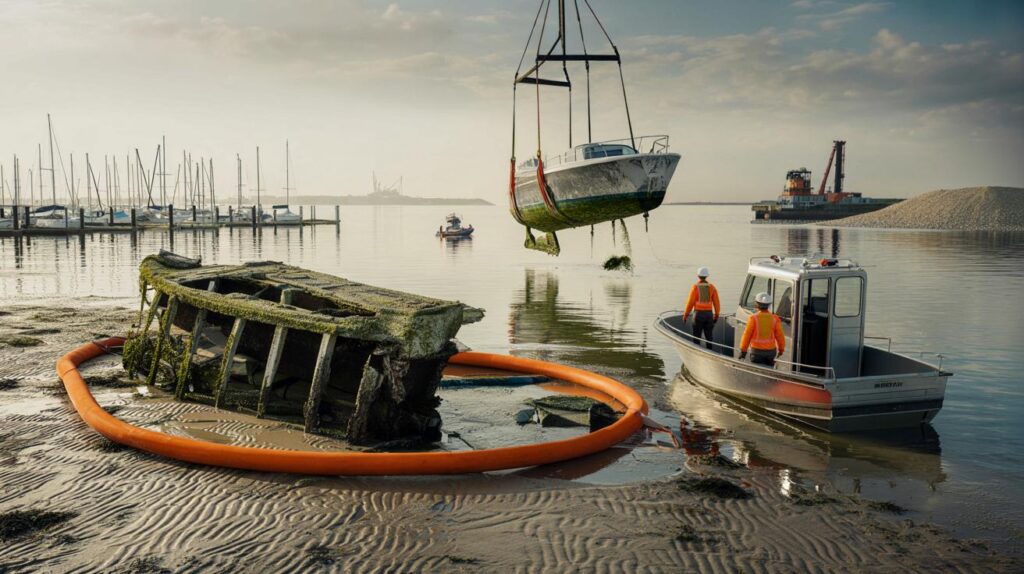
Harbour teams have removed about 120 derelict and submerged vessels from Langstone Harbour since 2022. The clear-out targeted wrecks that threatened navigation, leaked pollutants and drew antisocial behaviour. Authorities also paused new tidal mooring licences during the operation to keep the channel safe and to give crews room to work.
Only a small number of end-of-life boats now remain on moorings or on the Eastney foreshore. Staff describe grim conditions and tense encounters during removals. Some hulls lay buried in mud and silt. Others had become precarious shelters, with people bedding down in damp, unsafe cabins to escape the cost of housing on land.
About 120 hulls have gone since 2022, after a focused clearance costing more than £60,000 in two years.
Why the crackdown happened
Langstone sits between Portsmouth and Hayling Island. Natural England recognises its mudflats, saltmarsh and shingle as among Britain’s most significant intertidal habitats for wading birds. Oil, fuel, paint flakes and fibreglass fibres from decaying boats risk the mud, shellfish beds and bird feeding grounds. Wrecks can also break free in storms, battering other craft and moorings.
Deputy harbour-master Rob Dunford’s team drew notice across the country for the scale and pace of removals. Crews targeted sunken hulls first, then stripped back boats left to rot on moorings. Harbour-master Billy Johnson says owners frequently underestimate maintenance costs. A cheap boat bought for a few pounds can demand thousands each year in repairs, lift-outs and mooring fees. When money runs out, some owners walk away.
The money behind the clean-up
The harbour’s latest annual report sets out a complex financial picture. In 2024/25, a record volume of sand and gravel landed by the Kendall Group’s dredger, AI Avocet, lifted trading. Even so, the accounts show only a £7,500 operating surplus—and that included significant public support.
This year’s modest surplus relied on £222,000 from Havant and Portsmouth councils plus a £162,000 government grant for commercial fishing.
Major spending landed at the same time: rebuilding the Hayling slipway, renewing pontoon piles and buying a quayside crane. Johnson expects the harbour to need around £250,000 a year from councils for the next five years. From 2015 to 2023 the authority covered its own costs; now it aims to grow marine services income to as much as £100,000 a year to ease the pressure on local taxpayers.
| Item | Figure | Notes |
|---|---|---|
| Vessels removed since 2022 | ~120 | Derelict and sunken craft cleared |
| Clean-up cost (two years) | £60,000+ | Operational spend on removals |
| 2024/25 operating surplus | £7,500 | After support and record aggregate landings |
| Council subsidy (2024/25) | £222,000 | Havant and Portsmouth contributions |
| Government grant | £162,000 | To support commercial fishing |
| Projected annual council support | ~£250,000 | Expected for next five years |
| Target marine services income | Up to £100,000 | Planned new revenue stream |
Why so many boats were left to rot
Fibreglass boats often last for decades, but they do not vanish when owners stop paying bills. The hulls appreciate little on the second-hand market, and disposal is expensive. The UK has limited capacity to recycle reinforced plastic at scale. Breaking up a yacht can cost several thousand pounds once you include cranes, transport, yard labour and landfill charges. Many boats cleared from Langstone ended up in landfill because realistic recycling routes were not available.
Some owners underestimated long-term costs. Insurance, moorings, winter storage and routine engine work add up quickly. When a vessel misses maintenance, small faults become crippling repairs. A neglected boat can turn into a liability that nobody wants.
Cheap boats do not stay cheap: storage, lifting, repairs and disposal can outstrip the purchase price several times over.
The social edge of the problem
Harbour staff encountered people sleeping rough on board. Life afloat can look like a low-cost escape, but poorly maintained, unheated boats carry real risks—carbon monoxide, bilge water, electrical faults and isolation from services. Local agencies coordinated removals with welfare checks and signposting where possible, but the waterline cannot solve a housing crisis by itself.
Wildlife and dredgers: the delicate balance
Langstone’s funding model still leans heavily on one sand and gravel dredger. When AI Avocet operates consistently, fees and tonnage charges flow. Bad weather, mechanical issues or planning constraints can quickly dent revenue. Meanwhile, the harbour must protect sensitive habitat and manage commercial traffic, anglers, sailors and kayakers across the same tides.
The recent clear-out helps conservation. Fewer leaking wrecks mean cleaner mud, healthier invertebrates and safer feeding for curlews, redshanks and other waders. The slipway rebuild and new piles also support safer access for legitimate users while reducing the risk of damage to the shore.
What this means for sailors and residents
Locals will notice tidier mooring fields, fewer drifting hazards and less scrap on the foreshore. The pause on new tidal mooring licences is easing as the harbour regains capacity. Fees could face pressure if council contributions taper before new services bring in cash. Clubs and chandlers may benefit from a cleaner reputation for the waterway, attracting visiting yachts and fishing boats.
- If you keep a boat here, budget realistically for haul-outs, engine servicing and mooring fees.
- Check your insurance and proof of ownership; both matter if the harbour contacts you about compliance.
- Plan for end-of-life costs early. A savings pot beats a crisis when a survey flags serious defects.
- Report abandoned craft promptly so the harbour can act before they sink or leak.
How to avoid an end-of-life boat crisis
Owners can reduce future bills by maintaining bilge pumps, keeping through-hull fittings sound and lifting boats before winter storms. Clubs can organise “lift-and-look” days with local yards to catch problems early. Brokers can steer buyers away from bargain hulks by publishing realistic annual running costs alongside asking prices.
Nationally, the sector is debating better answers for fibreglass disposal. Options discussed across the UK include regional scrappage schemes, research into reusing composite fibre, and modest levies on new hulls to fund end-of-life processing. None of these fixes arrives overnight, and each needs coordination between builders, marinas, recyclers and government.
If you’re weighing up a ‘cheap’ project boat
Think beyond the sticker price. Set a three-year budget that covers storage, lifting, rig checks, sails, engine work and a contingency. Price disposal from day one; if the boat proves uneconomic to repair, you will need a lawful route to dismantle it. Speak to the harbour before you buy—some moorings remain under licensing pressure, and the authority is tightening oversight after the clear-out.
Plan for the full life of the boat—purchase, upkeep and disposal—so your bargain does not become everyone else’s bill.
For readers who want to understand the numbers, a simple rule of thumb helps. Annual ownership often runs at 10–15% of a boat’s realistic market value, rising sharply on older, poorly maintained hulls. Factor in haul-outs and lay-up equipment, and the true cost of “cheap boating” becomes clearer. That knowledge keeps harbours cleaner, budgets steadier and the channel safer for everyone who depends on it.



£222k from councils for a £7.5k surplus feels… fragile. Are navigational risks genuinely reduced or just relocated as remaining “end‑of‑life” hulls linger on Eastney? Would love collision/grounding stats from 2022–2025 to prove safety actually improved, not just the optics.
Credit to the harbour teams. Digging rotten hulls out of silt and dealing with people living aboard in unsafe cabins cant be easy. Thanks for coordinating welfare checks alongside removals. Next step: publish a clear disposal pathway so owners don’t panic-dump when repair bills explode.