
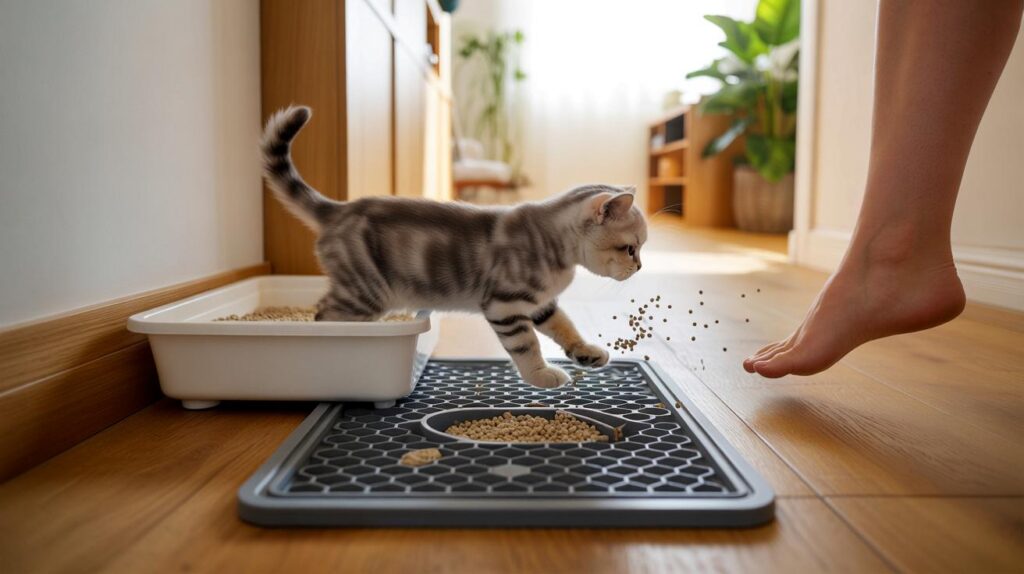
That crunch under bare feet can ruin a quiet evening. This season, many households want calmer paws and cleaner floors.
Across Britain, cat owners are fighting a daily blizzard of grains that spread from tray to hallway. A low-cost fix is sweeping into homes, promising cleaner corridors, calmer routines and fewer vacuum marathons. Here is how it works, why it helps your cat, and what to buy today without emptying your wallet.
Why litter ends up across your hallway
Cats dig, cover and spring away. Those rituals fling pellets and dust past the lip of many trays. Low-sided boxes leak debris. Covered models reduce arcs but still lose grains when a cat exits at speed or kicks with gusto. Fine clumping litters cling to toe fur, and static boosts hitchhiking on the way out.
Flooring magnifies the mess. Hard floors amplify the crunch and spread particles with every step. Rugs trap grains that later shake loose. Drafts through porches or kitchens push loose litter even further.
Most scatter begins in the first two steps after a cat leaves the tray. Intercept those steps and you slash mess.
The quick fix taking off: a double‑layer mat by the exit
How it works
A purpose‑made litter mat sits flush to the tray’s exit. A soft, honeycomb top catches granules from the first pawfall. The holes funnel debris into a second layer that stores it out of sight until you tip it back into the tray or bin. Grippy undersides prevent skating, and cushioned surfaces feel kind on pads.
Place a mat at least 60 cm wide to catch both front paws and the pivot step as your cat turns away.
What to buy and what to skip
- Size: 60×45 cm or larger for single trays; 75 cm width for lively diggers or top‑entry boxes.
- Structure: double‑layer EVA foam with 3–5 mm hexagon cells that funnel grains, not scratch claws.
- Comfort: soft touch underfoot; no stiff bristles that can snag nails or spook nervous cats.
- Cleaning: hinge or side opening to pour captured litter back; washable, quick‑dry surface.
- Safety: non‑slip base; rounded edges that sit flat and do not curl.
- Budget: most effective mats cost £10–£25; multi‑cat homes may need two.
| Mat type | Typical price | Best for | Care |
|---|---|---|---|
| Flat fabric loop | £8–£15 | Coarse litters, low diggers | Shake daily, machine wash monthly |
| Honeycomb EVA double‑layer | £12–£25 | Fine clumping litters, energetic kickers | Tip back daily, rinse weekly |
| Microfibre bath mat repurposed | £10–£20 | Senior cats, sensitive paws | Vacuum often, line dry |
Set‑up that works in real homes
Align the long edge of the mat with the tray’s exit, not at an angle. Leave no gap your cat can leap over. If you use a top‑entry tray, pull the mat slightly forward to meet the drop point. In drafty spots, tape the corners or choose a heavier mat so it stays parked during a midnight zoomie.
Tray tweaks help. Choose a high‑sided or top‑entry tray for vigorous diggers. Match tray size to body length—aim for at least 1.5 times your cat’s nose‑to‑tail base. Overweight or arthritic cats benefit from a high back with a lower front lip, which reduces spills without creating a painful climb.
A cleaning routine that actually saves time
Scoop twice daily. That quick two‑minute habit keeps the top layer dry, so fewer grains glue to paws. Shake the mat into the tray before you scoop. Once a week, rinse the mat, then dry it upright to protect the base from trapped moisture.
Two minutes, twice a day, beats 30 minutes of weekend vacuuming and a grumpy cat avoiding a dirty tray.
Keep a spare mat for swap‑outs. Rotate while one dries to prevent damp floors and odour build‑up. On hard floors, use a low‑suction vacuum head or a soft broom to avoid flicking grains beyond the mat’s reach.
Why this helps your cat as much as your toes
Cats prefer clean approaches to their toilet. Grit around the tray can cause hesitation, rushed digging and accidents nearby. Soft, secure footing reduces slips for kittens, seniors and tripod cats. Less tracking means fewer grains licked from fur during grooming, which lowers digestive irritation and cuts dust inhalation in stuffy winter rooms.
Some cats resent harsh textures underpaw. A cushioned mat offers a gentle landing that encourages measured exits rather than frantic leaps, which further reduces scatter.
Choosing litter that sheds less
Fine clumping clay sticks to moisture and fur, which boosts tracking. Larger‑grain mineral blends reduce cling but can be noisy. Plant‑based pellets track less but may need a tray with a sieve insert. Silica gel offers low odour and light tracking, yet some cats dislike the feel. Start with a small bag and watch paw prints around the tray for a week.
Small changes that stack up
- Add a door mat outside the loo zone for a second catch point.
- Trim long toe tufts on fluff‑footed breeds to cut cling.
- Place the tray away from food bowls to prevent litter transfer during meals.
- Use unscented litters; strong perfumes can trigger frantic covering and more kick‑out.
- Multi‑cat homes: follow the “one tray per cat, plus one” rule to reduce crowding and frantic digging.
Common mistakes to avoid
A mat that is too small invites leaps over the landing zone. A rough doormat can catch claws and make the tray a place to fear. Siting the tray in a wind tunnel drives lightweight grains into every room. Overfilling the tray increases arc and mess; aim for a consistent depth recommended by the litter brand, usually 5–7 cm for clumping types.
When a mat will not be enough
Sudden, heavy digging or bolting from the tray can signal discomfort. Urinary issues, constipation and joint pain change toilet behaviour and raise scatter. If your cat strains, visits often, cries, or soils nearby, book a vet check. A larger, low‑entry box can help stiff joints. For anxious cats, calmer corners with less foot traffic reduce frantic covering and keep more granules inside the tray.
Extra gains you can bank this season
Cleaner entry zones reduce dust load in small flats during closed‑window months. That can ease winter sniffles for sensitive households. Grit left on vinyl can act like sandpaper; catching it early protects floor sealants and tenancy deposits. For budgeting, consider the running cost: a £15 mat that lasts two winters and saves 10 minutes of daily cleanup pays for itself in weeks.
Want a quick test before you commit? Lay a folded cotton towel where a mat would sit and check the towel after two days. If you see fewer grains beyond the towel’s edge and a cleaner corridor, a purpose‑made mat with a capture layer will push those gains further, with less laundry and more time on the sofa—bare feet, no crunch.



Tried the 60×45 double-layer EVA honeycomb mat last week; it caught most of the clumping clay in the first two steps. Pour-back hinge is handy, though drying took longer than I expecetd. Quiet toes at last.
“7 in 10 fix it in 24 hours” — source? Is this a user survery or controlled test? Also, any data on durablity and edge curl on vinyl over time?