
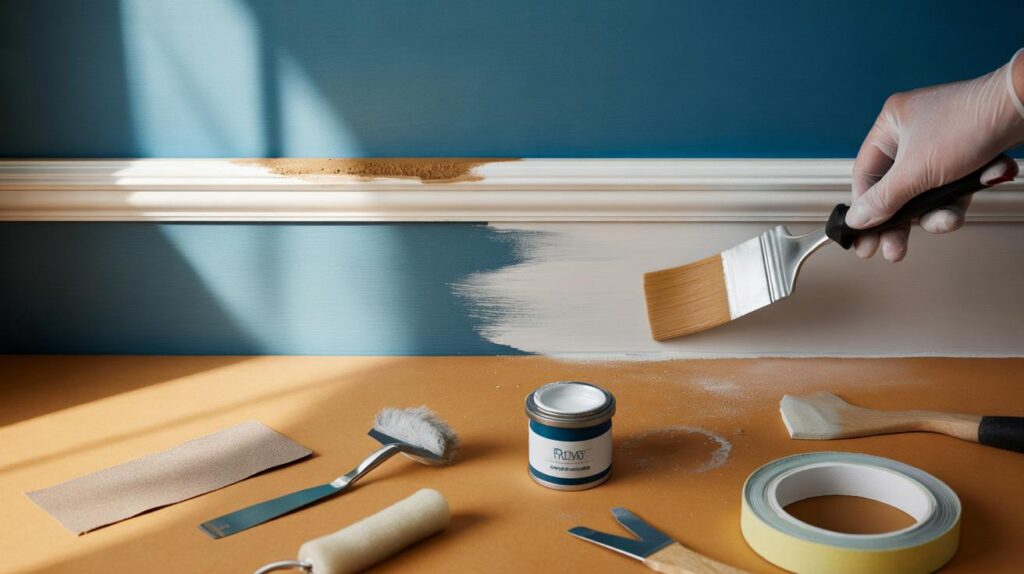
Cold snaps, hurried cleaning and shunted furniture quietly batter skirting boards, leaving tired edges just as guests start visiting.
Across the UK, households are turning to a quick, low-cost repair that restores chipped skirting without prying anything off the wall. The approach relies on careful prep, a small amount of filler and a steady hand with fine sandpaper. The pay-off is a clean, hard‑to‑spot finish in less than the time it takes to brew and drink a cuppa.
Why skirting chips in busy homes
Skirting boards sit where daily life hits hardest. Vacuum heads and mops nick paint. Toy wheels and chair legs clip corners. Damp autumn air swells timber and weakens old coatings. If the original paint wasn’t suited to woodwork, edges lift sooner. Over time, tiny knocks become visible scars along the floor line.
How to assess the damage
Look closely before you start. Is it only paint flaking, or can you see timber or MDF? Is the chip shallow or a small gouge? Press gently on any lifted paint; if it flexes, it needs removing. Note any signs of moisture, such as darkened wood or a musty smell, which change the order of work.
One careful minute of diagnosis saves twenty minutes of rework: identify depth, substrate and moisture before you touch a tool.
What you need before you start
Tools and materials for a clean, fast repair
- Soft cloth and a bowl of warm water with a drop of mild washing-up liquid
- Non-abrasive sponge; a splash of white vinegar for greasy marks
- Craft knife or paint scraper to lift loose flakes
- Fine sandpaper (P240 for blending, P180 if edges feel sharp)
- Ready-mixed wood filler (small tube or pot)
- Small filling knife or flexible spatula
- Primer/undercoat for wood and a topcoat to match your skirting colour
- Small brush or foam mini-roller; tack cloth to remove dust
- Masking tape for the floor edge, if needed
Prepare the surface without roughing the timber
Dust the area with a dry cloth. Wipe gently with the damp sponge and a little detergent. Stubborn scuffs respond to a 1:4 white-vinegar-and-water wipe. Keep water to a minimum. Lift any soft or hollow-sounding paint with the scraper. Feather sharp edges with P240 paper, using light circular strokes. Vacuum or brush away dust and run a tack cloth over the area.
The no-removal method that’s winning weekends
Fill, sand, paint: the 30-minute circuit
Open the wood filler and knead it with the filling knife until smooth. Press a small amount into the chip, working across the grain. Slightly overfill so you can sand back level. Smooth the surface with the knife at a shallow angle. Most ready-mixed fillers set in 20–45 minutes; check the label and allow a bit longer in cool rooms.
Once dry, sand lightly with P240 in small circles until the patch blends seamlessly with the original profile. Wipe away dust. Spot-prime the filled area to seal it, then apply the topcoat in a thin layer. Two light coats beat one heavy one and hide the join. If your boards are satin, avoid glossy edges by painting past the repair and easing off the pressure at the edges.
| Damage | Steps | Typical drying time | Approx. material cost |
|---|---|---|---|
| Tiny graze (paint only) | Feather sand, spot-prime, topcoat | Primer 30 min; topcoat 1–2 h | £0–£5 (you may have paint already) |
| Chip up to 5 mm | Clean, fill, sand, prime, topcoat | Filler 20–45 min; paint as above | £8–£15 for filler and brushes |
| Exposed MDF/wood fibre | Dry thoroughly, seal, fill, sand, prime twice, topcoat | Add 30–60 min for extra sealing | £12–£20 if primer needed |
Most small chips repair in 25–40 minutes of hands-on time with materials under £15, without lifting a single board.
Colour and sheen: match it so the repair disappears
Skirting often looks different once dry. Test the colour on a scrap card and hold it against the board. If you can’t match the shade, paint to a natural break, such as the end of a run or a doorway, so the eye doesn’t catch a change mid-span. Keep the sheen consistent; satin next to gloss will always show.
Use light pressure and circular sanding to preserve the profile. The goal is to blend, not reshape.
Make the repair last through winter
Gentle habits that prevent fresh chips
- Vacuum with a soft brush head; avoid hard plastic edges along the board.
- Stick felt pads to movable furniture and cot beds; check them every few months.
- Control humidity: keep rooms ventilated and dry wet floors promptly.
- Catch new lifts early; remove loose paint before it spreads.
Micro-retouches in five minutes
For pinhead chips, dab a pea of filler with a fingertip, smooth with a damp cloth edge, then sand with a folded piece of P240 once it’s set. A tiny touch of matching paint with an artist’s brush disguises the spot in seconds.
Extra pointers the pros wish you knew
Timber and MDF behave differently. MDF dislikes moisture along cut edges; seal exposed fibre with primer before filling. Hardwood dents can sometimes be raised with a drop of water and brief heat from a clothes iron through a folded cloth; test discreetly and avoid varnished finishes.
Choose the right filler. Ready-mixed filler suits small domestic repairs and sands easily. Two‑part fillers set faster and harder for deep gouges but demand swift shaping. If you have several chips across a room, decant small amounts to avoid drying out the tub and label the lid with the purchase date.
Mind the order of coats. Seal, then fill, then prime again if you sanded through to bare wood. A quick-dry undercoat improves adhesion and evens the sheen, especially over filler patches. Low‑odour, water‑based trim paints keep rooms usable the same day and avoid lingering smells.
Think about time and money. A typical 4 m run with three medium chips needs roughly 10–15 minutes of prep, 20–45 minutes of filler setting, and two short paint sessions. Materials come in under £15 if you already own a brush and sandpaper. Skipping removal avoids breaking old adhesive lines and saves you the likely £120–£180 a tradesperson would charge for a localised repair visit.
Watch for risks. Over‑sanding can flatten decorative profiles. Mask finished floors to prevent scuffs. Ventilate during painting and wear light nitrile gloves while handling filler. If you suspect persistent damp behind a cold external wall, fit a small humidity sensor; tackling moisture early prevents repeat failures.
No screws, no crowbars, no dust clouds. A clean surface, a thumb-sized blob of filler and a careful paint blend bring tired skirting back to life.



Brilliant guide—followed the fill, sand (P240), prime, topcoat steps and my hallway skirting looks new. Saved me about £120, so thanks!