
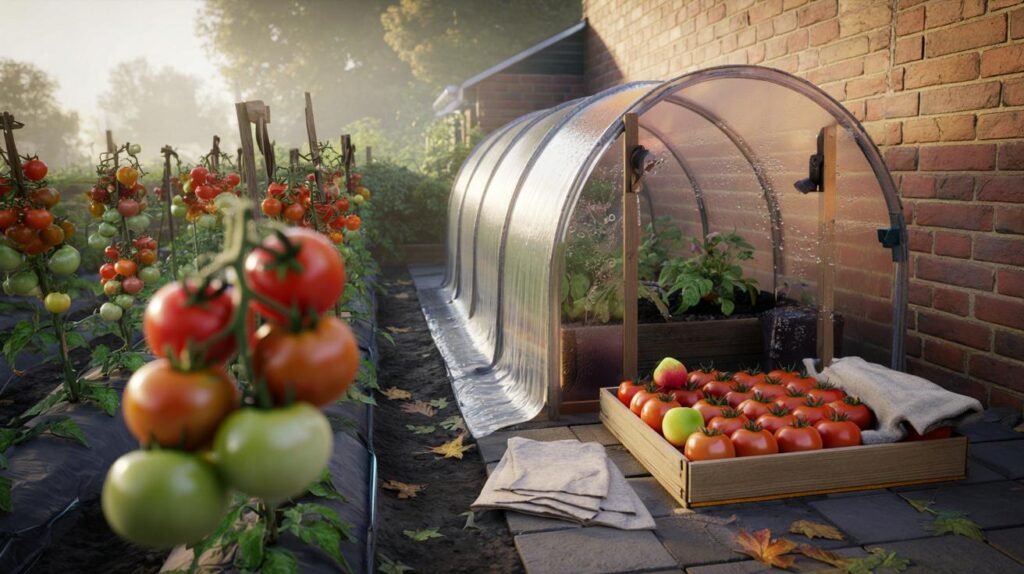
Foggy mornings needn’t spell the end of flavour. Across Britain, growers still coax colour from vines as nights bite.
As November looms, market gardeners reach for quick fixes and time-worn rituals that nudge tomatoes from stubborn green to dinner-plate red. The tools are humble, the timing precise, and the gains—often a handful of degrees—make all the difference between bland and bold.
Why cold stalls ripening
Tomato colour hinges on lycopene, a pigment that builds only within a narrow temperature window. Short days slow sugar movement to the fruit, and cold nights interrupt pigment formation. Below a critical point, ripening pauses, and green stays green.
The 13°C rule and what it means for your vines
Once night temperatures slip below about 13°C, the red pigment barely develops. The vine holds fruit safely, yet progress crawls. Waiting for a warm spell in late October rarely pays. Instead, growers change the fruit’s microclimate and, if needed, the fruit’s location.
Target a stable 14–18°C around the fruit cluster. Below 13°C, ripening stalls; below 10°C, flavour suffers.
Heat traps you can build in minutes
Black plastic, bricks and south walls
Pros bank warmth by capturing every sliver of autumn sun and releasing it around dusk. Surfaces that absorb light by day radiate it at night, buffering drops in temperature.
- Lay a black polythene sheet around the base to soak up and re-emit heat.
- Lean ripening trusses towards a south-facing brick wall that acts like a slow radiator.
- Stand dark paving slabs at the row ends to catch afternoon sun and shield from wind.
These tweaks add a few crucial degrees where it counts: around the fruit itself, not just the roots.
DIY cloches and micro-tunnels
Air moving too briskly strips heat; still, humid air breeds disease. Gardeners use light covers that warm gently but keep air circulating.
- Voile or fleece draped over hoops for nighttime cover, removed or vented by day.
- Clear plastic cloches over individual plants, with a small gap near the soil for airflow.
- Container plants shifted against a sun-soaked wall to capture stored heat.
Aim for shelter that breathes. Warmth without ventilation invites botrytis; ventilation without warmth halts colour.
| Method | Typical cost (£) | Temperature gain (°C) | Main risk |
|---|---|---|---|
| Black polythene mulch | 4–8 | 1–3 | Soil moisture loss if uncovered by day |
| Voile/fleece at night | 6–12 | 2–4 | Condensation on leaves at dawn |
| Clear cloche or micro-tunnel | 10–25 | 3–5 (sunny days) | Overheating at midday if unvented |
| South-facing brick wall | Free | 1–2 | Shaded mornings if wall too high |
Pick-and-ripen tactics
Choose the right fruit to cut
Pick for potential, not perfection. Fruit that has reached full size and shifted from dark to pale green, or shows a blush near the stem, will colour off the vine. Firm, blemish-free tomatoes handle box-ripening best.
- Harvest before a sharp temperature drop is forecast.
- Prioritise trusses with several nearly-ready fruits to reduce plant load and speed up the rest.
- Remove flowers and tiny fruits so energy goes to the finishers.
Indoor ripening with ethylene
Ethylene gas triggers the final sprint. Apples and ripe bananas release it in small, helpful doses.
- Lay tomatoes in a single layer in a shallow crate; avoid stacking that bruises shoulders.
- Add one ripe apple per box; replace it every three to four days.
- Store at 17–21°C, away from direct sun; check daily and turn fruit to prevent soft spots.
Handled gently and kept at room temperature with a single apple, pale fruit often reddens within 7–10 days.
Timing the last pick before frost
Your 48-hour cold snap plan
- Two days out: water lightly in the morning to steady plant stress; fit hoops and fleece for the night.
- One day out: harvest all full-sized green fruit that show any lightening in colour; leave only the reddest on the plant.
- Frost night: cover again at dusk; weigh down edges to stop wind lifting covers.
- Next morning: vent covers as sun arrives to shed condensation quickly.
Aftercare and flavour
Storage rules that keep aroma
- Avoid refrigeration; cold dulls aroma pathways and toughens texture.
- Keep fruit on a tray lined with a tea towel; space them so they do not touch.
- Turn every day; remove any that show spots to protect the rest.
- Salt and skin hold better when fruit finishes ripening at room temperature.
Never chill tomatoes below 10°C unless you accept flatter flavour; room temperature protects aroma compounds.
Common October pitfalls
Mistakes that cost you colour
- Waiting for a warm spell that never arrives while the first frost takes the lot.
- Leaving fruit piled in deep crates where bruising and rot spread.
- Sealing covers tight without ventilation, encouraging grey mould overnight.
Pro routines to copy at home
The small habits that stack the odds
- Cover early on clear, still evenings when radiative cooling bites hardest.
- Strip lower leaves around ripening trusses to increase airflow and sun reach.
- Reduce watering to morning only, keeping foliage dry by dusk.
- Move containers each afternoon to chase sun and radiating surfaces.
Numbers that help you plan
Think in fruit-per-plant and days-to-finish. If eight vines each carry five near-ready tomatoes, that is 40 fruits. With covers and a south wall, expect two to three fruits per plant to redden in situ within a week, the rest finishing indoors within the next 10 days. At £12 spent on fleece and two crates, the cost per saved tomato sits well under 40 pence.
Variety shifts the odds. Cherries and medium salad types colour faster than beefsteaks once cut. Thick-skinned paste tomatoes tolerate indoor ripening with fewer soft spots, while striped or purple cultivars may show muted final tones as days shorten.
Risk check and quick fixes
Condensation, mould and cold shock
- Condensation puddles on leaves signal trapped humidity; lift one end of the cover to vent at sunrise.
- Grey mould (botrytis) starts in cramped clusters; trim leaves around ripening trusses to open the space.
- Cold shock browns shoulders; add a double layer of fleece on nights below 5°C.
What to do with true green stragglers
Fruit that never reached full size will not redden well off the vine. Use them differently. Slice for pan-fried green tomatoes, simmer into chutney with onions and vinegar, or pickle wedges with dill. Nothing goes to waste, and the bed clears cleanly for winter planting.
A final nudge for late-season success
Think of heat like money: small, consistent deposits pay. A black sheet returns 1–3°C. A south wall adds 1–2°C. A light fleece grants 2–4°C at night. Stack them, observe daily, and harvest on time. You keep colour coming while the rest of the garden beds down.
If you want to test your set-up, place a cheap max–min thermometer under your cover for three nights. If the minimum stays at 14–16°C near the fruit, carry on outdoors. If it dips to 11–12°C, shift borderline fruit inside with an apple. This tiny experiment saves both flavour and effort.



3 cheap tricks for 27 fruits—really? In my unheated greenhouse nights drop to 9–10°C. Does the fleece + south wall combo actually keep the fruit cluster above 13°C, or is this just wishful thinking?
Great breakdown. The apple/ethylene method finally explaned without fluff. One question: do paste varieties like San Marzano get mealy indoors? I’ve had mushy shoulders before—maybe I stored too cool at 11C.