
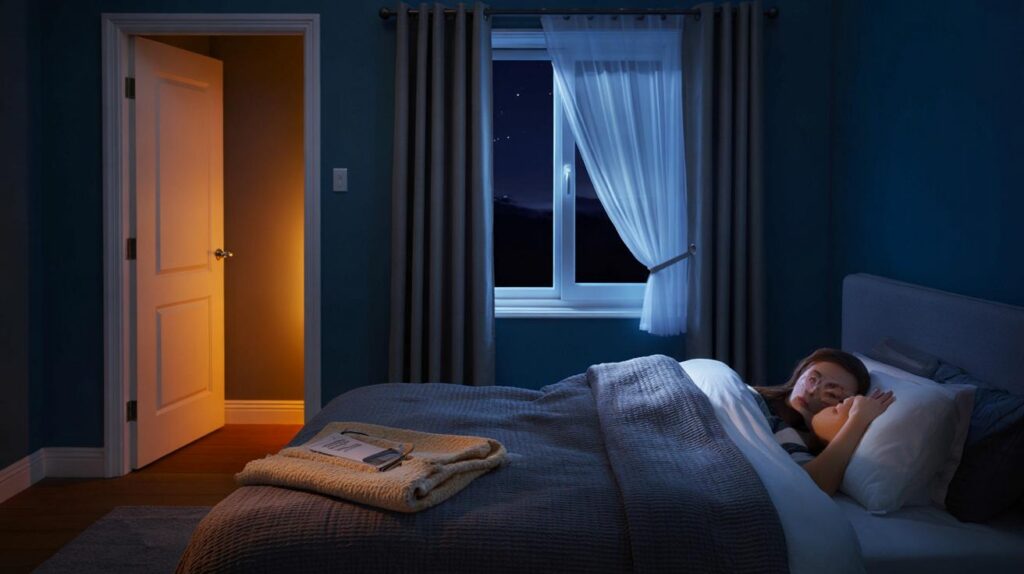
Sleepless nights push millions toward pricey gadgets and pills, yet a quiet shift at home is stealing headlines this winter.
As daylight shrinks and fatigue creeps in, a back-to-basics approach is gaining ground. People are testing two tiny changes that cost nothing, take seconds, and promise calmer nights: sleeping with the bedroom door ajar and the window just slightly open.
Two tiny tweaks that are making people talk
A new UK consumer poll of 2,000 adults points to a striking pattern. Nearly three-quarters of respondents who tried sleeping with the door ajar and a sliver of window opening reported faster sleep onset and fewer night-time awakenings. These aren’t high-tech fixes. They are simple adjustments that adjust airflow, temperature, and a subtle sense of space.
People who slept with a door ajar and a 2–3 cm window opening reported falling asleep several minutes faster on average.
The idea runs against a common instinct to seal the room. Many shut the door, latch the window, and dial up the heating. That can trap warm, stale air and raise carbon dioxide levels, which can nudge the brain into lighter sleep and prompt early waking.
Why airflow calms a restless brain
The brain scans the environment, even in the drift toward sleep. A completely sealed room can feel confining. A door left slightly open introduces a cue of escape and safety. Breathing slows. Muscles release tension. Anxiety softens. The effect is modest yet tangible when repeated every night.
Fresh air plays a second role. Even a narrow gap in the window helps lower CO2 build-up and humidity, especially in modern, well-insulated homes. Many people report less stuffiness, fewer headaches, and a clearer head on waking.
Small, steady airflow helps regulate temperature, clears stuffiness, and reduces micro-awakenings that shred sleep quality.
The temperature sweet spot
Sleep physiology favours a cooler room. Most sleep specialists point to 16–18°C as the zone where bodies drift off with less effort. Warmer rooms can fragment deep sleep. Colder rooms can trigger shivers and shoulder hunching that stiffen the neck by morning.
Cracking the window by 2–3 cm supports that thermal balance without turning the room into a wind tunnel. The door ajar helps air move gently so the room doesn’t feel stale or overly chilled.
What people are changing at home
- Leaving the bedroom door ajar by around 5–10 cm to ease airflow and reduce the sense of confinement.
- Opening the window 2–3 cm to renew air without a full draught, even on cold nights.
- Shifting the bed away from direct airflow to avoid a cold face or dry throat.
- Choosing a warmer duvet while letting the room stay cool.
- Using thick curtains to mute street noise while keeping the window slightly open behind them.
What changes first when you try it
People testing the approach commonly describe a faster slide into sleep within three to four nights. The early result is less tossing and fewer clock checks. Within a week, the pattern often stabilises: fewer mid‑sleep awakenings and an easier morning rise.
Faster sleep onset. Fewer wake-ups. Mornings feel less foggy and more deliberate.
Those gains link to improved breathing, steadier body temperature, and lower arousal from hypervigilance. A bedroom that feels breathable can reduce the low-grade stress that keeps the mind alert.
Security, noise and cold: how people are adapting
Concerns over safety and comfort are real. Households are meeting them with simple kit and placement.
- Use a door wedge to stop slamming and keep pets out, if needed.
- Fit a window restrictor to lock a safe 2–3 cm gap on upper floors.
- Place the bed so the airflow passes across the room, not onto the face.
- Add a wool blanket at the foot of the bed for feet that cool faster.
- Try soft silicone earplugs if traffic peaks at dawn.
What the science suggests
Ventilation reduces indoor CO2, often elevated overnight in sealed rooms. Rising CO2 correlates with headaches, grogginess, and lighter sleep. A cooler room also nudges core body temperature down, a necessary step for sleep onset. Together, airflow and temperature steer the brain into deeper, more stable sleep cycles.
| Parameter | Practical target | Why it helps |
|---|---|---|
| Bedroom temperature | 16–18°C | Supports natural drop in core temperature at bedtime |
| Window gap | 2–3 cm | Refreshes air without a chilling draught |
| Door position | Ajar 5–10 cm | Improves airflow and reduces confinement cues |
Who should take extra care
Allergy and asthma sufferers should watch pollen and pollution forecasts. On high‑pollen or smoky days, ventilate earlier in the evening, then rely on the door ajar. For homes near busy roads, open the window on the quieter side of the building. Parents of toddlers may prefer a monitor and a door wedge, with the window set on a restrictor.
Why simplicity is beating gadgets this season
People have tried sleep trackers, sound machines, supplements, and smart bulbs. Many still wake at 3 a.m. These two changes cut through the noise because they strike at root causes: air quality, temperature control, and a calmer nervous system. They cost nothing and start working quickly, which keeps people consistent night after night.
A cool, breathable room works with biology. The routine sticks because results show up fast.
A one-week trial you can run at home
Test the habit for seven nights. Keep the window at a 2–3 cm gap and the door ajar. Set your duvet for warmth rather than heating the room. Log three numbers: time to fall asleep, number of wake-ups, and how clear you feel by 10 a.m. Compare week to week and adjust the gaps by a centimetre if needed.
Beyond airflow: small upgrades that amplify the effect
Cut caffeine after midday to avoid a hidden push against deep sleep. Dim household lighting an hour before bed to cue melatonin. Keep bedside screens on night mode or out of the room. These changes pair well with the airflow routine and add incremental gains.
Consider seasonal tweaks. In winter, use a thicker duvet and maintain the same window gap. In summer heat, increase the gap slightly and run a fan on low to move air across the room, not onto the body. If indoor air feels dry, a bowl of water near a radiator can soften the edge without adding noise.



Definitley trying the 2–3 cm window crack + door ajar combo boosted my sleep last week—fell asleep quicker and woke up clearer. Thanks for keeping it simple and not gadget-y.
Any data beyond a UK poll? Correlation isn’t causation—could colder weather or new duvets be the real driver here?