
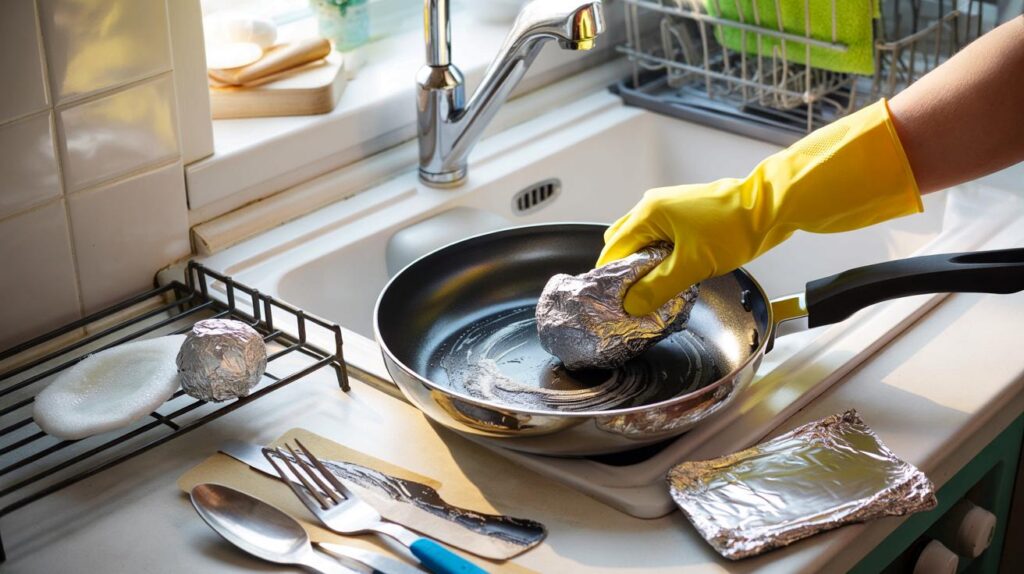
There’s a roll in your drawer that beats fancy sprays, cuts grime fast, and gives knackered metal a second life.
As cooler evenings arrive and routines tighten, households look for quick wins that stretch budgets. Aluminium foil, usually wrapped round leftovers, moonlights as a nimble cleaning tool. It scours, brightens and speeds up chores with pennies of spend and minutes saved.
Six ways to turn foil into a cleaning tool
1. Burnt pan rescue without buying a new scourer
Shape a tight ball of aluminium foil. Add a splash of white vinegar or a drop of washing-up liquid to the cooled pan. Rub in circles with light pressure. Rinse and dry. The foil’s fine texture lifts carbon without chewing up most stainless steel.
Skip non-stick. Foil scratches coatings, enamel and soft finishes. Test a tiny area first.
This trick shifts stuck-on rice, caramelised sugars and seared bits that laugh at soft sponges. Use gloves to protect your knuckles. Change to a fresh foil ball as it compresses; you keep the abrasive bite consistent.
2. Oven racks and barbecue grates back to silver
Make a paste with bicarbonate of soda and warm water. Paint the paste on cold racks or grates. Leave ten minutes. Scrunch a foil ball and scrub along the bars. Rinse hot and wipe dry. Grease loosens quickly, and you skip heavy aerosols and long soak times.
For stubborn patches, add a tablespoon of washing-up liquid to the paste. Work from the underside of the bars to lift charred flakes away from you.
3. Cutlery that actually gleams out of the dishwasher
Roll a clean foil ball about the size of a golf ball. Place it in the cutlery basket on a normal cycle. The foil behaves as a sacrificial metal, helping reduce the dulling oxide film on stainless and solid silver.
Do not use this with silver-plated items, pewter, oxidised finishes, gold plating or heirloom pieces. Hand clean those.
Hard water affects results. Add rinse aid or a teaspoon of bicarbonate to the prewash compartment if spotting persists. Keep the foil away from heating elements and remove it after the cycle.
4. Limescale lines in the loo and on taps
Wet the area with warm water. Rub gently with a smooth pad of foil and a dab of mild soap or lemon juice. The foil dislodges mineral deposits and surface rust stains from porcelain and chrome without harsh acids.
Rinse well and buff with a microfibre cloth. This keeps fixtures brighter between deeper cleans, and it trims spend on separate bathroom descalers.
5. Ironing in fewer passes with a heat reflector
Lift the cover of your ironing board. Lay a sheet of foil, shiny side up, flat under the cover. Smooth out wrinkles. The foil reflects heat back through fabrics, so creases relax faster on both sides.
Expect fewer repeat strokes on cotton and linen, and a small drop in electricity use per session.
Use steam as normal. Watch edges so the foil stays tucked and doesn’t snag. Replace the sheet if it crumples; a smooth layer reflects heat more evenly.
6. Scissors that stop chewing paper
Fold a piece of foil several times to get 6–8 layers. Cut thin strips edge to tip with your scissors. This aligns tiny burrs and removes adhesive residue from sticky jobs. Wipe blades after with a dry cloth.
For sticky gunk on blades, sandwich a little washing-up liquid between two foil layers and cut through once before the dry cuts. Avoid this method on premium shears that state “sharpen by professional only”.
How far can a 30 cm sheet really go?
| Job | How to use foil | Time saved | Cash saved per month | Caution |
|---|---|---|---|---|
| Burnt pans | Foil ball + vinegar or washing-up liquid | 6–10 minutes per pan | £1–£2 on pads and sprays | Never on non-stick or enamel |
| Oven racks/grates | Foil ball + bicarb paste | 10–15 minutes per set | £3–£4 on heavy degreasers | Use gloves; avoid hot surfaces |
| Dishwasher cutlery | Foil ball in basket | 5 minutes of hand-polishing | £2 on silver polish | Not for plated or oxidised items |
| Limescale/rust marks | Smooth foil pad + mild soap | 5 minutes per fixture | £2–£3 on descalers | Rinse porcelain to avoid residue |
| Ironing | Foil sheet under board cover | 15–20% fewer passes | £0.70–£1.20 in electricity | Keep foil flat; no tears |
| Scissor upkeep | Cut through folded foil | Trip to sharpener avoided | £0.50 monthly equivalent | Skip premium or serrated blades |
Why this works, in plain terms
Foil brings three useful traits. It is thin yet tough, so it agitates grime without gouging most hard metals. It compresses into shapes that reach corners and ridges. It also swaps electrons easily, which helps break up oxide films in wet, soapy conditions. You get the cleaning effect of a mild abrasive and a little chemistry, with far less kit.
Make it safer and kinder to your kit
- Keep foil away from non-stick coatings, enamel, lacquer and soft plastics.
- Rinse metals after scrubbing to remove grey residue and lifted oxide.
- Wear gloves on greasy jobs to protect skin and improve grip.
- Use smooth, not jagged, foil on chrome to avoid swirl marks.
- Avoid jewellery with stones, pearls, patina or glue settings when using any foil bath.
- Ventilate if you pair foil cleaning with commercial products; do not mix chemicals.
A quick method for tarnished jewellery
Line a bowl with foil, shiny side up. Add hot water, a tablespoon of bicarbonate of soda and a pinch of salt. Drop in solid silver pieces for 30–60 seconds. Rinse and dry. This reverses tarnish on plain silver chains and spoons. Skip items with inlays, oxidised detail or plating, as finishes can change colour.
What about cost and waste?
A standard roll costs about £2–£3 and covers months of upkeep when you reuse pieces. A palm-sized ball cleans several pans. A flat sheet under an ironing board can last weeks. Rinse and dry used pieces when they still have life. Recycle clean foil in your kerbside scheme if your local authority accepts it. Scrunch small scraps into a fist-sized ball before binning them in the recycling to stop pieces falling through sorting lines.
One roll can replace two bottles of specialist cleaners, a sleeve of scouring pads and several polishing cloths across a season.
Bonus use when damp creeps in
Metal tools in sheds can spot-rust in autumn. Wrap blade tips loosely in dry foil or place a folded piece in the toolbox to create a drier microclimate. Add a silica gel sachet for better moisture control. Check monthly and replace any damp foil.
When to pick a different method
Choose a nylon scrubber or a cream cleaner for non-stick pans. Use a purpose-made descaler on thick limescale if you rent in a hard-water area. Call a pro sharpener for quality knives and tailoring shears. These choices protect coatings, edges and warranties.
Small tweaks that multiply gains
Pair foil scrubbing with a five-minute pre-soak in hot, soapy water to halve elbow grease. Keep a small kitchen tin labelled “foil for cleaning” so you reuse offcuts from cooking. Time your next ironing pile before and after adding a foil reflector; note the minutes saved and adjust steam settings down a notch to bank the energy drop.



Just tried the burnt pan rescue with a foil ball and vinegar—came off in minutes. Defintely keeping a “cleaning foil” tub under the sink. Also love the ironing board reflector tip; creases dropped faster and I swear the steam setting could go down a notch 🙂