
You buy potatoes each week, yet the label never explains how they sit on your plate, or why cooking method matters.
You hear mixed messages at every turn. Friends call potatoes a comfort food to swerve, while others swear by their budget-friendly calories. A nutrition expert has cut through the noise, and the findings may change how you cook tonight.
Where potatoes really sit on your plate
Two truths can hold at once. Botanically, the potato comes from a plant, and we eat its tuber. That places it in the vegetable family. Nutritionally, the story shifts. Potatoes behave like a starchy carbohydrate, closer to bread, pasta or rice than to leafy greens.
Botanical vegetable, nutritional starch: that’s why potatoes confuse labels and dinner tables alike.
This dual identity helps more than it hinders. Treat potatoes as your meal’s starch, then add non-starchy vegetables for colour and fibre, plus a source of protein. That simple tweak turns a heavy plate into a balanced one.
The science in brief
- Water content: around 78%, which means far fewer calories than most people think.
- Fat: naturally very low unless you add oil, butter, cheese or cream.
- Carbohydrate: mainly starch, which fuels muscles and brains during busy days.
- Fibre: higher if you leave the skin on; it feeds your gut microbiome and supports fullness.
- Vitamins and minerals: notable for potassium and vitamin C; a 150 g cooked portion can deliver around a quarter of your daily vitamin C target.
The potato itself rarely drives weight gain; toppings and frying oils do the heavy lifting.
Why chips get the blame and boiled spuds do not
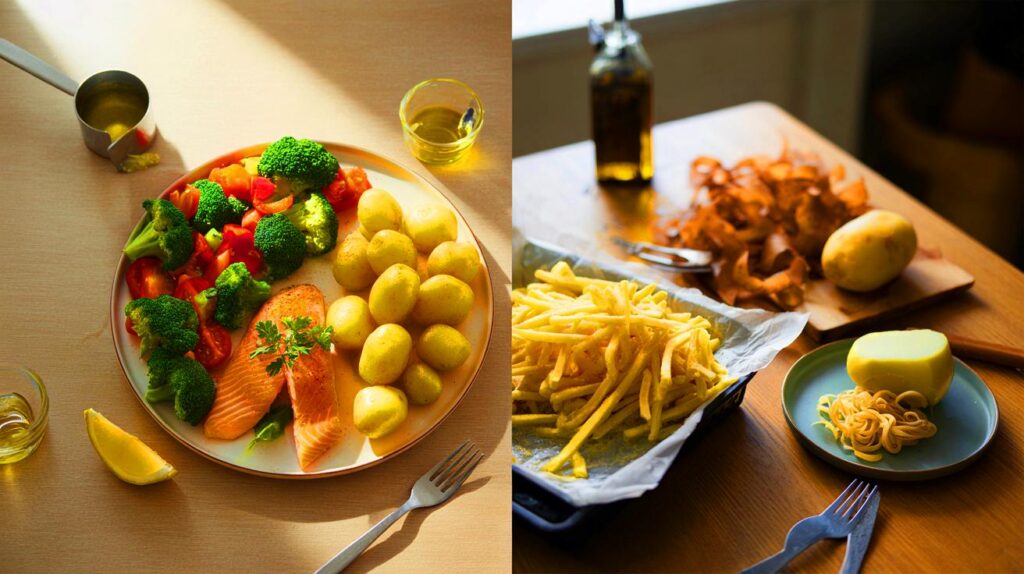
Context changes everything. The same potato baked with its skin carries a very different nutritional profile from one dropped into a fryer. Your method — not the tuber — shapes the outcome.
| Food | Typical energy per 100 g | What changes the number |
|---|---|---|
| Boiled potato, plain | 80–90 kcal | Variety, salt, and whether the skin stays on |
| Baked potato, skin on | 90–100 kcal | Size and added butter or cheese |
| Mashed potato with milk | 110–150 kcal | Milk type, butter, and portion size |
| Roast potatoes | 190–220 kcal | Amount and type of oil or fat used |
| Chips/fries | 290–350 kcal | Deep-frying and coatings |
The table shows why potatoes pick up a “fattening” reputation. Most of the calories arrive with oil, cream, or cheese. Control those, and you control the plate.
Make your potato work for you
Build a balanced plate without fuss
- Portion guide: 150–200 g cooked potato for most adults, roughly the size of your clenched fist.
- Add protein: eggs, fish, chicken, lentils or tofu help steady blood sugar and keep hunger at bay.
- Double the veg: pile on non-starchy vegetables — greens, tomatoes, peppers, broccoli — for fibre and volume.
- Season smartly: use herbs, garlic, lemon or vinegar to lift flavour without heavy sauces.
- Keep the skin: it raises fibre and provides extra texture for satisfaction.
- Go easy on fats: measure oil by the teaspoon, not the splash; swap butter for olive oil where you can.
Glycaemic index: what changes it and why it matters
Not all potato dishes affect blood sugar in the same way. Waxy varieties and new potatoes tend to have a lower glycaemic impact than fluffy varieties. Boiling, cooling, and reheating increases resistant starch, a form of carbohydrate your body treats more like fibre. That can help with fullness and reduce spikes.
- Cool and reheat: cook potatoes, chill them, then reheat for a salad or hash. Resistant starch rises after chilling.
- Add acidity: a splash of vinegar or lemon with your potatoes can blunt the glycaemic rise at that meal.
- Pair well: protein and healthy fats slow digestion and help maintain steadier energy.
Cool, chill, reheat: a simple kitchen routine that nudges spuds towards a steadier blood sugar response.
So, vegetable or starchy carbohydrate?
Let’s settle it plainly. As a plant part, the potato is a vegetable. On your plate, count it as a starchy carbohydrate. That means it should usually replace rice, pasta, or bread at a meal, not sit alongside all three. If you want more greens, add non-starchy vegetables rather than doubling up on starches.
Call it a vegetable in the garden, a starch on the table — and a smart choice when cooked with care.
Three mistakes to stop this week
- Stacking starches: potato plus white bread plus pasta in one meal leaves little room for fibre-rich veg.
- Drowning in fat: roasting with puddles of oil turns a light side into a calorie bomb.
- Skipping the skin: you throw away fibre and flavour when you peel by default.
Practical add-ons you can use tonight
Short on time? Microwave a whole potato for 5–7 minutes, then finish in a hot pan with a teaspoon of olive oil and a pinch of smoked paprika. Add a tin of sardines or chickpeas and a green side. You get protein, fibre, and comfort without the deep-fryer.
Shopping helps too. Choose firm potatoes with smooth skin and no green patches. Store them in a cool, dark cupboard — not the fridge — to protect flavour. If you spot green tinges or sprouting, trim generously or compost them; greening signals solanine build-up, which you want to avoid.
Keep more vitamins on the plate
- Steam or microwave rather than boil for long periods; vitamin C is water-soluble and sensitive to heat.
- Cut larger chunks to reduce nutrient loss if you do boil.
- Serve with a vitamin C–friendly partner like cabbage, peppers or a lemony dressing for a bright, sharp edge.
If you like data, run a quick kitchen test this week. Swap one high-fat potato dish for a lighter method and watch hunger cues. Roast with two teaspoons of oil rather than four, or try boiled-and-chilled potato salad dressed with yoghurt and mustard. Note your energy, fullness, and whether you reach for snacks later. The numbers on your plate will mirror what you feel.
For variety without extra cost, rotate methods across five nights: boiled with herbs; crispy air-fryer cubes with paprika; mash with warm milk and chives; tray-bake wedges alongside salmon; and a chilled salad with vinegar and capers. You’ll keep comfort, gain balance, and finally settle the potato debate at your own table.



Loved the “botanical veg, nutritional starch” line. I’ve been stacking potatoes with rice (oops). The 150–200 g portion guide and the chill-reheat tip are game changers. Trying the microwave-then-pan method tonight 🙂