
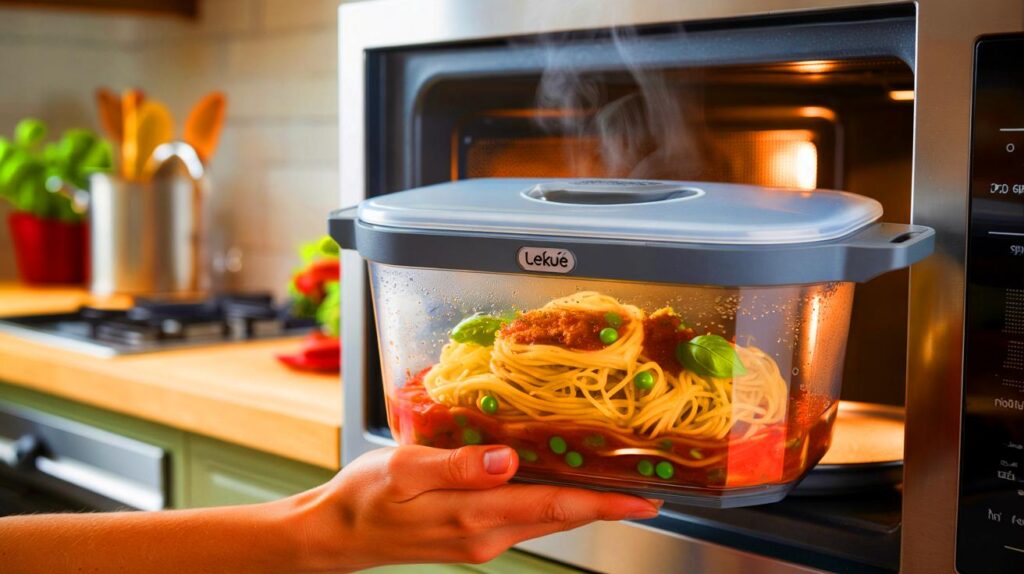
Busy evenings reveal where time slips away. A small, microwave-safe container promises fewer pans, quicker bites and calmer weeknights.
A simple plastic-and-silicone vessel from Spanish maker Lékué is drawing fresh attention as cash‑pressed households chase speed and lower bills. It claims to cook dry pasta in the microwave in about 10 minutes, serve 1–4 people, and leave the sink free of a bulky pot and colander. The pitch is direct: measure, add water, microwave, plate up. So does the promise hold up, and who actually benefits?
What is the Lékué pasta cooker?
Think of it as a compact, vented container designed for the microwave. Inside you get discreet marks that indicate portions for 1–2 and 3–4 diners. The lid controls splashes and foam, and the elongated shape suits spaghetti as well as shorter shapes such as fusilli or farfalle. The idea is to cook the pasta in just enough water to hydrate the starch, then serve straight from the same container.
Lékué built its reputation on flexible silicone tools for quick, weekday cooking. Here the design steers the starchy foam so it does not spill over, which means fewer wipes inside the microwave. The container is rigid enough to carry to the table, and the lid can be used to hold back pasta while you pour off a little water when you want a thicker sauce base.
Up to four portions in roughly 10 minutes, no pan to scrub, and no separate colander to wash.
What you do step by step
Fill to the portion mark with pasta. Cover with water to the line, add salt, and clip on the lid. Microwave on high. Stir once halfway if your microwave tends to leave cold spots. Test for bite near the end, then rest for a minute to even out the heat. Toss with sauce in the same container, or plate and finish with oil and cheese.
Internal graduations help you avoid guesswork: 1–2 portions or 3–4 portions, measured in seconds.
Does it really save time and energy?
On the hob, you heat a large volume of water, wait for a rolling boil, then simmer for 8–12 minutes. The cooker aims to cut that waiting time and shrink the amount of water you need. In practice, total time for most shapes lands between 8 and 12 minutes at full microwave power. The gains grow in smaller kitchens, student flats and caravans where hob space is tight or slow to heat.
Hob versus microwave at a glance
| Method | Total time | Water used | Energy per batch (approx.) | Washing up |
|---|---|---|---|---|
| Hob, 2–3 portions | 5–8 min to boil + 8–12 min simmer | 1.5–2.0 litres | 0.45–0.60 kWh | Pot + colander + spoon |
| Microwave cooker, 2–3 portions | 8–12 min total | 0.6–0.8 litres | 0.15–0.20 kWh | One container + lid |
Figures are estimates. Times and energy draw vary with wattage, pasta shape and starting water temperature. The trend is clear: less water to heat and fewer minutes waiting for a boil usually means less electricity used.
What you can cook beyond plain pasta
The cooker ships with quick recipe ideas ranging from pesto to fettuccine arrabbiata. The shape and lid also suit add‑ins and one‑bowl sauces. Because you keep some of the starchy cooking water in the container, emulsified sauces cling well without extra cream.
- Penne with frozen peas and lemon zest: add peas for the last 3 minutes, finish with zest and olive oil.
- Spaghetti with tomato and chilli: stir in passata, chilli flakes and a ladle of cooking water; microwave 1 minute more.
- Tuna and caper fusilli: fold in tinned tuna, capers and parsley; the residual heat warms everything through.
- Farfalle with roasted veg: toss in pre‑roasted peppers and courgette; finish with feta and black pepper.
- Cheesy macaroni: stir in grated cheddar and a splash of milk; microwave 30–45 seconds to melt.
Safety, materials and maintenance
The container and lid are made from materials certified for food contact. That means they comply with the rules that govern products used with hot foods. The parts are microwave‑safe and designed to handle repeated heating and cooling cycles. Most users will put both pieces in the dishwasher; hand‑washing works as well thanks to the simple geometry.
Open the lid away from your face. Steam can scald, even after the timer beeps.
Do not press the container against the microwave’s walls during use. Leave space for air to circulate. Avoid metal utensils, which can nick the surface. If you add oil, keep it modest, as oil superheats in a microwave and can create hot spots.
Tips for better texture and flavour
- Salt the water generously: about 1 teaspoon per 500 ml gives decent seasoning without bitterness.
- Stir once mid‑cooking. It reduces clumping and evens out heat in microwaves with weaker turntables.
- Rest for one minute before tasting. The core finishes cooking and firms up.
- Adjust time by wattage. At 700 W, add 1–2 minutes; at 1000 W or more, check earlier.
- Break long spaghetti only if needed. Angling strands into the water helps them soften without snapping.
- Keep an eye on fill lines. Overfilling encourages foam and soft textures.
- Use the starchy water. It helps sauces cling and adds body without cream.
Who gains most from this gadget
Students with cramped kitchens, renters with slow electric hobs, shift workers who cook late, parents juggling bedtimes, and anyone in a caravan or holiday let. If you routinely cook for six or more, or you adore very wide fresh pasta sheets, a stockpot still wins on capacity and control.
What about taste and texture?
Texture depends on water‑to‑pasta ratio and microwave power. Using just enough water can intensify flavour, because the starches and salts stay in the pot rather than swirling down the sink. Shapes with deep grooves, like rigatoni, may need a minute more than the box suggests; thin shapes, like angel hair, often finish earlier than you expect.
Pricing and availability in the uk
Retailers typically sell the Lékué pasta cooker between £18 and £30 depending on colour and capacity. Look for models sized for up to four portions, with a snug lid and clear interior marks. Stock can fluctuate seasonally as students kit out flats or families plan winter batch‑cooks.
Why the foam does not boil over
Pasta releases surface starch as it hydrates. In a big pot, that starch forms bubbles that expand and race over the rim. The cooker’s venting and geometry manage bubble size and let steam escape at a steady rate. Less water also means fewer bubbles to wrangle. If you see foam rising, pause the microwave for 10–15 seconds, then resume at a slightly lower power level.
Lower water volume, guided venting and steady power keep starchy foam from painting the inside of your microwave.
Similar microwave tricks that save time and cash
The same approach applies to rice and grains. A dedicated microwave rice cooker uses measured water and a vented lid, often yielding fluffy rice in 12–15 minutes while using about 0.2 kWh. Steamer baskets for vegetables sit above a shallow water layer and soften broccoli in under 5 minutes. For potatoes, a vented container accelerates jacket spuds; pierce the skin, cook, then crisp briefly in a hot pan if you like a crackling finish.
If you cook a few times a day, these small shifts stack up. Cutting 0.3 kWh once a day at current tariffs adds up to several pounds a month, while the reduced washing up nudges you to actually cook when you arrive home tired. For many households, that nudge is what matters most.



Tried it last night with fusilli: 9 mins at 1000W, quick stir halfway, genuinely al dente and zero pot to scrub. This is definetly nudging me to cook on weeknights. Thanks for the clear steps.