
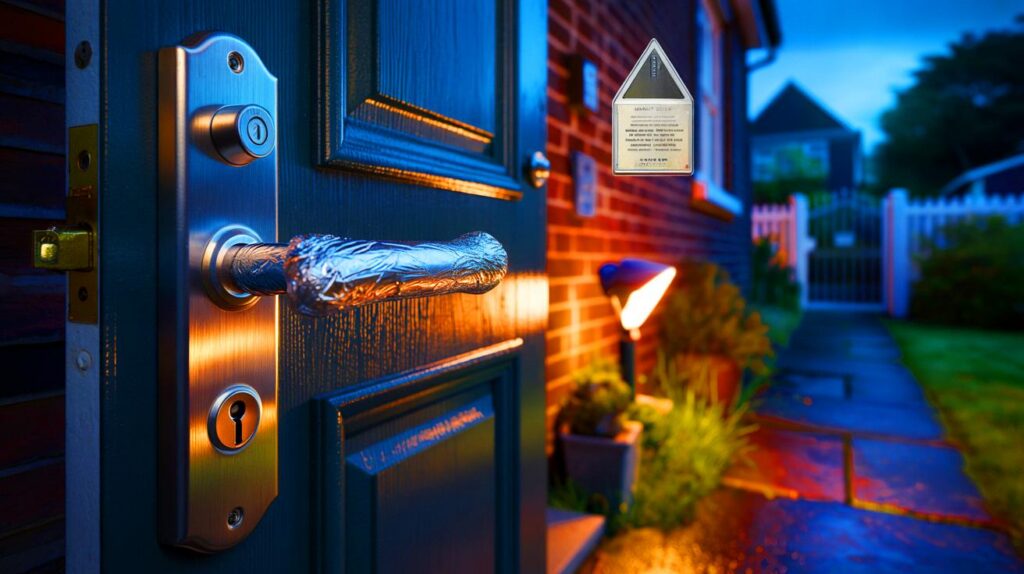
A strip of foil on a handle looks harmless. It costs pennies, spreads fast online, and whispers promise amid rising fears.
The shiny trend has jumped from DIY forums to TikTok feeds, promising a cheap safety net. Supporters say it scares intruders, alerts sleepers, and preserves evidence. Police briefings and locksmiths tell a different story. Here is what the viral claim misses, what actually works, and how to protect your home without wasting time or money.
What the viral hack claims
Videos show people wrapping aluminium foil around door handles before bed or when leaving for the day. The pitch is simple: the foil will crinkle if a handle moves, the noise will frighten a would‑be intruder, and the scrunched metal will reveal tampering when you return.
- Noise as deterrent: a sudden metallic rasp might make a chancer back off.
- Alert for occupants: the crinkle could wake someone in the next room.
- Trace of tampering: crushed foil might prove a handle was touched.
Foil on a handle is not a security device. It is a craft material. Treat it as decoration, not defence.
Why experts say it falls short
Reality is messier than a 20‑second clip. Burglars often check handles in seconds, and many operate when no one is home. The sound of foil is soft and brief through a closed door, especially with double glazing, carpets and nighttime background noise. If no one hears it, it achieves nothing.
Police in Germany warned in 2024 that this tactic is ineffective and risks a false sense of safety. UK officers and locksmiths make the same point: visible strength and verified locks deter far more than a crinkly wrap.
The real hazard is misplaced confidence. People who feel “protected” by a gimmick tend to skip the basics that actually cut risk.
Sound, sleep and real life
Even a healthy sleeper can miss short, high‑frequency sounds. Doors, frames and insulation dampen the crinkle. Neighbours will not hear it. Pets may trigger it. Wind, letters or a loose latch may crush it without a visitor. Reliable alerts need purposeful sensors, not kitchen foil.
Evidence, fingerprints and proof
Foil is malleable. It deforms with any contact, including yours. It smudges easily and picks up prints unreliably. A crushed strip does not prove intent, identity or time. Insurance assessments rarely accept such “evidence”. Solid doors, standards‑rated locks and proper reporting matter far more during claims.
Where the idea came from
The foil‑on‑handle tip began as a painter’s shortcut. Wrapping handles keeps them clean during decorating. Internet lore turned a decorating fix into a crime‑prevention “hack”. The leap made for catchy video, not for safer homes.
What actually reduces risk
Visible security, good habits and verified hardware cut opportunities. That is what burglars weigh: time, noise and chance of being seen.
| Measure | What it does | Typical cost | Notes |
| Foil on handle | Makes a small sound if touched | Pennies | No proven deterrence; may create complacency |
| Hang a fragile item on handle | Can make a louder crash if knocked | Low | Only useful if someone is present to respond |
| BS3621 or TS007 3‑star locks | Improves resistance to snapping and picking | £80–£200 plus fitting | Often required by insurers for external doors |
| Multipoint locking with reinforced strike | Spreads force, resists kicking and levering | £150–£350 plus fitting | Works best with a solid door and strong frame |
| Monitored or smart alarm | Raises an instant alert and siren | £200–£600; £15–£30/month optional | Sticker and bell box are powerful deterrents |
| Door viewer and security chain | Improves verification before opening | £10–£40 | Simple fit; reduces distraction burglary risk |
| Lighting and cameras | Boosts visibility, aids identification | £20–£200 | Position to cover approach routes and access points |
| Neighbourhood watch and routines | Adds eyes on the street | Free | Parked cars, bins and lights can simulate occupancy |
Locks that meet British Standards, a loud alarm and a lived‑in look deter most opportunists long before a handle moves.
What the numbers say
Police‑recorded burglary dipped during lockdowns, then bounced as travel returned. Most domestic break‑ins target easy wins: unlocked doors and windows, poor lighting, or absent occupants. Opportunists look for speed. Strong doors, simple habits and active neighbours lengthen the job and raise the risk. That is how you shift the odds.
- Keep doors locked, even when at home. Many entries exploit a latch, not brute force.
- Shut and lock downstairs windows at night. Use window restrictors for ventilation.
- Do not leave keys near letterboxes. Fit a draught excluder or a cage to block “fishing”.
- Make the front look busy when away. Timers, a parked car and a moved bin help.
- Record serial numbers of valuables. Marking aids recovery and deters resale.
If you still want a low‑cost cue
Prefer a small prompt to a roll of foil. A handle jingle or a wedge alarm produces a clear, repeatable sound. Basic contact sensors linked to a chime work well on rented doors and do not need drilling. Place them where you will hear them, and make sure you will act if they trigger.
For flats and HMOs, think about common areas. Do not block fire exits, props or closers. Tampering with shared handles can breach tenancy terms or building rules. Ask your landlord before fitting anything that changes a door’s operation.
Insurance, tenancy and safety rules
Insurers expect “reasonable care” and may specify lock standards on external doors. Check your schedule for BS3621 or TS007 requirements. If you upgrade, ask the fitter for written confirmation and keep the invoice. A foil hack adds no value at claim time, but correct locks and photos of secured points do.
Report suspicious activity to the police on non‑emergency lines, and dial 999 if a crime is in progress. Share verified alerts with neighbours rather than viral tricks. Good information prevents copycat myths and keeps attention on measures that actually cut risk.



Any actual data that foil deters burgelars?