
From phones to fasteners, biometrics is creeping into your wardrobe, stirring laughs, arguments and awkward questions about love, trust and privacy.
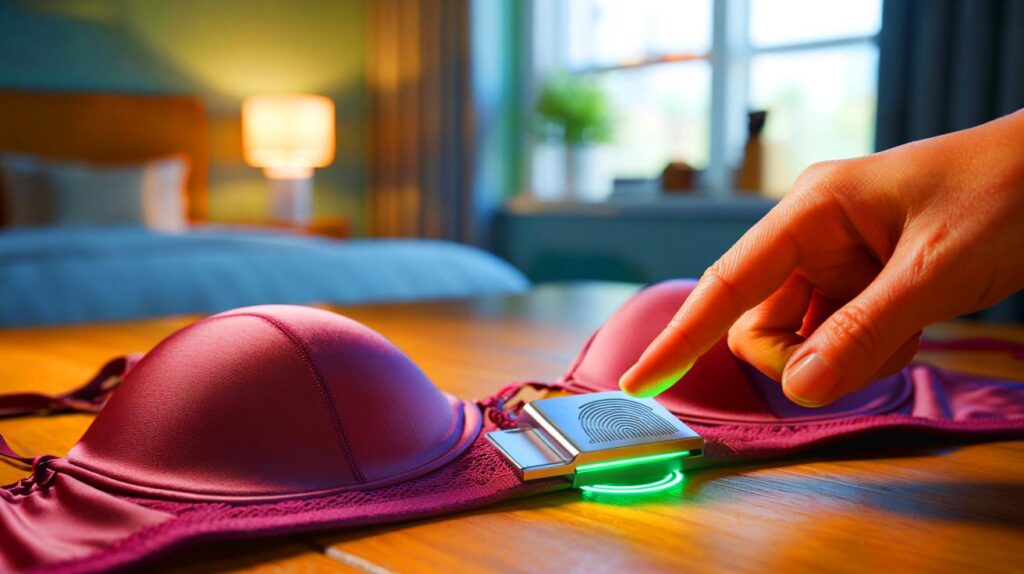
A Japanese student has sparked a storm with a prototype that blends intimacy, tech and humour. It looks like a normal bra, yet it locks like a phone. The unlock key is not a hook or a hand. It is one registered fingerprint.
Who made it and why
The maker is Yūki Aizawa, a student inventor better known online as ZAWAWORKS. In July 2024, he posted a short clip on X (formerly Twitter) showing a bra clasp with a fingertip-sized scanner. The promise was simple and provocative: only a chosen partner could open it. The stated purpose was to “prevent cheating,” a tongue‑in‑cheek line that fuelled both laughter and criticism.
Only the saved fingerprint releases the clasp; everyone else gets a firm no.
Aizawa’s feed often features playful devices that test social norms. This fingerprint bra sits in that tradition. It raises questions as much as it raises eyebrows. It prods at relationships, consent and the limits of tech‑led control in daily life.
How the clasp appears to work
The prototype shows a compact module in the place of a standard fastening. A tiny sensor reads a fingerprint. A microcontroller compares it with the stored template. If the match passes, a motor or latch releases the catch. If not, the clasp holds.
What the video implies, not what it guarantees
The clip does not disclose storage methods, battery size or waterproofing. It also does not reveal whether multiple prints can be enrolled, or whether there is an emergency override. Those details matter for safety, comfort and reliability.
| Feature | Fingerprint-locked prototype | Conventional bra |
|---|---|---|
| Unlock method | Registered fingerprint | Hooks, clips or front clasp |
| Access control | Single person by default | Any wearer or helper |
| Power | Likely battery powered | None required |
| Failure mode | Lock stays engaged if sensor fails | Manual release remains possible |
| Privacy concerns | Biometric data handling | No biometric data |
A viral joke with serious undertones
The post raced around social feeds in 2024 because it hits a nerve. Many users laughed at the absurdity. Others saw a thought experiment about loyalty. A fair share asked the practical questions: what if the registered partner is not around; what if the power dies; what if the wearer changes their mind mid‑moment.
It is not a retail product; it is a conversation starter about trust, consent and the role of tech in intimacy.
According to the inventor’s own track record, this sits in a category of playful, non‑commercial builds. That framing helps, yet the idea points to a trend: biometric tech moving from devices to garments.
Why fashion cares about biometrics
Biometric locks have lived on phones and doors for a decade. Designers now tinker with them in clothing to add convenience, personalisation and deterrence. Sports brands test jackets that unlock pockets for the owner. Bag makers explore clasps that pair with a fingerprint or a wearable. Even costumes for festivals use hidden tags to control light patterns for one person only.
Plausible uses that people might actually want
- Gym bags or rucksacks that unlock for the owner’s finger on the zip puller.
- Travel pouches that open only when the wearer touches a concealed tab.
- Medical garments that restrict access to ports or patches to caretakers.
- Rental kit with temporary enrolment for the paying user, then automatic reset.
Benefits and risks for wearers
Any biometric garment must serve the wearer first. It should respect bodily autonomy, comfort and safety. The prototype highlights both promises and pitfalls.
What might work well
- Clear consent signal: the wearer can choose if and when to grant access.
- Deterrence value: casual interference becomes harder in crowded settings.
- Novelty factor: playful tech can add fun to a private gift or a stunt.
What could go wrong
- False rejects: wet skin, lotion or cold fingers can trip sensors.
- Spoofing: lifted prints or silicone casts can fool cheap scanners.
- Emergency access: a jammed clasp needs a safe, quick manual release.
- Power and washing: batteries dislike heat and moisture; laundering must be safe.
- Data handling: even a template, not a raw image, needs secure storage and deletion.
What a viable product would need
No sign points to a commercial launch here, but the thought exercise still helps. A real‑world, body‑worn lock would need a physical override, such as a hidden pull tab that breaks a sacrificial pin. It would need multi‑user enrolment with on‑garment reset by the wearer. It would benefit from a time‑limited unlock, so it does not re‑lock mid‑wear.
Privacy by design would matter. Templates should stay on the device. Pairing should not require an app account. The electronics would need water resistance, soft mounting and safe charging. Standards from wearables could guide the build. Without these, any garment risks being a gimmick at best and a hazard at worst.
What this controversy really tells you
The reaction says less about lingerie and more about the social life of sensors. People trust a fingertip to open a bank app, yet bristle when the same sensor polices a clasp. Context shifts meaning. In private settings, consent must be reversible, immediate and clear. That is hard to encode in hardware. It is easy to perform with a word.
Think of biometric spoofing as a useful concept here. Many low‑cost readers check surface patterns only. A gel print can pass. Higher‑grade sensors use blood‑flow detection or multi‑spectral imaging, which costs space and money. Garments have little room for those parts. That trade‑off will define whether biometric fashion stays playful or becomes practical.
A quick scenario to test the idea
You wear a fingerprint‑locked gym top on a rainy run. Your hands are cold and wet. The sensor rejects you three times. A friend tries to help; the lock ignores them. Do you have a backup release, or do you cut the fabric? This is the kind of everyday test any future design must pass before anyone should buy it.
For now, Aizawa’s bra plays the role of cultural mirror. It teases tech’s march into intimacy while poking at jealousy and trust. If you want a safer twist, consider two‑factor garments for bags: a simple mechanical lock plus a tiny Bluetooth tag that beeps if it moves away from you. You gain deterrence without handing your fingerprint to a clasp you cannot quickly override.



So if the battery dies mid‑moment, is the official backup plan “scissors”? Asking for a frend 😅
I get the provocation, but framing this as “preventing cheating” worries me because it normalizes control. A viable version would need a wearer‑only manual override, multi‑print enrolment, on‑device template storage, and a safe dead‑battery mode. Plus: laundery guidance, comfort, and skin‑safe materials. Consent has to be reversible in seconds, not gated by a finicky sensor or app. Otherwise it’s a gimmick at best, a hazard at worst.