
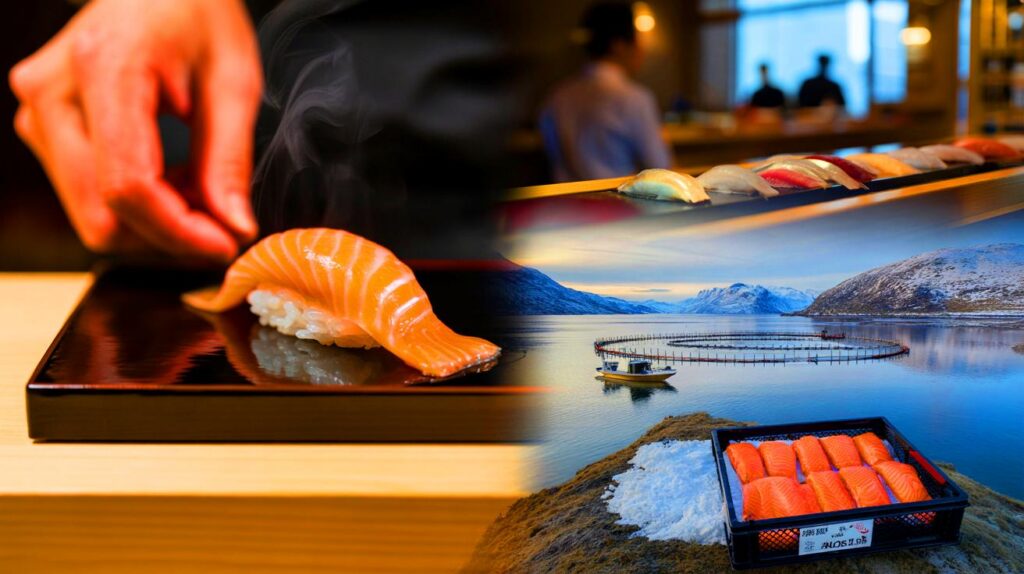
Millions reach for salmon nigiri at lunch, assuming tradition. The story behind that choice runs colder and farther north.
What sits on your rice today took shape in the 1980s, not in Edo-era Tokyo. It began with a marketing gamble from Norway, a supply pinch in Japan, and a decade-long push that reshaped global taste.
What sushi looked like before salmon
Until the late twentieth century, Japanese sushi chefs rarely served salmon raw. Counters favoured tuna, mackerel and sea bream, fish with known handling rules and predictable textures. Salmon carried a reputation for parasites, delicate flesh and excess oil, a trio of red flags for traditional Edo-style technique.
The practice behind sushi reaches much deeper into history, and farther west. In early China, as far back as the fourth century BCE, salted fish packed in fermenting rice kept protein edible for months. The fish was eaten; the rice was discarded. Centuries later, Tokyo street vendors turned that preservation logic into fast, vinegared rice with fresh toppings. Salmon still waited in the wings.
Before the 1980s, salmon had no place at the sushi counter. Tuna ruled; salmon simply didn’t qualify.
A supply crunch in the 1980s
Japan’s appetite for tuna surged through the economic boom. Prices rose, pressure on stocks intensified, and importers looked for dependable alternatives that fit the sushi format. Chefs needed a fish that sliced cleanly, presented brightly and arrived reliably fresh, day after day.
The Norwegian bet that rewrote the menu
In 1985, a Norwegian delegation led by Thor Listau, a former fisheries minister, arrived in Tokyo with a pitch: replace scarce, costly tuna with farmed Atlantic salmon from cold-water pens. The plan, nicknamed “Project Japan”, bundled supply guarantees, chef outreach and a promise of parasite-safe, consistently fatty fillets.
1985: Norway pitched farmed salmon—clean, cold and consistent—to Tokyo’s chefs as a new sushi standard.
The first tastings fell flat. Raw salmon felt unfamiliar, and diners turned away from its soft texture. Rather than retreat, Norway doubled down. Tastings moved to embassies. Trainers visited kitchens. Marketing talked technique and safety, not just price. The goal was trust.
From cold fjords to kaiten bars
The grind lasted years. Adoption began with curious chefs experimenting on limited menus, then spreading through conveyor-belt chains and upscale counters. As volumes grew, logistics improved and costs stabilised.
Exports told the story: from barely 2 tonnes to more than 45,000 tonnes shipped to Japan within two decades.
From curiosity to global default
By the 1990s, salmon nigiri and sashimi had become fixtures from Tokyo to Paris, New York and Oslo. The colour stood out in glass cases. The flavour proved gentle, even for first-timers. Pricing stayed predictable, a blessing for chains and supermarkets.
- Visual appeal: bright orange marbling signals freshness and draws the eye.
- Mild taste: less metallic than some pelagic fish, easy for children and cautious eaters.
- Supply reliability: year-round farm output supports catering and retail schedules.
- Consistency: uniform fillet sizes reduce waste and speed training in busy kitchens.
- Menu flexibility: works as nigiri, sashimi, rolls, chirashi and even pressed sushi.
Safety and sourcing: what you should know
Historic concerns about parasites were tied to wild salmon. Modern sushi programmes manage risk through two routes: farmed Atlantic salmon raised with controlled feed and monitoring, and deep-freezing protocols mandated by food-safety authorities. Many jurisdictions require fish served raw to be frozen to -20°C for at least 24 hours, or to -35°C for 15 hours, to neutralise parasites. Reputable chefs log temperatures and trace batches.
How your favourite bar keeps it safe
Suppliers deliver sashimi-grade salmon trimmed for raw service. Cold chain audits track every handoff. Kitchens store salmon on ice or in blast chillers, separate boards for raw and cooked, and short shelf lives reduce risk. Staff receive knife and hygiene training tailored to oily fish.
“Sashimi-grade” is not a flavour claim; it signals handling that permits safe raw service under strict temperature control.
What this swap changed for oceans and chefs
Shifting some demand from tuna towards salmon eased pressure on certain tuna stocks, especially for mass-market outlets. That said, salmon farming raises its own questions: feed conversion ratios, sea lice management, escapes and coastal impacts. Certification schemes, improved feed formulations and closed-containment experiments aim to shrink these footprints. Consumers increasingly weigh both provenance and welfare alongside taste.
For chefs, salmon brought new textures and techniques. It tolerates light curing, gentle searing and smoke, widening the creative set beyond straight slicing. Uniform fillets help trainees learn fast, while premium grades still reward high-skill cutting and presentation.
| Year | Turning point | Impact on your plate |
|---|---|---|
| Pre-1980s | Salmon avoided for raw service | Tuna, mackerel and bream dominate sushi counters |
| 1985 | Norway’s “Project Japan” launches | Parasite-safe farmed salmon pitched to Japanese chefs |
| 1990s | Global adoption gathers pace | Salmon nigiri becomes a default order worldwide |
| 2000s–today | Scale and standardisation | Affordable sets in supermarkets, chains and delivery apps |
How to order smarter, wherever you are
Ask which species is served (Atlantic vs Pacific), whether it is farmed or wild, and how it is handled. Look for transparency on freezing and origin. If you prefer firmer texture, request the belly or a lightly cured cut. If sustainability drives your choice, consult in-house sourcing notes and consider mixing orders with mackerel or bream to spread demand.
Price, value and taste: a quick guide
- Texture check: shinier, slightly translucent salmon indicates freshness; dull surfaces suggest oxidation.
- Temperature: salmon should arrive cool, never icy; warmth dulls flavour and raises risk.
- Balance: pair one rich salmon item with a lean fish to keep a tasting set lively.
- Home prep: if using raw salmon at home, buy from a supplier who labels it safe for raw use and respect freezing guidance.
That familiar orange nigiri is a late-arriving guest at the Japanese table—invited by Norway, adopted by the world.
Curious about technique? Try a simple comparison at your local bar: order one salmon nigiri and one mackerel nigiri. Note how vinegar in the rice meets fat in salmon versus acidity in cured mackerel. You will taste why chefs balance menus with both rich and lean fish.
If you want to gauge your own impact, swap one salmon roll per week for a seasonal, locally landed species. You will keep variety on your plate, support regional fleets and still enjoy the clean, bright flavours that drew you to sushi in the first place.


So it wasn’t “tradition” but a marketing blitz from Norway? Kinda kills the mystique tbh.
Is the 45,000-tonne surge mostly farmed Atlantic, and are those deep-freeze protocols actually enforced everywhere?