
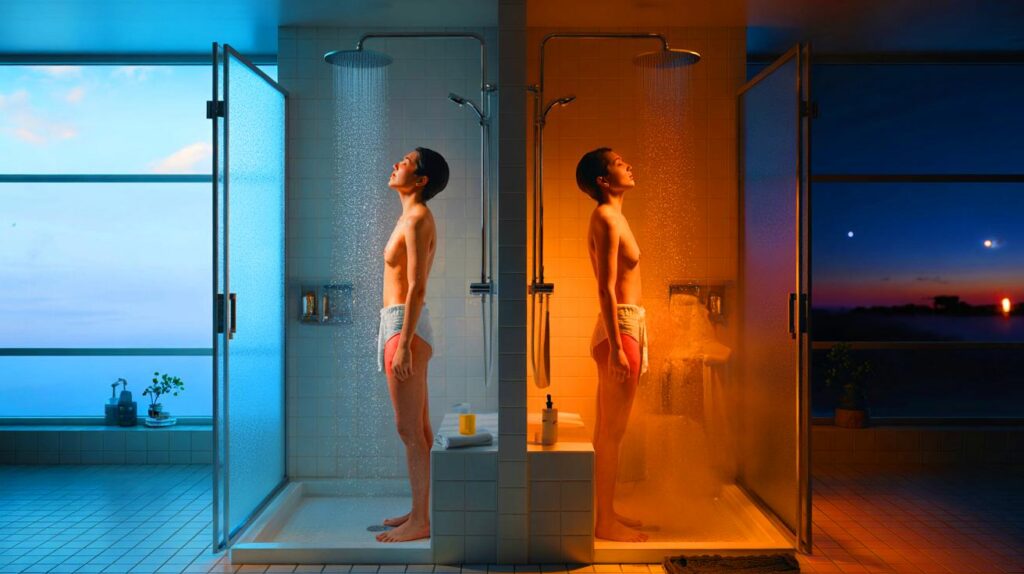
You step under the water without thinking. The hour you choose quietly reshapes mood, skin and sleep more than habit suggests.
The daily shower feels simple, yet timing nudges your body clock, skin barrier and brain in different directions. Research on thermoregulation, pollution and circadian rhythms now offers practical rules. The right slot improves alertness, eases stress and supports recovery overnight.
What the body clock says
Your temperature rises by day and falls at night. That rhythm steers hormones, sleep pressure and mental sharpness. Water can shift these curves in your favour.
Morning showers prime the brain
A brief, warm-to-cool rinse increases blood flow to skin and muscles. The contrast sharpens alertness and speeds the sleep-to-wake transition. Many people report better focus within minutes. Cooler finishes can raise noradrenaline and breathing rate, which helps attention during the first hours of work.
Night-time warmth sets up sleep
Warm water dilates blood vessels at the skin. That draws heat from your core after you step out. Core cooling signals the brain that night has started. Relaxed muscles and calmer breathing reduce pre-bed arousal. People tend to fall asleep faster when they bathe before lights-out, provided the timing is right.
For smoother sleep, bathe warm 60–90 minutes before bed. Heat the skin, then let the core cool as you dry and wind down.
Your skin’s daily battleground
Skin collects sweat, sebum, allergens and urban particles as you commute, train and touch surfaces. Night is repair time, so evening cleansing changes what your skin must fight.
Evening wash removes pollution and allergens
Particulate matter, pollen and residue from sunscreen cling to hairlines, brows and pores. Leaving them on for eight more hours increases irritation and breakouts. An evening rinse lowers exposure in bed, which helps hay fever and asthma symptoms as well.
Night is repair time—help it along
While you sleep, the skin barrier renews lipids and clears cellular waste. A gentle cleanse supports that work. Actives such as retinoids or niacinamide penetrate more evenly on clean, slightly damp skin. Warmer, drier indoor air in autumn and winter demands moisturiser after washing to lock in water.
If pollen, pollution or work grime build up by day, the evening shower protects both skin and lungs while you sleep.
Temperature, timing and length
Small tweaks to a daily ritual produce outsized benefits. Use these guardrails to avoid common traps.
- Target water at 37–39°C. Lukewarm protects natural oils and still relaxes muscles.
- Keep it to 8–10 minutes. Longer showers strip lipids and worsen dryness.
- Moisturise within three minutes of pat-drying. Trapped moisture sustains the barrier.
- Set morning light bright and cool; dim evening light. Lighting reinforces water’s timing signal.
- If you like a cool finish, limit it to the last 15–30 seconds and avoid it directly before bed.
Aim for 37–39°C water, 8–10 minutes, then moisturise within three minutes. Your skin barrier will thank you.
When morning wins, and when evening wins
Different days call for different tools. Use the list below to match the hour to your needs.
- Choose morning if you wake groggy, face an early meeting, or need a clean slate before sunscreen and a mask.
- Choose evening if you commute in traffic, train after work, have allergies, or crave a calmer descent into sleep.
- Split the difference if you sweat overnight: quick rinse in the morning, full cleanse before bed.
- Double showers demand skincare: fragrance-free wash, short duration and diligent moisturiser to curb dryness.
A quick head-to-head
| Goal | Morning shower | Evening shower |
|---|---|---|
| Alertness and focus | Improves within minutes, especially with a brief cool finish | Mild benefit if lukewarm; hot water may make you drowsy |
| Sleep onset | Neutral unless hot, which may delay cooling | Better when taken 60–90 minutes before bed |
| Skin barrier | Fine with short, lukewarm rinse and moisturiser | Favourable: removes pollutants before overnight repair |
| Allergens and pollution | Removes overnight sweat and dust from bedding | Removes daytime exposure before you inhale it in bed |
| Post-exercise hygiene | Useful after early training | Preferred after late sessions to prevent folliculitis |
What science suggests as a baseline
For most people, an evening shower edges ahead in autumn and winter. Warmer water relaxes tight muscles. The post-shower cooldown aligns with the body clock’s downward temperature slope. Clean skin absorbs night treatments better. Morning showers still have a clear role. They jump-start alertness, clear overnight sweat and prepare you for sunscreen and public transport.
Chronotype changes the best hour
Larks often gain more from a short morning rinse with a cool finish. Owls often settle faster with a warm evening wash followed by dim light and quiet time. If you are a shift worker, bathe before the main sleep episode in your schedule, even if that falls during the day, and keep the room dark and cool.
Match your water to your skin
Dry or eczema-prone skin prefers fewer, shorter showers, fragrance-free cleansers and richer creams. Oilier or acne-prone skin may benefit from an evening cleanse and a lighter moisturiser. Hard water increases dryness, so consider a gentle syndet or a softening cartridge if your area’s limescale is high.
Smart habits that compound benefits
Bundle bathing with cues your brain recognises. In the evening, pair the shower with warm socks, low light, and a no-screens rule for 30 minutes. In the morning, add bright light, a glass of water and a short walk to amplify wakefulness. These anchors teach your body what comes next.
Mind the bills and the planet. An eight-minute shower uses roughly 50–70 litres, depending on your showerhead. A low-flow head and a two-minute trim save 15–20 litres without sacrificing comfort. Shorter, warmer—not hotter—showers lower energy use and protect your skin at the same time.
Specific issues need tweaks. Steam helps nasal congestion before bed, but keep water lukewarm to avoid rebound dryness. If dandruff or scalp oil bothers you, schedule shampooing in the evening after daily exposure, and dry hair fully to prevent itch. After a late workout, shower promptly to remove sweat and bacteria, then cool down gently to avoid spiking heart rate at bedtime.
Safety matters too. Very hot water increases dizziness risk and strips oils, which undermines both comfort and sleep quality. Avoid scalding temperatures, supervise children, and place a non-slip mat in case your wind-down runs longer than planned. If your skin stings or flushes after washing, cut duration, drop the heat and apply a ceramide-rich moisturiser while skin is still damp.



Great breakdown. The 60–90 minute pre-bed warm shower tip finally explains why my “hot right before lights out” habit kept me wired. Your 37–39°C and 8–10 min reccomendations are practical; moisturising within three minutes was the missing step for me.
Is there solid randomized evidence for the 15–30s cool finish boosting noradrenaline/attention, or mostly mechanistic inference plus self-reports? Links to the key trials would be awesome.