
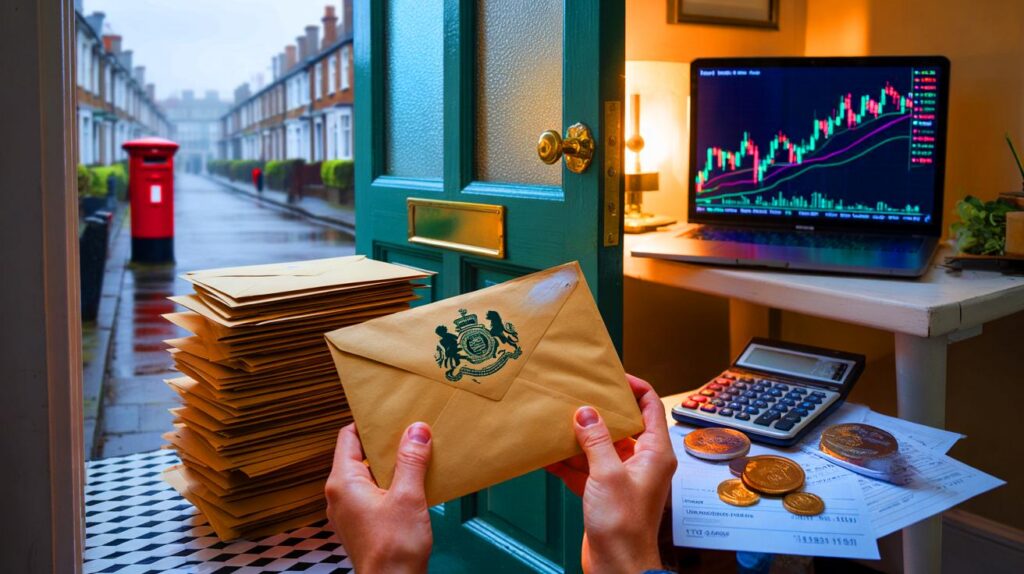
Across the UK, crypto owners are opening brown envelopes again, as tax rules tighten and past gains meet present scrutiny.
HM Revenue & Customs has sharply increased its contact with people suspected of underpaying tax on digital assets. The surge, driven by new data and a political appetite for compliance, places crypto traders and occasional dabblers squarely in the spotlight.
Why HMRC is stepping up
Officials are intensifying efforts to close the gap between tax owed and tax collected. Digital assets are an obvious target. Transactions move quickly, records are messy, and many investors still assume that swapping one token for another is tax neutral. It is not. Each disposal can trigger a capital gain or a loss, even when no pounds change hands.
Accountancy firms say the revenue authority has expanded its use of so-called nudge letters, intended to prompt voluntary disclosure before a full investigation. The latest batch targets people believed to have undeclared gains or income from crypto trading, staking, lending or rewards.
HMRC sent almost 65,000 letters in the 2024–25 tax year to individuals linked to potential crypto tax shortfalls.
The scale of the letters
Freedom of Information data shows a dramatic rise in correspondence volumes in the last two years, following a quiet period during 2022–23. The pattern suggests a maturing compliance strategy and growing access to third‑party data.
| Tax year | Number of letters |
|---|---|
| 2021–22 | 8,329 |
| 2022–23 | 0 |
| 2023–24 | 27,713 |
| 2024–25 | 64,982 |
About 7 million UK adults now hold crypto, with total holdings estimated at £12.9bn, up from £7.8bn in 2022.
What counts as a taxable disposal
Crypto in the UK is usually taxed under the capital gains rules, not income tax, unless you are trading on a scale that amounts to a business. A taxable disposal arises when you sell tokens for sterling, swap one token for another, gift tokens (other than to a spouse or civil partner), or use tokens to pay for goods and services.
Common triggers people miss
- Swapping token A for token B on an exchange.
- Spending crypto on a card or at a retailer.
- Converting rewards or staking yields into other tokens.
- Disposing of NFTs acquired at low cost during hype cycles.
Losses matter too. If you recorded heavy losses in a market slump, these can be claimed and set against current or future gains. That requires records good enough to reconstruct dates, costs, proceeds and fees.
What to do if a letter lands on your doormat
A nudge letter is not a tax assessment. It is a prompt to check your position and correct it if necessary. Responding calmly and methodically is the best route to closing the issue.
Actions to take within 30 days
- Gather exchange histories, wallet addresses, transaction exports and fee records for the relevant years.
- Recalculate gains and losses, including crypto‑to‑crypto swaps and spending events.
- Check whether your total gains exceed the annual exempt amount (£3,000 for 2024–25).
- Use HMRC’s digital disclosure service if you need to correct past returns or report undeclared gains.
- If you are unsure, seek advice from a tax professional experienced in digital assets.
How the tax works, in brief
Capital gains tax is charged on net gains after deducting allowable losses, acquisition costs and transaction fees. For most crypto investors, rates are 10% within the basic rate band and 20% where gains fall into the higher and additional rate bands. The allowance has shrunk, so smaller disposals now bite faster than before. Keeping meticulous records reduces the bill and the risk of penalties.
Why the enforcement wave now
Advisers say the latest step-up reflects richer data flows. HMRC can request customer information from UK‑based exchanges. It also benefits from international cooperation, with data-sharing frameworks expanding across jurisdictions. As datasets improve, matching names to wallets and exchange accounts gets easier, and automated letters follow.
Professionals warn that some investors dispute the principle of taxing crypto gains. That stance carries risk when the authority already holds matching data. Voluntary disclosure typically results in lower penalties than waiting for an enquiry.
Record‑keeping and loss relief
Good records are the single biggest difference between a defensible calculation and an opaque estimate. Keep CSV exports, API logs and screenshots of transactions, plus notes where transfers move between your own wallets. If tokens become worthless, a negligible value claim may crystalise a loss for tax purposes. That can soften future bills in a recovery.
What this means for 7 million UK crypto holders
The scale of adoption suggests the compliance push will touch a wide audience, from long‑term Bitcoin holders to NFT collectors. People who dipped in during 2020–21 and swapped repeatedly may have a string of disposals to reconstruct. Others who bought and held may have nothing to declare until they sell. Either way, understanding when a gain arises prevents surprises at Self Assessment time.
Three quick scenarios
- You bought a token for £2,000 and swapped it for another worth £7,000. The £5,000 gain is taxable that year.
- You made £9,000 of gains and £4,000 of losses across several trades. Your net gain is £5,000 against the £3,000 allowance; the rest is taxable.
- You lost access to tokens on a failed exchange. A claim may be possible, but you will need evidence of acquisition and loss.
Risks, penalties and deadlines
If HMRC concludes that tax is underpaid, it can charge interest and penalties. These vary with behaviour: lower where you took reasonable care and higher where conduct is judged careless or deliberate. Making an unprompted disclosure usually reduces the penalty range. For most individuals, the filing deadline is 31 January after the end of the tax year, with tax due the same day.
What happens next
Expect more data‑led nudges as the authority refines its approach. That will include closer scrutiny of staking rewards, DeFi activity and cross‑exchange transfers intended to obscure origins. As reporting frameworks develop internationally, the room for mismatches between reality and returns will narrow.
If you are unsure whether a transfer was a disposal, run a simple simulation with your records: apply actual dates, sterling values at the time, all fees, and your pool of existing holdings. Compare the result against your allowance and rate bands. That exercise, repeated consistently, gives you a defensible number and turns a worrying letter into a manageable task.



So crypto-to-crypto swaps are disposals—does HMRC expect historic GBP pricing for every trade, and how do you handle tokens that vanished on failed exchanges with no clear exit value?
Feels like a cash-grab tbh. The allowance shrank to £3k and now 65,000 nudge letters? Some of us took heavy looses and kept messy records, not fraud.