
You scrub, rinse, repeat. Yet the household staple under your sink may quietly raise infection risks with every wipe across worktops.
Health agencies and lab tests now shine a harsh light on sponges. The evidence points to practical routines that cut risk fast, with heat and drying at the heart of the fix.
The hidden load in your sponge
A used kitchen sponge traps water, food scraps and grease in its pores. That mix feeds microbes. Warmth and constant moisture help them multiply. Researchers have reported staggering counts inside used sponges, including species linked to foodborne illness.
Up to 50 billion bacteria per cubic centimetre have been measured in some used sponges in controlled tests.
Salmonella and E. coli can find shelter in this damp matrix. A sponge that never properly dries becomes a long‑term host. The longer the moisture lingers, the higher the chance that microbes rebound between cleanings. Storage matters as much as washing.
A sponge that stays damp for 10 hours or more becomes an incubator, not a cleaning tool.
ANSES, the French food safety agency, warns that permanently or intermittently wet areas in kitchens drive microbial growth. Sponges and dishcloths top that list. That is why reliable heat and thorough drying make the biggest difference.
Microwave method: what works, what does not
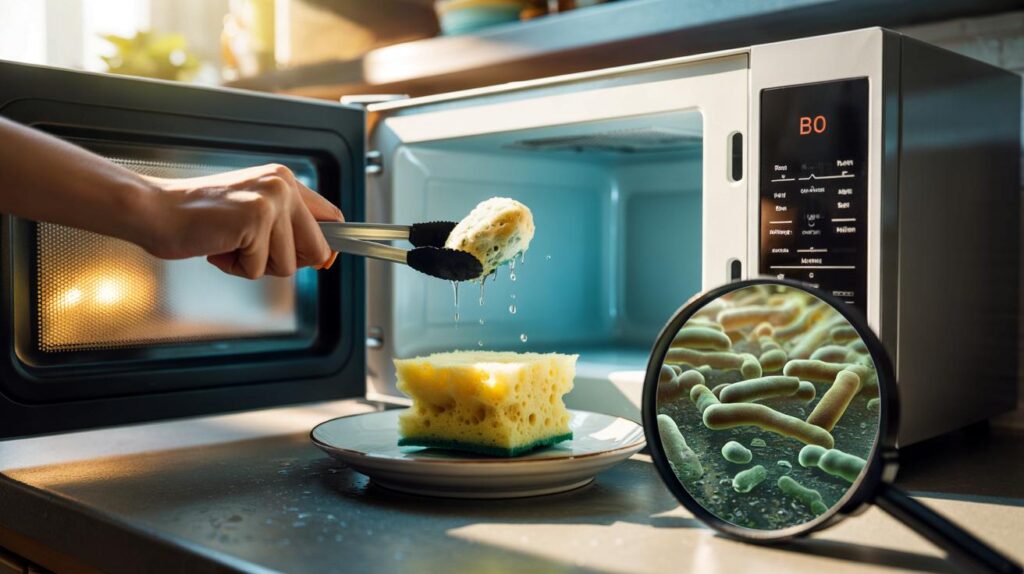
Microwaving can cut the microbial load fast when done correctly. ANSES supports the method for a well‑soaked, non‑metallic sponge. The effect comes from heat, not the waves themselves. You need water in the sponge to absorb energy and produce steam.
Protocol: soak thoroughly, heat for 2 minutes at full power, and use only non‑metallic sponges.
Tests shared by several outlets indicate an average drop of around 60% in microbial counts after a short, high‑power cycle. That reduction helps, but it does not sterilise. A small, hardy fraction may persist. Drying after heating reduces regrowth.
Step‑by‑step for busy households
- Soak the sponge under the tap until water drips easily.
- Place it on a microwave‑safe plate to catch runoff.
- Heat for 2 minutes at full power. Let it stand for 1 minute before opening the door.
- Remove with tongs. Wring carefully. Stand it upright to dry in free air.
- Stop the cycle if you see smoke or smell scorching.
Never heat a dry sponge. Dry fibres can char and ignite. Avoid scouring pads with metallic threads. Keep hands and faces clear of steam when you open the door. Children should not handle hot sponges. If the sponge looks warped or crumbly after heating, retire it.
Expect roughly a 60% drop in microbes. Cleaner, not sterile. Follow with rapid drying to slow regrowth.
Alternatives when you skip the microwave
Boiling water offers a simple route. Submerge the sponge in a rolling boil for a few minutes. Use tongs to lift it out, then cool and dry upright. The heat knocks down many organisms. Repeated boiling can shorten a sponge’s life.
A bleach bath works very well when done safely. Pre‑wash the sponge so soil does not neutralise the bleach. Then immerse it for 5 minutes in a solution of half to one glass of bleach mixed into 5 litres of water. Rinse and dry. Do not mix bleach with acids. Do not heat bleach. Keep the room ventilated.
Some households use a hot saline and white vinegar soak. Bring the mixture to a simmer, kill the heat, then soak for a few minutes. This approach avoids bleach and the microwave. Efficacy varies, so pair it with strict drying and frequent replacement.
| Method | How to do it | Typical effect | Key cautions |
|---|---|---|---|
| Microwave | Sponge fully soaked, 2 minutes, full power | About 60% fewer microbes | Never heat dry; avoid metal; burn risk |
| Boiling | Simmer for several minutes | Marked reduction in bacteria | Use tongs; cool fully; may degrade sponge |
| Bleach bath | Half to one glass bleach in 5 L water for 5 minutes | Very effective if pre‑washed | Do not mix with acids; ventilate; rinse |
| Hot wash | Machine‑wash microfibre cloths at ≥ 60 °C | Kills many common bacteria | Check labels; dry quickly |
When to clean, when to bin
Set a routine. Disinfect at least weekly. Do it more often after handling raw meat juices, egg spills or soil from vegetables. Many specialists suggest changing a heavily used sponge every week. The cost is small compared with the risk.
- Bin the sponge if it smells, discolours, or sheds crumbs.
- Keep separate sponges for raw foods, general wiping and bathroom tasks.
- Store sponges and brushes so air can circulate. Do not leave them in the sink.
- Rotate two sponges and let one dry completely between uses.
Moisture control beats most germs. Fast drying and frequent replacement cut risk more than any single trick.
Cut your risk around raw foods
Use a dish brush or disposable paper towels for raw meat spills. Brushes dry fast and carry less risk. Clean chopping boards with hot soapy water, then a heat or bleach step. Wash hands before you pick up the sponge again. Keep cloths and tea towels on a hot‑wash cycle. Aim for at least 60 °C.
What scientists still debate
Outcomes vary with microwave power, sponge size, water content and the mix of microbes. Biofilms shield some bacteria. Heat breaks many cells, yet a fraction can ride out short bursts. That is why drying time matters. Steady airflow, a draining rack and sunlight where possible make a difference.
A quick cost and energy check
Two minutes at 800–1000 W uses roughly 0.03 kWh. That costs only a few pence in most UK homes. Boiling a pan for several minutes draws more energy. A bleach treatment costs pennies. Replacing a sponge weekly keeps the baseline low and saves time on repeated decontamination.
Households with infants, pregnant people, older adults or anyone immunocompromised benefit from tools that dry quickly. Microfibre cloths wash well at 60 °C and release less lint. Dish brushes drain fast and resist odour. Copper scourers add antimicrobial properties but still need rinsing and drying. Create a simple rota: disinfect midweek, replace on a set day. Keep a spare pack in the cupboard. Small habits add up to lower risk and calmer kitchens.



So we microwave for 2 minutes and only get ~60% fewer microbes—does that really make a meaningful dent between raw chicken preps?