
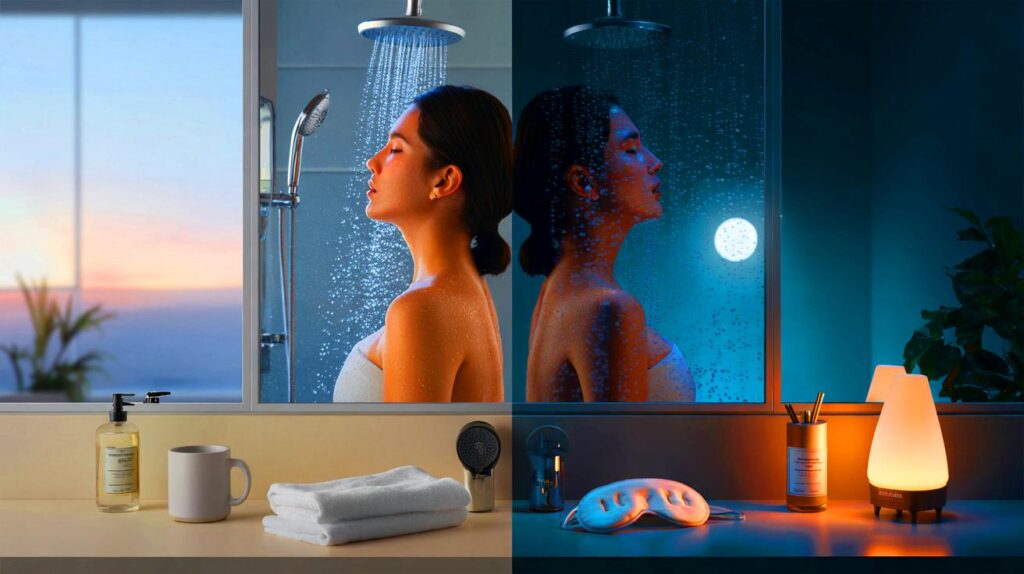
Your shower could help or hinder energy, sleep and skin. The clock matters more than you think this season.
The daily wash divides households. Some people chase a cold splash at dawn. Others swear by warm steam after dusk. Biology and dermatology now offer a clearer playbook: time your shower to your body’s rhythm and your skin’s needs, not just your diary.
Morning showers sharpen focus and reset your body clock
A morning shower wipes away night sweat and skin oils that build up under the duvet. Warm water raises skin temperature, then the post-shower cool-down nudges you into an alert state. A short cool finish, 30 to 60 seconds, can feel invigorating and may lift mood. Keep it brief.
If you cycle or walk in winter, dry hair before heading out. Leaving the house with a damp scalp increases heat loss and feels biting in wind. People with an oily scalp sometimes prefer shampoo in the morning to keep daytime odour at bay.
Short, warm morning showers can cue alertness. Add a 30–60 second cool rinse only if you tolerate it well.
Evening showers help you fall asleep and protect your skin
A warm shower in the evening acts like a dimmer switch for your body. Take it about 60 to 90 minutes before bedtime. Warmth draws blood to the skin, helping core temperature drop afterwards. Your brain reads that fall as a sleep signal, so you nod off faster.
Night is when skin repairs itself. Washing off city soot, sunscreen residues, pollen and sweat sets the stage for overnight treatment. That matters if you manage acne, shave irritation, or live through peak hay fever. Rinse hair and lashes to keep allergens out of bedding. Go to bed with dry hair to avoid a cold scalp and a clammy pillow.
Time your evening shower 60–90 minutes before lights-out; keep water comfortably warm and finish within 10 minutes.
What your microbiome and barrier need
Your skin’s protective film—lipids, sweat and a thriving microbiome—keeps moisture in and irritants out. Very hot, lengthy showers strip that layer. Gentle routine wins over scrubbing. Choose pH-balanced cleansers, use fingertips instead of harsh tools, and moisturise promptly.
- Target 5–10 minutes per shower to reduce barrier damage.
- Use warm water, roughly 37–40°C, not scalding.
- Apply a fragrance-free moisturiser within three minutes of towelling.
- Limit exfoliation to one or two times per week if your skin tolerates it.
- Swap loofahs for a clean cloth; wash or replace it often.
- If you live with hard water, consider a simple shower filter to reduce dryness.
Most adults do well with one daily shower. Add a second only after sweat, dirt, chlorine or close contact with illness.
Choose the time that fits your day
Pick a morning shower if you are aiming for
- A clean start before a crowded commute or client-facing work.
- Sharper focus for early meetings or creative tasks.
- Managing oily scalp or morning bed-head for short styles.
- Recovering from light morning exercise where sweat is modest.
- A mental “go” signal to begin your routine on time.
Pick an evening shower if you need
- Faster sleep and fewer night-time awakenings.
- Relief from hay fever; washing off pollen calms the night.
- Removal of urban grime, sunscreen and SPF actives before skincare.
- Post-gym recovery when you train after work.
- To keep sheets cleaner for longer and reduce morning laundry.
Match your goal to the right timing
| Goal | Best timing | Why it works | Quick tip |
|---|---|---|---|
| Energy on waking | Morning | Thermal contrast heightens alertness and reduces grogginess. | Finish cool for 30–60 seconds if comfortable. |
| Faster sleep | Evening, 60–90 min pre-bed | Post-shower cooling aligns with circadian drop in core temperature. | Keep water warm, not hot; dim lights after. |
| Acne management | Evening | Removes sebum, sweat and pollutants before actives work overnight. | Use a gentle, non-comedogenic cleanser. |
| Allergy control | Evening | Rinses pollen and dust from skin and hair before bed. | Change pillowcases often in peak season. |
| Dry skin comfort | Either, keep brief | Short, warm showers limit lipid loss and irritation. | Moisturise within three minutes of towelling. |
If you need two showers, make one of them minimal
Some days demand both. Keep the second one short and targeted. Use water-only on clean areas. Cleanse armpits, groin, feet and any visibly soiled skin. Three to five minutes is enough. Reapply moisturiser to exposed sites like hands, shins and forearms. For hair, rinse sweat after a hard workout, but avoid daily shampoo if your scalp gets tight and flaky. Alternate with a gentle scalp rinse or co-wash, depending on your hair type.
Temperature, products and small tweaks that pay off
Extreme heat can flare eczema and rosacea. Aim for a pleasant warmth where steam does not billow. If you enjoy contrast therapy, keep cold bursts short and skip them if you have Raynaud’s, cardiovascular issues or you feel faint. For keratosis pilaris, a warm evening shower followed by urea or lactic acid lotion can smooth rough patches. If you shave, do it in or after a warm shower to soften hair and reduce micro-cuts.
Think beyond the water stream. Rotate two clean towels to avoid damp fabric against skin. Ventilate the bathroom to cut mould and musty odours. In winter heating, a bedside humidifier and a heavier night moisturiser reduce overnight transepidermal water loss. In summer, a lighter gel cream stops stickiness without skipping hydration.
A simple seven‑day experiment to find your best routine
Test both schedules. For one week, shower in the morning; for the next, switch to an evening slot 60–90 minutes before bed. Track three metrics: time to fall asleep, energy in the first two hours after waking, and any skin tightness or itch. Adjust temperature and duration, not just the clock. Many people land on a hybrid: evening most days, morning on early starts or presentation days.
When circumstances change, adjust your plan
After heavy training, chlorine exposure, contact with illness, or a messy commute, prioritise a thorough wash regardless of the clock. On very high-pollen days, rinse before bed even if you already showered. During flare-ups of eczema or psoriasis, shorten showers, switch to emollient cleansers, and moisturise more often. Parents of babies and carers of older adults can keep baths or showers less frequent, with warm-water top-and-tail washes in between.



This is the first guide that actually ties the shower clock to circadian cues—super helpful. The 60–90 min pre‑bed window + warm (not hot) water finally explains why I fall asleep faster after an evening rinse. Also didn’t know about moisturising within three minutes; tried it tonight and my shins feel less tight. I’ll keep cool finishes to 30–60s in the morning only. Definitley bookmarking, esp. the ‘make one of two showers minimal’ tip for gym days.