
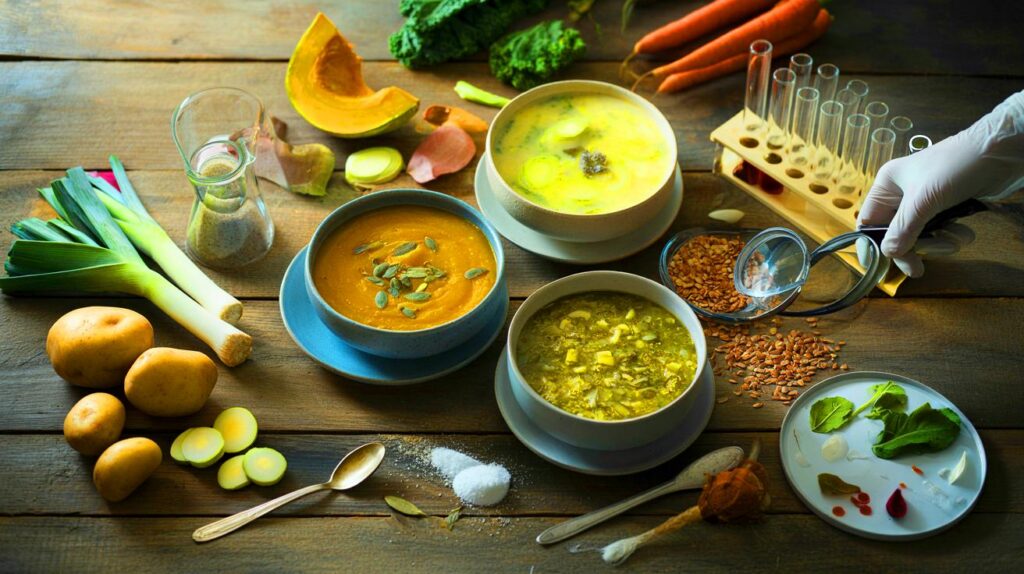
Cold nights pull you towards the soup aisle. Labels look cosy. Your bowl might be hiding more than warmth.
France’s consumer group 60 Millions de consommateurs has put 28 supermarket soups under the microscope this season. The findings raise fresh questions about fibre, vitamins, additives and residues, while also naming bottles, bricks and sachets you can trust when the weather turns.
What the testers looked for
The panel covered three families you’ll recognise on shelves: leek and potato veloutés, mixed-vegetable “moulinés”, and pumpkin-based soups. Ready-to-serve bricks and bottles sat alongside dehydrated sachets. Each recipe faced the same checks: vegetables in the ingredient list, fibre per portion, vitamin levels, salt, added fats, thickeners, flavourings, and lab screens for pesticide residues.
Set a practical target at home: aim for at least 3 g of fibre per bowl of soup.
Why push fibre? UK adults are advised to hit around 30 g per day. Many industrial soups contribute little to that total. The review repeatedly found portions delivering around 1 g of fibre, far below what a hearty vegetable soup should support.
Vitamins told a mixed story. Leek-and-potato blends tended to underperform for vitamin B6, vitamin E and beta‑carotene. The recipes often included thickeners, flavourings and added fats such as sunflower oil or cream. Two dehydrated sachets from Royco contained palm oil. Lab tests across the full line‑up detected five different pesticide residues, although most products showed none.
Across all 28 soups tested, no product exceeded 2 g of salt per portion; the WHO daily cap is 5 g.
Salt has improved compared with past shelves, yet vigilance still pays. A salty starter nudges your daily tally up before the main course arrives.
Best picks by aisle
Several products stood out because they kept recipes simple, led with vegetables, and delivered decent nutrition for the price. Organic options often fared well on residues and ingredient lists.
| Category | Top picks | Why they stood out |
|---|---|---|
| Mixed-vegetable “moulinés” | Marcel Bio “7 légumes bio du terroir”; Grandeur Nature “Mouliné du potager bio”; Knorr dehydrated “Légumes du potager” | Short, readable lists with vegetables upfront; a better fibre profile than the aisle average; solid value |
| Pumpkin-based soups | Bio Cambrésis “Potimarron aux éclats de châtaigne toastés”; Knorr “Comme à la maison: Potiron et pointe de muscade”; Liebig “Velouté de potiron, 100% légumes français” | Honest pumpkin content, flavour balance without chasing salt, and fewer unnecessary add‑ons |
| Leek and potato veloutés | Liebig “Velouté de poireaux et de pommes de terre”; Top Budget (Intermarché) “Velouté Poireaux Pommes de terre” | Clean recipes and seasoning kept in check; accessible prices for a regular weeknight starter |
The laggards and why they scored low
Three labels trailed the pack for nutrition and composition. Scores quoted below come from the review’s 20‑point scale.
Low fibre and thin nutrition
Royco “Velouté poireaux” landed 7.5/20. The bowl brought little fibre, modest vitamin value and several additives. Royco “Velouté potiron” followed at 8.5/20, marked down for limited vegetable content, palm oil, and a formula leaning on starches and flavourings despite acceptable salt.
Bulking with potato and thickeners
Casino “Mouliné légumes variés” scored 9.5/20. Potato dominated the mix, thickeners featured, and fibre barely moved the needle. The label told the story before the spoon did.
Two Royco dehydrated soups contained palm oil; that choice weighed on their scores.
How to shop smarter for soup
Turn the box. The front sells a feeling; the back tells you what you will actually eat. These quick checks steer you well.
- Vegetables first: pick soups where vegetables lead the ingredients list.
- Fibre floor: aim for 3 g per portion; skip bowls stuck near 1 g.
- Salt sense: stay under 1.5 g per portion; the review found none above 2 g.
- Short lists: fewer thickeners and flavourings usually means a better recipe.
- Fats that fit: prefer recipes without palm oil; watch for added cream if you monitor saturated fat.
- Organic edge: organic lines tend to show fewer residues, though nutrition still varies.
Laboratory screens picked up five different pesticide residues across the full panel; most soups had none detected.
Can soup fix your fibre gap?
Not on its own if you rely on many industrial recipes. A 1 g bowl is a missed chance when you need around 30 g daily. You can shift the numbers with a few simple tweaks at home.
Smart swaps and add‑ins
- Pulse power: stir in 3 tablespoons of cooked lentils or chickpeas to add roughly 3–4 g of fibre.
- Seed sprinkle: a tablespoon of ground flaxseed adds about 2 g of fibre and healthy fats.
- Veg boosters: fold in frozen spinach, peas or kale during reheating for vitamins and bite.
- Whole sides: pair your bowl with a slice of wholemeal bread or a small oatcake stack.
Portion maths helps. If a label reads 0.6 g fibre per 100 ml and your bowl is 250 ml, you get 1.5 g. Two bowls would bring 3 g, before add‑ins. Keep salt in mind if you go back for seconds.
Label jargon decoded
Per 100 g versus per portion
Manufacturers often list both. Compare across brands using the per‑100‑g column. Then convert to your usual portion size for a real‑world figure.
“Velouté”, “mouliné”, “dehydrated”
“Velouté” signals a smooth texture, often with added starch or cream. “Mouliné” usually means blended vegetables with some texture left. Dehydrated sachets trade water weight for convenience; recipes can lean more on starches and flavourings.
What this means for your trolley
Industrial soup can still be a handy winter ally, especially when a brand leads with vegetables and holds the salt. The review shows you do not need to spend big to buy better, with several organic and mainstream options delivering fair value. The red flags are predictable: ultra‑short fibre numbers, thickeners high on the label, and oils that bring little nutrition.
Method notes and limits
The 28 products represented common supermarket choices across three categories. Tests weighed nutrition, salt, fats, ingredients, and residue screens. Results reflect those recipes at the time of purchase; brands update formulas, and batches vary. Always recheck labels, especially if you manage blood pressure or cholesterol.
Extra help for winter planning
Batch cooking saves money and lifts nutrition. Roast a tray of root veg at the weekend, blitz with stock, and freeze in 300 ml portions. Each thawed bowl beats many shelf options on fibre and vitamins, and you decide the salt. If time is tight, combine a quality bottled soup with a tin of no‑salt beans for a five‑minute upgrade.
Cost matters when energy bills bite. Branded winners sometimes cost more per litre. Compare unit prices and nutrition side by side. A store‑brand leek and potato can work if you add frozen greens and a handful of pulses. Your bowl warms the hands either way; the label decides how it treats the rest of you.



Great piece—clear, practical. The “3 g fibre per bowl” target is going on my fridge.
You say five pesticide residues showed up, though most soups had none. Which brands had traces, and at what ppb? A link to lab tables would be apreciated.