
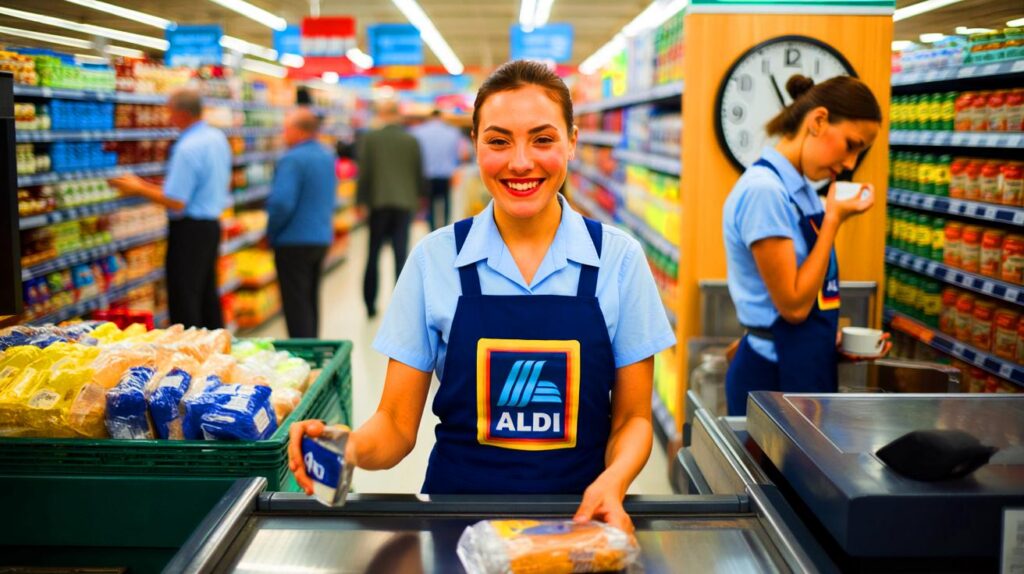
Shoppers and store workers wake to a subtle but telling change as a budget chain quietly resets its pay strategy today.
From this morning, Aldi has nudged its hourly base rate just above a fierce rival and widened its pay gap with much of the grocery field, while keeping an unusual perk that most competitors still don’t touch.
What the 2p rule means for your payslip
Aldi has lifted its entry hourly pay for store assistants from the previously announced £13.00 to £13.02 across Britain outside the capital. The shift looks tiny on paper, but it signals something bigger: a commitment to stay a fraction ahead of its closest challenger on headline pay, and to build retention in a tight labour market.
New base pay now stands at £13.02 an hour nationwide outside London, overtaking a rival’s £13.00 benchmark.
More than 28,000 hourly paid store colleagues benefit immediately. Staff who stay longer can earn up to £13.95 outside London, with the London rates moving to £14.35 at entry level and £14.66 with length of service.
How many workers benefit, and where
The uplift covers hourly paid store colleagues in every region, with separate rates for the capital due to higher living costs. The move follows Aldi’s second pay increase of the year, reinforcing its habit of moving first and forcing competitors to react.
| Area | Previous entry rate | New entry rate | Top rate with service | Extra benefit |
|---|---|---|---|---|
| Outside London | £12.75 | £13.02 | £13.95 | Paid breaks (c. £1,425 a year) |
| London | £14.05 | £14.35 | £14.66 | Paid breaks (c. £1,425 a year) |
Why Aldi moved now
Pay has become the frontline of supermarket competition as inflation, labour shortages and a hot poaching market push up costs. Lidl recently set a £13.00 floor outside London, prompting Aldi to add a two‑pence buffer and stress that its rates won’t be beaten. The German discounters have led the wage battle for years, pressuring the traditional big four to keep pace while protecting shelf prices.
Aldi positions the 2p uplift as part of a simple promise: stay fractionally ahead on hourly pay to attract and keep talent.
Senior executives frame the decision around productivity as much as fairness. Higher hourly rates help cut churn, shorten training cycles and improve on‑shelf availability—factors that matter more as store footfall stays high and online grocery steals less share from discount formats.
Paid breaks: the quiet extra that adds up
Alongside the headline rate, Aldi stands out for one policy rivals typically avoid: paid breaks for all store colleagues. Over a year, that perk adds up to roughly £1,425 for the average worker, depending on contract hours and shift patterns. It’s a benefit that doesn’t show in the base rate, yet it lands directly in take‑home pay.
Aldi remains the only national grocer to pay staff during breaks, a perk worth about £1,425 annually on an average contract.
That alone can neutralise small differences in hourly rates elsewhere. A competitor offering a slightly higher published rate, but unpaid breaks, can still leave people worse off by the end of the year.
What this means for you if you work in store
- From today, your base rate outside the capital is £13.02; in London it rises to £14.35.
- After a period of service, the top rates climb to £13.95 outside London and £14.66 in London.
- Breaks remain paid, adding an estimated £1,425 a year to your earnings on an average schedule.
- This is the year’s second uplift, reinforcing Aldi’s premium position among major grocers.
What it means for shoppers and rivals
Customers won’t see a 2p line on receipts, but they may notice steadier staffing at peak times, quicker checkouts and fuller shelves if retention improves. For competitors, the signal is awkward. Matching base rates without paid breaks still leaves Aldi ahead on total compensation; matching both raises operating costs significantly and tightens the squeeze on margins already under strain from price promises.
Expect more targeted bonuses and one‑off payments elsewhere rather than a full copy‑and‑paste of Aldi’s structure. Grocers often prefer perks they can withdraw later to permanent rate rises that lock in higher costs.
What you’d earn in real terms
Numbers matter, so here’s a simple illustration. Figures are gross and indicative; actual pay depends on contracted hours, overtime, and tax.
- If you work 30 hours a week outside London, today’s 2p “edge” over £13.00 adds about £31 a year (0.02 × 30 × 52).
- Compared with July’s £12.75, the rise to £13.02 adds roughly £421 a year (0.27 × 30 × 52) before tax.
- Paid breaks worth around £1,425 push the real‑world total higher than headline rates suggest.
- Step‑up to £13.95 with service increases gross annual pay by a further ~£1,449 versus £13.02 at 30 hours (0.93 × 30 × 52).
In London, the higher base and top rates increase those figures further. For full‑time schedules at 40 hours, multiply the hourly changes by 2,080 for a rough annual guide.
Career and budgeting angles staff should consider
Colleagues close to a service‑related step‑up might weigh up overtime, availability for key shifts, and training modules that support progression to higher rates. Small hourly differences shape long‑term earnings, especially when combined with paid breaks and predictable rotas that cut travel and childcare costs.
Those planning budgets can treat paid breaks as a built‑in cushion against bills rather than a discretionary bonus that may vanish. Because the policy applies to all store staff, it reduces uncertainty and helps smooth income month to month.
What to watch next
Eyes now turn to autumn pay announcements from the rest of the sector. If rivals respond with headline rises but keep breaks unpaid, Aldi’s total package is likely to stay on top even when the published hourly numbers look close. If competitors copy the paid‑break model, the race shifts to productivity and scheduling, not just rates.
For workers, the combination of a slightly higher floor, a clear service ladder and paid breaks creates a tangible path to better annual pay. For shoppers, the near‑term trade‑off remains the same: discounters will hunt for efficiencies elsewhere so shelf prices stay tight while wages inch up.



Paid breaks? That’s the real win—more than the 2p headline. Good move if it actually helps retention and not just the PR line.