
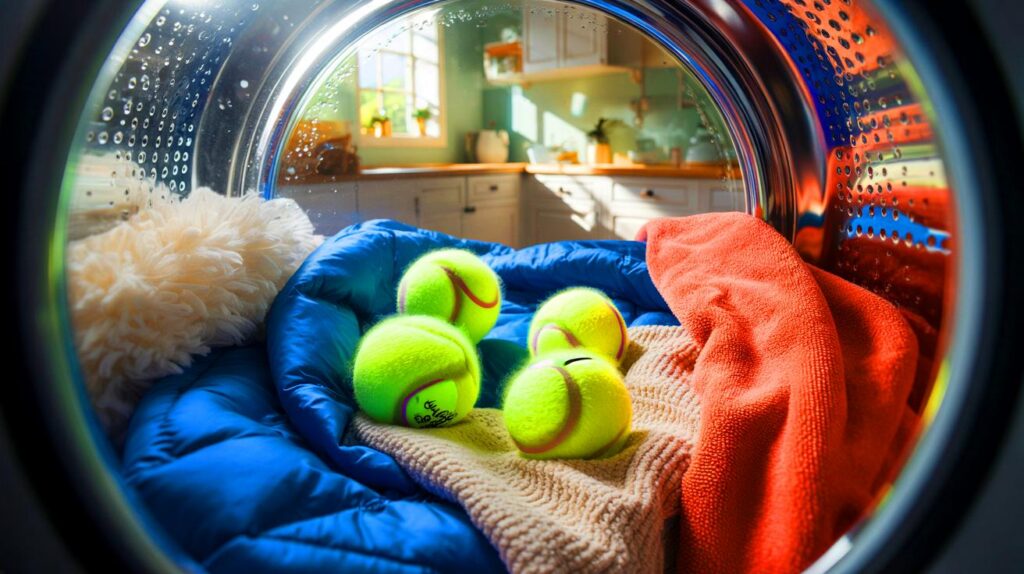
Many homes chase cleaner, softer laundry without pricey additives. A cheap fix hides in plain sight, and it works surprisingly well.
Instead of upgrading detergent, add controlled movement inside the drum. A simple sports accessory boosts agitation, lifts fibres, and helps water and soap reach every layer.
Why this cheap trick matters now
Budgets feel tight. Energy bills shape washing habits. Small, low-cost tweaks that improve results earn attention. This method uses items many people already own. It can improve cleaning on bulky loads. It can help reduce creasing. It can shorten drying time by improving spin-out. It avoids heavy fragrance and extra chemicals.
How tennis balls improve washing
The mechanics in the drum
Tennis balls add a gentle, repeated tap as the drum turns. That extra contact breaks up clumps. It aerates fibres. It spreads water and detergent more evenly. It can help lift dirt that a mild cycle might miss. It also keeps items from sticking together, so rinse water flows through better. During spin, the balls disrupt heavy bundles and help expel more water.
Use 3 to 4 clean, old tennis balls for roughly 3 kg of laundry. Do not overload. Let the balls bounce.
Older balls work best. Their felt sheds less dye. They still have enough spring to move fabric. New, neon felt can bleed on pale loads. Frayed, crumbling balls can leave residue. Pick a solid middle ground.
Where results show fastest
Thick knits regain loft after the fibres open up. Padded items resist clumping. Heavy pieces squeeze out more water in the spin. Many people notice fewer deep creases. That reduces ironing on dense fabrics. The effect is subtle on flat linens. Sheets and towels benefit less from extra bounce. On those, a good shake before hanging often does more.
When not to use the trick
Delicate textiles need gentle handling. Silk, cashmere, lace, tulle, and beadwork can distort or snag under repeated impacts. Hand wash or use a specialised cycle without any added objects. Check care labels. If a label says hand wash only, skip the balls. For very light fabrics, the balls can imprint faint marks. Keep them for robust items.
Keep tennis balls away from silk, cashmere, tulle and any garment labelled delicate or hand wash.
Step-by-step: the set-up and the dosage
- Check the balls: clean, colourfast, intact, not shedding.
- Load the machine to no more than three-quarters full to allow movement.
- Add 3–4 balls for a 3 kg load. Scale carefully with larger drums.
- Choose a temperature that suits the fabric. Many items prefer 30°C.
- Use your regular detergent. Skip softener if you plan to use vinegar.
- Run the cycle and remove the balls as soon as it ends.
- Dry items promptly to prevent odours from returning.
Low-impact add-ons that pair well
You can pair the balls with simple, low-cost helpers. These support softness and freshness without heavy perfume. They also help keep the machine clear of residue.
- Pour half a glass (about 100 ml) of white vinegar into the softener drawer to soften fibres and reduce scale.
- Add a tablespoon of bicarbonate of soda in the drum to neutralise odours.
- Wipe the door seal and clean the filter regularly to keep performance steady.
- Run a short refresher cycle with the balls on items that look flat but not dirty.
- For a light scent, place one drop of essential oil on a ball. Test on a dark load first.
Best uses: bulky items and insulation
Duvets, down jackets, padded gilets and pillows react well to extra bounce. The balls stop filling from clumping in one corner. They maintain volume and help air flow during both wash and dry phases. Zip up jackets to protect the fabric. Clip detachable fur trims off before washing. After washing, dry low and slow. Pause the cycle to break up any clumps by hand. Restart the dryer with the balls to restore loft.
| Item | Suggested cycle | Balls | Notes |
|---|---|---|---|
| Duvet (single) | 30°C, gentle, high spin if label allows | 3–4 | Check drum capacity. Dry fully with balls to prevent clumps. |
| Down jacket | Cold or 30°C, delicate | 2–3 | Zip pockets. Reshape during drying. Expect a longer dry. |
| Pillows | 40°C if permitted by label | 3–4 | Wash two at a time for balance. Dry until fully airy. |
Noise, wear and safety
Tennis balls add a thump. That is normal. Level the machine to limit vibration. Place a rubber mat under the appliance if floors wobble. Do not use cracked or sticky balls. They can smear felt on the drum. If noise bothers you, try wool dryer balls. They are quieter and designed for heat. Keep balls out of reach of pets and children.
Front‑loading machines handle this trick well. For top loaders with central agitators, the benefit is smaller. Check your user manual if you worry about warranty conditions. Slip each ball into a thin cotton sock to cut dye transfer and soften the impact. Tie a loose knot so the socks do not come off mid‑wash.
What it costs and what you save
Old balls cost nothing. A budget three‑pack can sit around £3–£6, depending on the shop. That one purchase serves for many cycles. Extra bounce can reduce reliance on softener. It can also lower ironing time when creases drop out more easily. Better spin-out leaves less water to remove in the dryer. That can trim drying time. Results vary by fabric, load size and machine model.
Old, clean tennis balls are effectively free. One small change can lift softness, flow and drying efficiency.
Troubleshooting common issues
Felt marks or lint
Switch to older, colourfast balls. Wash lights with white or pale balls only. Wrap each ball in a white cotton sock to create a dye barrier.
Too much noise
Reduce spin speed slightly on delicate items. Add a rubber mat under the machine. Swap one or two tennis balls for wool dryer balls.
No visible difference
Reduce the load to allow movement. Increase to four balls. Clean the filter and detergent drawer. Pick a cycle with more agitation if the fabric allows.
Beyond tennis balls: useful alternatives
Wool dryer balls provide gentler bounce and reduced noise. Silicone dryer balls withstand heat and can speed up drying. For a duvet that hogs the drum, add a clean towel alongside the balls to change the tumbling pattern. Some people use clean trainers in a pillowcase to break clumps during drying. Trainers can scuff the drum, so check your appliance guide first.
Think about care labels, microfibre shedding and airflow. Use a microfibre filter bag for synthetic sportswear. Choose lower temperatures when possible. Balance loads so the drum spins freely. Small changes add up to cleaner fabric, better loft and calmer bills, without buying a shelf of new products.



Tried this today with 3 older tennis balls on a 3 kg mixed load at 30°C — fewer deep creases and the dryer cycle was ~10 mins shorter. Skipped softener and used a splash of white vinegar; clothes came out soft, not perfumey. Definitley keeping this.
Honest question: won’t the repeated thumps harm the drum or bearings over time? My user manual is vague on “added objects”. Front‑loader, 8 kg, wood floor (a bit wobbly). Would a rubber mat and slightly lower spin be enough, or should I just try wool dryer balls instead? Also, any impact on warrenty?