
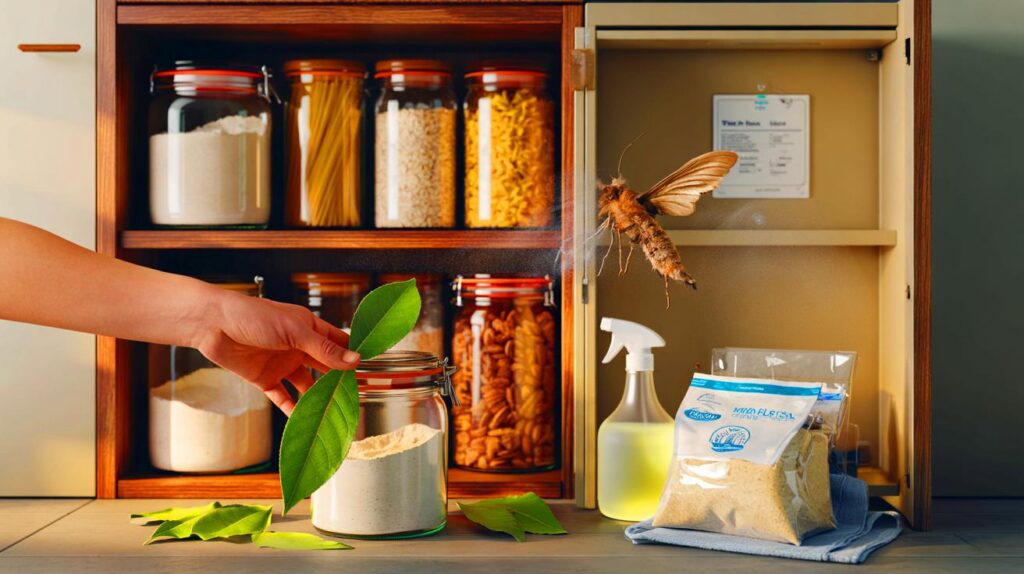
Across Britain, tiny moths are turning larders into battlegrounds, wasting money, spoiling staples and unsettling even the most organised cooks.
A quiet, plant-based fix is circulating again, passed down by grandparents and revived by thrifty households. Paired with a thorough clean, it can push back infestations without reaching for sprays.
Why bay leaves help you beat pantry moths
Pantry moths, often the Indian meal moth (Plodia interpunctella), target flour, rice, pasta, cereals and nuts. They slip into cardboard seams and thin plastic, laying clusters of eggs that hatch into hungry larvae. You notice the trouble when brown‑grey moths flutter at dusk or when fine webbing appears inside opened packets.
Bay leaves release aromatic compounds that moths dislike. You do not need much. A few leaves, placed in the right spots, create a thin odour barrier that makes these insects avoid your shelves.
Bay leaves repel rather than kill. Use them to steer moths away while you secure food and break the breeding cycle.
How the scent disrupts their behaviour
Moths navigate by smell to locate starches and nuts. Strong kitchen odours can scramble those cues. Bay sits in a sweet spot: noticeable to insects, gentle to people, neutral to food. Dry leaves keep their punch for weeks, then fade slowly.
Where to place the leaves for fast results
Think like a moth. They patrol corners, undersides of shelves and the edges of opened packets. Put the leaves where they travel, not buried in the back of a drawer.
- Slip 2–3 leaves into each shelf corner and along the back edge.
- Tuck 1–2 leaves beside opened flour, cereals, rice, pasta and dried fruit.
- Drop a leaf beneath baskets or on top of closed tins and jars.
- Keep leaves out of direct contact with loose, unpackaged food.
- Replace every 8–12 weeks or when the fragrance fades and the leaf turns brittle.
Place leaves at the level of the food, at points where moths land and walk, not just at the cupboard door.
Mistakes that let infestations linger
One or two leaves for a whole larder rarely helps. Random placement misses the insect’s path. Wet or oily leaves mould and attract pests. Overfilling shelves creates dark gaps where larvae hide.
Strengthen the defence: cleaning, storage and monitoring
Bay works best inside a wider plan: clean, seal, then protect. You cut the food supply, then you make the space less inviting.
| Action | Purpose | Timing or duration |
|---|---|---|
| White vinegar wipe‑down | Removes residue, odours and hidden webbing | Empty shelves, wipe seams and corners, dry fully |
| Airtight jars | Block access and contain any hitchhikers | Use glass or thick plastic with tight seals |
| Bay leaves | Repel adults from landing and laying | Refresh every 8–12 weeks |
| Pheromone traps | Catch males and reduce mating | Effective for 6–12 weeks per trap |
| Freezing | Stops eggs and larvae in food | 24 hours at household freezer temperature |
Combine three moves for best impact: clean with white vinegar, lock staples in airtight jars, then line shelves with bay.
What to do if you spot larvae or webbing
Act quickly. A single female may lay about 200 eggs. Larvae can chew through thin bags and soft card, so delays allow hidden pockets to bloom.
Freeze, bin, reset
- Quarantine suspicious packs. Seal them in bags.
- Freeze for 24 hours to halt development. Return to jars once thawed and dry.
- Bin items with heavy webbing or off smells.
- Vacuum shelf edges, pin holes and hinge cavities. Empty the vacuum immediately.
- Wipe all surfaces with diluted white vinegar and dry thoroughly before restocking.
- Fit one pheromone trap per cupboard zone to monitor activity.
Lavender, cloves and when to use them
Dried lavender sachets and a few whole cloves add extra scent pressure. Place them on upper shelves where adults first fly in and circle. Rotate the sachets with your bay leaves to keep aromas fresh. Do not mix too many odours in one small space; consistent placement matters more than intensity.
How long does the cycle last and when will you see progress
At typical indoor temperatures, the journey from egg to adult can take several weeks. You often notice fewer moths within a few days of placing leaves and cleaning, then a further drop after the next tidy‑up. Keep going for two life cycles to prevent a rebound.
Realistic expectations and safe practice
Bay leaves help prevent new laying and steer adults elsewhere. They do not fix contaminated food by themselves. Always secure dry goods first. Use jars with gaskets for flour, oats, rice and nuts. Label the date you decant, then rotate stock so older batches go first.
Avoid chemical foggers in food cupboards. These treatments drift and may contaminate packaging. If you need a stronger step, focus on traps and targeted cleaning rather than sprays.
A practical, low‑cost plan you can start today
Clear one shelf at a time so the job stays manageable. Wipe, dry, then arrange the jars. Add bay leaves to the corners and beside opened staples. Fit one pheromone trap near the door of the cupboard. Check back every Sunday for a two‑minute sweep: remove crumbs, pinch a leaf to test its scent, note any moths caught.
Extra guidance for families and flat‑sharers
Agree simple rules: only sealed containers in the food cupboard, no rolled paper bags, and a weekly glance at traps. If you bulk‑buy, split large sacks into smaller airtight jars to limit risk. For holiday periods, store vulnerable goods in the freezer drawer so heat waves do not accelerate the cycle.
Consider a small “incoming” box. New packs of flour, rice or nuts go there for 48 hours while you check for webbing or tiny larvae near the seams. If you spot anything, freeze for 24 hours before it reaches the main shelf. This one habit stops most surprises and keeps the bay‑leaf barrier working as intended.



Tried the bay leaves + vinegar clean today and the evening moth parade shrank by half. Simple and cheap—appreciate the step‑by‑step! 🙂