
Your cupboard hides a tin that could lift heart health, sharpen thinking, and cut waste, all in one cheap bite.
A leading gastroenterologist now points directly to canned anchovies as the smartest pick on the shelf, ahead of sardines and mackerel. His case rests on hard numbers, easy cooking, and week-to-week practicality that suits busy kitchens and tighter budgets.
A surprising winner in the tin aisle
Dr William Berrebi singles out canned anchovies as a standout for everyday eating. The fish may look small, but it punches above its weight: a modest serving carries serious omega‑3, robust protein, and meaningful iron. Unlike bigger predatory species, anchovies sit low on the food chain, so they bring less mercury to your plate and store neatly for months without fuss.
50 g of anchovies deliver roughly 100% of daily omega‑3 needs. A 100 g portion gives about 23 g protein and 4.6 mg iron.
This profile helps if you want to support your heart and brain without lighting up the hob for hours. It also helps if you aim to stay strong and steady past 50, when iron and quality protein matter more for energy, muscle maintenance, and day‑to‑day resilience.
What 50 g actually does for you
Heart and brain support
Anchovies provide marine omega‑3s (EPA and DHA) that help maintain normal heart function and support cognitive performance. A small serving does the heavy lifting, so you can fold a few fillets into a meal and still tick the omega‑3 box for the day.
Ageing and iron
At around 4.6 mg per 100 g, anchovies bring useful iron, which supports oxygen transport and helps combat tiredness. If you sit in the over‑50 bracket, that matters more. Pair anchovies with a vitamin C source, such as tomatoes or lemon juice, to aid iron absorption at the same meal.
Protein without the fuss
With roughly 23 g protein per 100 g, anchovies rival many meats while staying light and quick to cook. You can open a tin, add heat if you want it, and serve within minutes. The texture blends easily into sauces, spreads, and salads, so even anchovy sceptics barely notice it—apart from the flavour lift.
The salt question you must manage
Here’s the catch: tinned anchovies often arrive well salted. You can manage that with simple kitchen moves and a few label checks. People with high blood pressure, heart failure or kidney disease should go carefully and keep portions modest.
Rinse, drain, then dilute in a full meal: you cut sodium while keeping the anchovy kick.
- Rinse fillets under cold water and pat dry to remove surface brine.
- Choose “in water” or “in olive oil” over salt‑packed when possible.
- Scan labels for “reduced salt” options and note the drained weight.
- Use anchovies to season a dish, then skip extra salt at the table.
- Balance the plate with unsalted staples: plain pasta, steamed veg, or beans.
How often should you eat it?
ANSES suggests 140 g of lean fish and 160 g of oily fish each week. Anchovies count as oily fish, so a small tin—often 45–60 g drained—slots right into that oily fish target. Rotate with other species for variety and taste. Many households rely on tuna for convenience, yet tuna can carry higher mercury; anchovies offer a lower‑risk swap when you want a quick protein hit without that worry.
One small tin can cover an oily fish portion for the week, especially if you spread it across two meals.
How to add it this week
Anchovies play two roles at once: seasoning and protein. That saves time, washing‑up, and money when you want weeknight meals to behave.
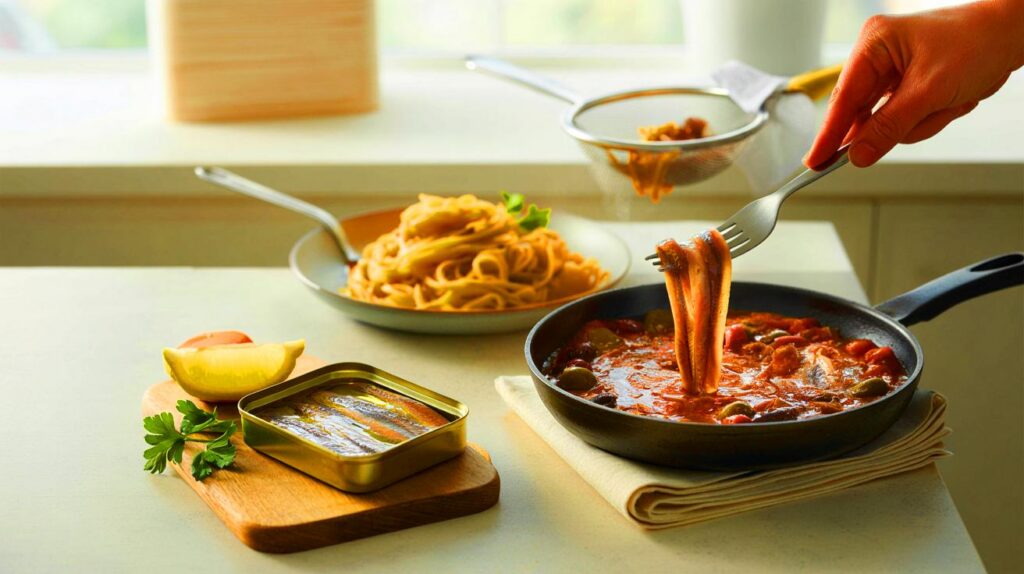
- 15‑minute puttanesca: sizzle garlic and chilli in olive oil, melt in 3–4 anchovy fillets, add tomatoes and olives, toss with pasta.
- Quick tapenade: blitz anchovies with olives, capers, lemon and oil; spread on toast or tuck into a sandwich.
- Niçoise or Caesar upgrade: use 2–3 fillets per person in the dressing to replace salt and deepen flavour.
- Crostini with lemon: mash anchovies with lemon zest and parsley; spoon over warm toast and finish with pepper.
- Veg pan sauce: after searing greens or courgettes, melt 1–2 fillets in the pan with a splash of water for a glossy, savoury glaze.
Anchovies versus your usual tins
| Fish | Omega‑3 impact (small serving) | Mercury exposure | Salt risk in brine | Kitchen role |
|---|---|---|---|---|
| Anchovy | Very high | Low | Higher if salt‑packed | Seasoning and protein |
| Sardine | High | Low | Moderate | Protein with bones for calcium |
| Mackerel | High | Low to moderate (species‑dependent) | Moderate | Flaky fillets, rich taste |
| Tuna | Variable | Higher | Lower if in water | Lean protein, neutral flavour |
Buying, storing and small print that saves you money
Pick short ingredient lists: fish, oil or water, maybe herbs. Salt‑packed fillets bring punchy flavour but push sodium up, so keep those for special dishes. Olive‑oil tins travel well, last for months in a cool cupboard, and open without mess. Note the drained weight; some tins look generous but hide a small yield once you pour off the liquid.
Storage stays simple. Keep unopened tins in a cupboard. After opening, transfer leftovers to a clean, sealed container in the fridge and use within two days. If you cook for one, split a tin across two meals: a pasta on day one, then a salad or toast topper the next day.
Useful extras before you plate up
Bones, calcium and texture
Most anchovy fillets in jars or tins come boned, which makes them smooth in sauces but lighter on calcium than bone‑in sardines. If you want more calcium, mix the week with a bone‑in fish serving or include dairy or fortified alternatives elsewhere.
Flavour balancing
Anchovies bring umami. Lemon, parsley, tomatoes and chilli balance that richness. A small squeeze of lemon or a handful of chopped herbs resets the palate and keeps the dish bright without adding salt.
A practical weekly plan
Try this simple rotation: one small tin of anchovies for sauces and salads, one meal with sardines or mackerel, and one lean white fish. That mix fits the ANSES split of lean and oily fish, cuts mercury exposure, and keeps the shop straightforward. If you usually grab tuna for speed, swap one tin a week for anchovies and watch the flavour—and your omega‑3 intake—jump.



Just switched from tuna to anchovies and this piece nails the why. The 15‑minute puttanesca is now my midweek staple—melting 3–4 fillets in the pan is chef magic. If 50 g really covers daily omega‑3, that’s a huge win. I rinse to cut the brine, then skip table salt. Any recs for brands that are in olive oil but not overly salty? Also, does lemon actually help with iron absorption here or just flavor?
100% in 50 g feels… optimistic. What baseline are you using—250 mg EPA+DHA, 500 mg, or the higher EFSA targets? Please cite the data. Also, protein looks solid, but is that 23 g per 100 g drained? Oil-packed tins can add calories; water-packed can taste meh. And sodium varies a lot; “reduced salt” claims are sometimes marketing fluff. Defintely needs a label-by-label comparison.