
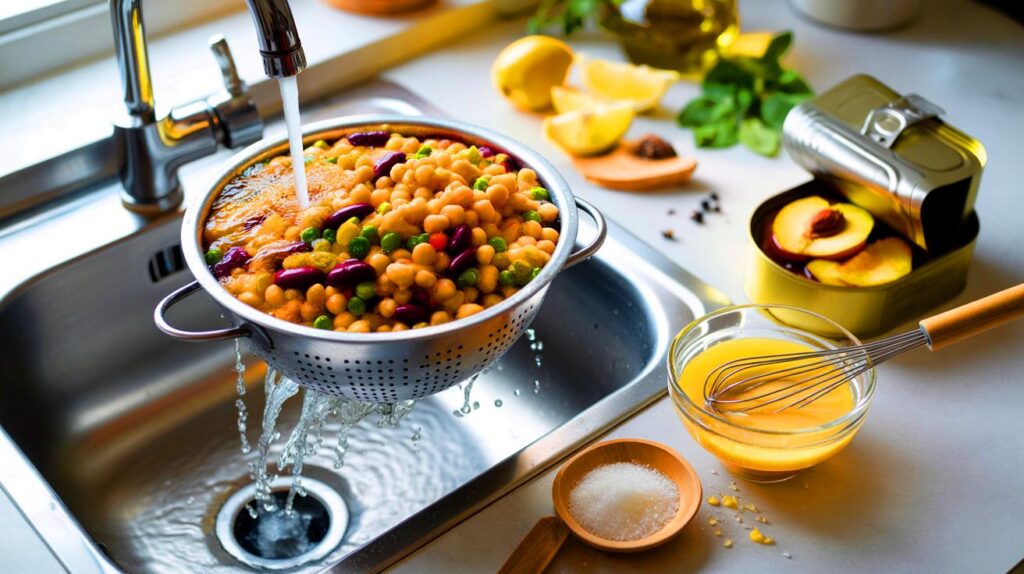
A splash from the tap can change dinner. But which tins need it, and when does that quick rinse backfire?
Across Britain, cupboards brim with chickpeas, sweetcorn and peas that save weeknights. Many households copy a habit passed down from Nan: a brisk rinse. That move can cut salt by up to 40% and ease tummy troubles for some. Yet there are moments when the liquid earns its place. The trick is knowing which is which, and how to make the rinse work for your recipe.
Why washing the brine away can slash your sodium
Most savoury tins sit in brine. That liquid keeps texture and shelf life, but it brings salt. Draining and rinsing sends a chunk of that sodium down the sink. People watching blood pressure or heart risk gain control without losing a meal to extra faff. Flavour improves too. The veg tastes cleaner, and seasoning sits in your hands.
Rinsing canned legumes can reduce sodium by up to 40% compared with using the liquid straight from the tin.
If you forget to drain, you will not poison dinner. The liquid is safe to eat. It is a taste and balance issue, not a danger in itself. A rinse under cold water, then a thorough drain, is enough for everyday cooking.
What the numbers say: up to 40% less salt
Manufacturers use varying levels of salt. Labels often list salt per 100 g and per portion. The rinse trims what ends up on your plate. For a quick sense check, picture this: if a portion lists 1.0 g of salt, a good rinse might leave you with around 0.6 g. Results differ by brand and bean, but the saving is real.
| Food | Rinse? | Likely effect |
|---|---|---|
| Chickpeas, kidney beans, lentils | Yes | Lower salt, cleaner taste, gentler on digestion |
| Sweetcorn, peas | Usually | Less salt, brighter flavour in salads |
| “No added salt” veg | Not needed | Minimal change; rinse for taste if you prefer |
| Fruit in syrup | No | Rinse dulls sweetness and aroma |
| Seasoned beans or stews | Sometimes | Keep liquid if it adds flavour to the recipe |
Gut comfort: how rinsing legumes tames bloat
Beans and peas carry complex sugars. These can ferment in the gut and cause wind. The canning liquid holds some of these compounds. A rinse can make a noticeable difference when you serve beans cold. Think salads, dips and quick lunches.
In hot dishes, the effect is still helpful, though the pot may tame some of the edge. Start with a rinse for control, then season back with herbs, spice and a pinch of salt if you fancy.
Rinse, drain, and the same tin of beans often feels lighter on the stomach and brighter on the palate.
Simple method that fits weekday cooking
- Open the tin and pour its contents into a colander set in the sink.
- Rinse under cold running water for 15–30 seconds, tossing gently with a spoon.
- Shake the colander well and leave to drain for a minute.
- Pat dry with kitchen roll for crisp salads or roasting.
- Season from scratch so you decide the salt, acid and spice.
When not to rinse: fruit, ready-to-eat labels and no-sodium tins
Fruit sits in syrup to lock in sweetness and texture. Washing it away can flatten both. Some vitamins and aroma compounds live in that syrup. If you want less sugar, drain and blot, or choose fruit packed in fruit juice instead.
Labels help. If a tin says “ready to eat”, the maker wants you to use the liquid as part of the dish. “No added salt” means a rinse brings less benefit. Seasoned beans, like chilli-spiked varieties, often carry flavour you may want in the pan. Taste first, then decide.
Aquafaba: the foamy exception bakers love
Chickpea brine has a name: aquafaba. Whisk it and it turns into a foam that binds air, like egg white. Cooks use it for vegan meringues, mayonnaise and mousses. If you plan to whip, save the liquid from unsalted tins for a cleaner flavour. Chill it, then beat with sugar and acid, as you would an egg white. Three tablespoons of aquafaba roughly match one egg white.
Food safety with tins: heat, storage and timing
Canning is not casual. Factories heat food above 100 °C to disable microbes and enzymes. That process gives tins their long life at room temperature. It also means the liquid in the tin is safe to eat when you open it.
Once opened, tip leftovers into a covered container, refrigerate, and use within 48 hours for best quality.
Do not store food in an opened metal can. Transfer it to glass or plastic to preserve taste and texture. Check tins before you buy or open. Severe dents, swelling or spurting liquid are red flags. If you see them, bin the can.
Avoiding cross-contamination at home
Rinse the can lid before opening so dirt does not fall inside. Keep raw meat away from the colander while you drain beans. Wash the colander and sink after use. Small steps protect flavour as much as hygiene.
Smart uses that make rinsing work for you
Rinsing gives you control. You decide the salt, fat and acid. Toss drained beans with lemon, olive oil and herbs. The result tastes fresh, not briny. Roast drained chickpeas with paprika for crunch. Stir rinsed lentils into a soup to add body without extra saltiness.
Want a quick template? Mix 1 tin of drained beans, 2 tablespoons of olive oil, 1 tablespoon of vinegar or lemon, a pinch of salt, pepper, and a chopped spring onion. Add chilli flakes if you like heat. It takes five minutes and makes lunch for two.
What labels and numbers mean for your plate
On packs, high salt sits at 1.5 g per 100 g or more. Low salt is 0.3 g or less. A rinse will not turn a salty stew into a low-salt food, but it can pull the figure down. If you need to track intake, compare brands and aim for the lower end. Rinsing then lets you add salt precisely, rather than swallowing what the brine dictates.
Think of rinsing as a reset: remove the factory brine, then season to your taste and needs.
Extra tips that save money, flavour and waste
- Keep vegetable canning liquid for soup stock if it tastes pleasant and mild.
- Use syrup from fruit tins for cocktails, porridge or baking glazes.
- If sodium is a worry, choose “no added salt” tins, then season with citrus, garlic and herbs.
- For a calmer stomach, pair legumes with cooked grains and chew well; smaller portions help too.
A family that opens three tins of beans a week could remove several grams of salt over a month with a simple rinse. That change costs nothing, trims the weekly sodium load and leaves room for flavour you actually choose. Your nan’s habit was not just thrift. It is a neat lever for health, taste and comfort—used in the right moments, with a little judgment.



Great piece! I’ve rinsed chickpeas for years and this explains why they taste cleaner. If it really chops sodium by ~40%, that’s defintely going into my weeknight routine. Also noticed fewer tummy rumbles after salads—nice to see that confirmed. Quick ask: does patting them dry really help crispness when roasting, or is a thorough drain enough? Thanks for the plain-English guidance.