
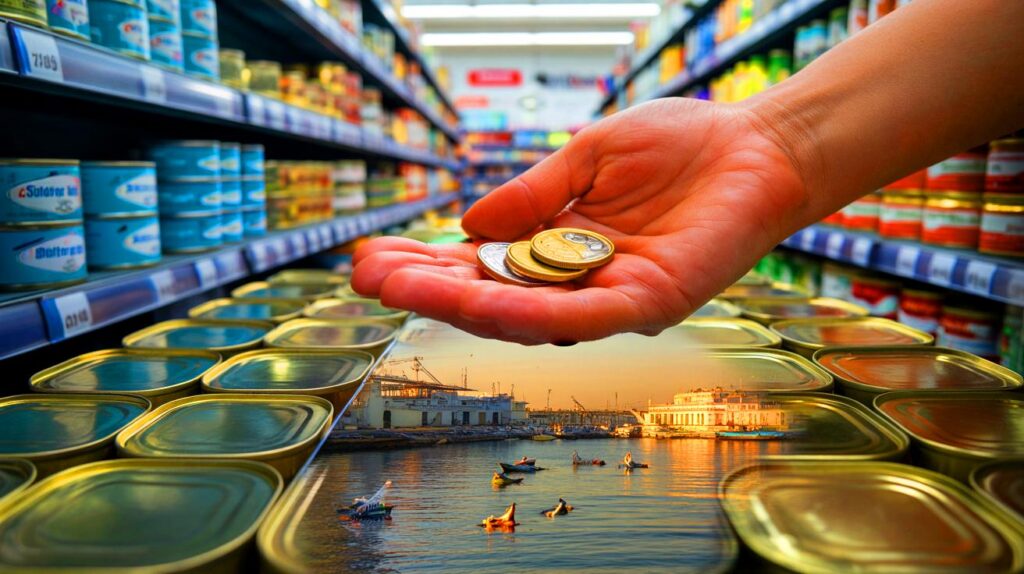
A humble cupboard staple is quietly slipping from French shelves, leaving shoppers puzzled and scanning empty spaces for familiar tins.
Since early September, supermarket aisles have thinned and the cheapest sardine cans are the first to go. Staff restock slower, end caps change, and regulars reach for pricier brands. Behind those gaps lies a story that starts at sea and ends at the checkout.
Where have the cheapest tins gone
Budget ranges depend on large, low-cost canneries and steady catches. Over half the sardines in French trolleys come from abroad, mainly Morocco. That reliance looks fragile when boats land less fish and factories face stop‑start weeks.
Moroccan sardine landings fell from about 950,000 tonnes in 2022 to 525,000 tonnes in 2024 — a 46% drop in two years.
When supply tightens, supermarkets protect core lines and prune entry‑level references. Own‑label ranges take the first hit because they rely on bulk import contracts. Shoppers see it as “no stock”. Buyers see a risk they can’t price with confidence.
How Morocco went from flood to bottleneck
A low-cost model under stress
Morocco displaced Brittany on value shelves over the last two decades. Labour there costs around seven to ten times less than in France. Big coastal plants processed huge volumes for European retailers hungry for cheap tins. French households bought roughly 16,000 tonnes of canned sardines at an average of €11 per kilogram, according to fisheries data. That machine worked while catches rose and logistics stayed smooth.
Then the tide turned. A fast‑growing inshore fleet narrowed the margin for error. Quotas tightened and skippers sailed further for smaller gains. With fewer fish landed, canneries prioritised higher‑margin products, and the flow of entry‑level tins slowed to a trickle.
Climate is shrinking the fish
Warmer seas and disrupted currents change plankton patterns, the foundation of sardine diets. With less and smaller prey, sardines put on weight more slowly and breed less. Scientists report a clear size shift. In the Atlantic, average length slipped from about 17 to 14 centimetres. In the Mediterranean, it fell from around 15 to 11 centimetres. Their average weight has halved, and many now live barely twelve months, not the several years once observed.
Smaller fish mean fewer saleable fillets per kilo and more cans needed to fill the same orders.
France sees the strain at home. In the Gulf of Gascogne, the sardine population has shrunk to a third of its level two decades ago. Researchers classify the stock as degraded. Boats return with lighter hauls. Processors run shorter shifts. Supermarkets accept sporadic outages and reprint price labels more often.
What it means for your bill this autumn
The fish itself costs more when landings drop. Tinplate, oil, and energy also weigh on costs. Shipping and currency swings add friction. Retailers can absorb some increases, but not all. That is why budget tins vanish first and branded tins edge up in price.
The benchmark has hovered around €11/kg. With supply tighter, many everyday lines could nudge past that level.
Expect fewer multi‑buy deals on the cheapest sardines. Expect more promotions on mid‑range tins, as brands court shoppers trading up. Expect more mackerel and herring facing on gondola ends, because retailers steer you towards what they can source reliably.
How to keep costs down without ditching fish
- Check the drained weight, not just the net weight. You pay for oil or sauce you won’t eat.
- Compare price per 100 g. Tin sizes vary, and bigger is not always cheaper.
- Try tomato sauce or brine. They often price lower than olive oil.
- Swap in mackerel, herring or sprats. They offer similar omega‑3 at fresher price points.
- Buy two when a favourite returns. Avoid stockpiling beyond what you’ll eat in three months.
A quick price check you can copy at home
These examples show how the same shelf can hide very different costs. The figures are illustrative, but the method is what matters.
| Tin size | Shelf price | Price per kg |
|---|---|---|
| 120 g (drained 84 g) | €1.69 | €14.08/kg (vs €20.12/kg on drained weight) |
| 135 g (drained 95 g) | €2.05 | €15.19/kg (vs €21.58/kg on drained weight) |
| 90 g (drained 65 g) | €1.19 | €13.22/kg (vs €18.31/kg on drained weight) |
Use the unit price on the shelf edge and, where possible, base the comparison on drained weight. That way you compare fish with fish, not oil with oil.
What producers and regulators are doing
Fleets adjust to lower quotas and shorter seasons. Processors upgrade lines to handle smaller fish more efficiently. Some plants switch hours from sardines to mackerel when boats report slim hauls. Retailers diversify sourcing to Portugal and Spain where possible, but those fisheries face similar constraints.
Managers push selective gear, seasonal closures, and better data to stabilise stocks. Certification schemes gain traction as buyers ask for proof that today’s tins do not undermine tomorrow’s catches. The alternative is a cycle of boom and bust that keeps your shelf empty and your bill rising.
Will the gaps widen before they close
Short term, shoppers will notice patchy availability and higher floors on entry‑level prices. Mid‑range tins may hold a little steadier if brands fight for volume. Premium packs will stay on shelf, and they will remind you what “cheap” used to look like.
Medium term, the market may rebalance if catches stabilise at lower levels and factories lock in predictable volumes. That would mean fewer references, more consistent sourcing, and clearer price tiers. The bigger test sits with the fish themselves. If smaller, shorter‑lived sardines become the norm, the old mathematics of canned value changes.
Extra help for smart shopping and healthier plates
Look for sardines packed in water or tomato if you watch calories and salt. Oil‑packed tins carry more energy but protect texture and flavour. Drain the can fully before adding to salads or toast; save a spoon of oil for dressing and bin the rest. For a quick, low‑waste meal, mash sardines with lemon, mustard, and capers, then pile onto warm potatoes.
If you need a close substitute, try brisling sardines (sprats) for small, tender fillets, or herring for robust flavour at fair prices. Check labels for origin, catch method, and drained weight. Those three lines of fine print help you judge value when the shelf looks thin and the numbers creep upward.



€11/kg already here in my supermarket. Ouch.
If landings fell 46%, will retailors cap prices or just cut SKUs? How long before mackerel faces the same squeeze?