
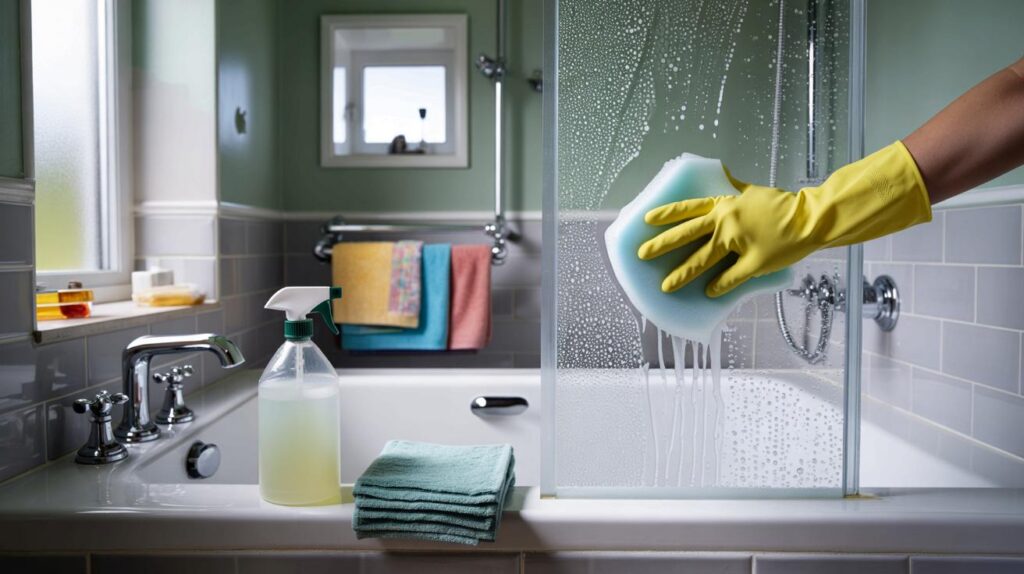
Britain’s hotel bathrooms stay pristine while our home showers fog, streak and dull. A simple, cheap habit is closing that gap fast.
Across the country, house-proud people are swapping harsh chemicals and long scrubs for a hotel-style routine that takes minutes and costs pennies. Two everyday items do most of the work, and the pay-off shows within a single wash.
Why hotels swear by a £1.50 melamine sponge
The unglamorous melamine sponge—often sold as a “magic eraser”—acts like ultra-fine sandpaper on marks without scratching glass when used with care. Hotel room attendants reach for it to lift limescale bloom and soap film from shower screens, taps and grout, usually with just warm water.
Used damp and lightly pressed, a melamine sponge cuts through weeks of haze in under five minutes per screen.
Melamine foam contains a network of hard microstructures. Those tiny edges shear off mineral deposits and bodywash build-up, so you don’t need a strong cleaner. The trick lies in minimal pressure and a clean rinse after each pass.
How to use it safely
- Wet the sponge with hot water and squeeze out the excess. Don’t soak it.
- Work in circles from top to bottom on the glass, then rinse the area.
- Dry immediately with a microfibre cloth to stop new droplets forming marks.
- Test first on a discreet corner if your glass has a factory coating or a hydrophobic treatment.
- Avoid high-gloss metal trims, lacquered surfaces and soft plastics to prevent dull patches.
One sponge usually handles multiple cleans. Once it crumbles, replace it. At roughly £1.50 per sponge in multipacks, the running cost stays very low compared with bottled sprays.
The two-ingredient spray that dissolves soap scum
When deposits run deeper, hotel teams reach for a mix of white vinegar and washing-up liquid. The acid breaks mineral crust; the surfactant loosens greasy film. You can make a batch in seconds.
Mix 50% white vinegar with 50% washing-up liquid in a clean trigger bottle. Shake gently before use.
Spritz the shower screen generously, wait 10–15 minutes, then wipe with a non-scratch sponge and rinse well. Finish with a dry microfibre. The glass clears, taps shine, and the bathroom smells freshly cleaned without a chemical fog.
Use warm—not boiling—vinegar if the limescale is stubborn. The heat speeds the reaction, while the detergent keeps residues suspended so they rinse away cleanly.
Safety notes that save surfaces
- Never mix vinegar with bleach or products containing chlorine. Hazardous fumes can form.
- Keep acids off natural stone such as marble, travertine and some composite trays. Stick to neutral pH cleaners there.
- Rinse seals and metal finishes thoroughly to avoid etching or tarnish over time.
Routine that keeps glass clear for longer
Prevention beats scrubbing. Hotels cut the problem at source by removing water before it dries. Copy the timing and you slash build-up without effort.
The three-move habit: squeegee after the last shower, microfibre dry on splashed zones, window open or fan on for 20 minutes.
Why it works: hard water leaves dissolved minerals behind as droplets evaporate. A quick squeegee breaks that chain. Drying the bottom edge, hinges and door handle stops rings and spotting where water sits longest.
For hard-water homes
About six in ten UK households live with hard or very hard water, especially across the South East and East of England. That means faster haze, chalky dots and tired-looking glass. Increase the quick-dry habit, and run the vinegar mix weekly rather than monthly. If the kettle furs up fast, your shower glass needs more frequent attention too.
What to use, when to use it
| Method | Best for | Time per screen | Approx. cost per use | Watch-outs |
|---|---|---|---|---|
| Melamine sponge + water | Light to medium haze, water spots, detail around edges | 3–5 minutes | £0.15–£0.30 | Avoid glossy trims; use light pressure |
| 50:50 vinegar + washing-up liquid | Soap scum, limescale veil, weekly refresh | 10–15 minutes dwell, 5 minutes wipe | Pennies | Not for natural stone; don’t mix with bleach |
| Lemon followed by rinse and dry | Quick spot treatment, light calcium marks | 2–3 minutes | £0.20–£0.40 | Can sting cuts; rinse well |
Common mistakes that make streaks worse
- Spraying and wiping straight away. Let chemistry do the lifting with a 10–15 minute wait.
- Skipping the final dry. Microfibre leaves a streak-free finish and breaks the limescale cycle.
- Using abrasive powders on coated glass. Many modern screens carry an invisible seal that scratches easily.
- Overloading with product. Excess suds cling to edges and dry into new marks.
Time, money and results you can bank
Switching to the hotel routine reclaims time fast. A family of four often spends 8–10 minutes per deep clean, once a week. Move to a daily 60–90 second squeegee-and-dry, and the weekly job drops under five minutes because there’s no crust to fight. Over a month, that shaves roughly 26–30 minutes from cleaning, and the glass stays clearer between sessions.
Costs fall as well. One bottle of basic white vinegar and a dash of washing-up liquid deliver dozens of treatments. A small pack of melamine sponges covers months. You also avoid the fragrance fog and residue some commercial sprays leave behind.
Extra ways to stretch the shine
Add a hydrophobic glass sealant every three to six months if your screen lacks one. Water beads and runs off faster, so the squeegee removes almost everything in one pass. A cheap car glass rain-repellent works in a pinch, though purpose-made bathroom products last longer in steam.
If your area’s water tests very hard, a small inline filter on the shower feed or a whole-house softener will cut mineral spots. That reduces maintenance on taps, tiles and the kettle as well. Keep an eye on bathroom ventilation: run the extractor for 15–20 minutes after showers or open a window to drop humidity, which slows mould growth on seals and grout.
For badly etched glass that won’t clear, try a paste of chalk-based cleaner such as blanc de Meudon on a damp pad, then rinse and dry. If the frosting sits inside double-panel glass or under a failed coating, replacement may be the only route back to clarity.
Store your vinegar-and-detergent spray out of reach of children and label the bottle with the mix and date. Make small batches monthly so it stays fresh and effective. Keep a squeegee and a folded microfibre hanging in the shower; convenience makes the habit stick for the whole household.


