
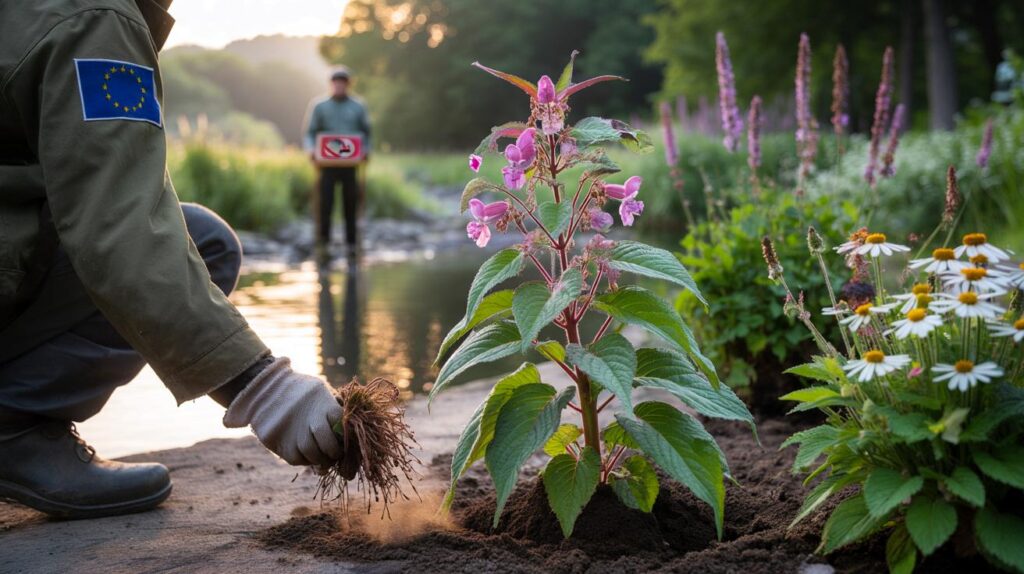
A summer rule change is reshaping flower beds from Brittany to the Balkans, and the trigger is a plant many people loved.
The European Union has moved against a fast-growing ornamental that slipped the leash. The decision now reaches into private gardens, riversides and retail catalogues alike.
What changed on 5 August 2025
From 5 August 2025, the EU’s directive bans the cultivation, sale, exchange and deliberate planting of Himalayan balsam (Impatiens glandulifera) across all 27 member states. Authorities frame the measure as a biodiversity safeguard, not a war on aesthetics. It targets one species with a proven track record of crowding out native flora in rivers, wetlands and woodland margins.
Growing, gifting, swapping or stocking Himalayan balsam is now prohibited across the EU. Member states will police compliance and remove remaining stocks.
France, Germany, Italy and their neighbours must all take the same hard line: stop new introductions, remove planted specimens, and prevent spread from existing stands. Online platforms and physical garden centres face equal obligations, closing off the main pipelines that fed casual purchases and well-meaning swaps between neighbours.
Why this much-loved plant turned into a problem
Himalayan balsam married showy pink-purple blooms with a forgiving temperament. It germinated easily, shot up quickly and filled gaps that many gardeners struggled with. That same vigour turned into a liability. Dense stands monopolise light, water and nutrients, squeezing out native plants that support local insects, birds and soil life.
Ecologists point to the chain reaction. When native wildflowers vanish under balsam canopy, nectar calendars shift, seed fall dwindles, and nesting or foraging niches disappear. The issue is not simply cosmetic borders along footpaths; it runs through entire food webs. Climate stress adds pressure. Garden icons such as hydrangeas already suffer under hotter, drier summers in parts of Europe, leaving disturbed spaces that invasives can seize with ease.
Where Himalayan balsam dominates, species diversity thins, seasonal food supplies wobble, and habitats lose resilience against heat and drought.
How it overruns rivers and woods
Once spring warmth arrives, balsam races away. By early summer, it forms shoulder-high thickets along streams, in marshy hollows and at the edges of coppice. The plant reproduces at pace: mature pods snap and fling seeds several metres, rain carries them further, and disturbed ground lets them root with minimal competition.
The pattern is simple. First, a pink carpet. Next, a single-species stand that hogs the light. Finally, a gap in the seasonal menu of nectar and seed, with consequences for bees, butterflies and birds that rely on mixed, staggered bloom times.
Three signs it is creeping into your garden
- Sudden drifts of pink-purple flowers where you once had mixed groundcover or damp meadow plants.
- Hollow, translucent stems with a sweet, sappy feel, often in dense clusters that shut out light at soil level.
- Seed pods that burst on touch, scattering seeds several metres and reappearing as seedlings after summer showers.
What you can and cannot do now
Gardeners must remove any Himalayan balsam they find and keep watch for new seedlings. Do not plant it, keep it, swap it, or move it. Retailers must purge catalogues, pull stock, and ensure supply chains no longer carry it. Local and national agencies will run checks in sensitive landscapes and may authorise limited, tightly controlled research access for scientists.
| Activity | Status in the EU | Notes |
|---|---|---|
| Growing in private gardens | Not allowed | Remove plants and prevent reseeding. |
| Selling or gifting plants or seeds | Not allowed | Includes swaps between neighbours and online listings. |
| Stocking in nurseries or garden centres | Not allowed | Destroy remaining stock according to national guidance. |
| Scientific study | Possible by exception | Strict permits aim to prevent any release or spread. |
Offering Himalayan balsam as a gift now counts as an offence in the EU. Penalties and procedures vary by member state.
Retailers and online platforms
Shops and marketplaces must remove product pages, scrub seed mixes that contain balsam, and notify customers about substitutes. Propagation schedules and planting plans need revision so accidental contamination does not slip back onto pallets or into mixed trays. Staff training helps spot lingering stock and avoid mislabelling.
Safer alternatives that still give colour
Banning one flashy species does not mean dull borders. You can mix resilient, wildlife-friendly choices that suit local soils and rainfall. Aim for staggered bloom through the season, low water demand, and reliable nectar for pollinators.
- Lavender: tough, fragrant and nectar-rich, it pulls in bees without self-seeding into wild habitats.
- Oxeye daisy: bright discs that lift meadows and verges and support butterflies and solitary bees.
- Sage (Salvia): long flowering with upright spikes that feed hoverflies and bumblebees.
- Native, site-appropriate mixes: choose regional species that match your soil and sun, reinforcing local food webs.
Take a lesson from pampas grass, once fashionable, later restricted or banned in several places because it escaped gardens. When you weigh beauty against ecological cost, pick plants that anchor biodiversity rather than erode it.
Choose plants that suit your region and you keep the colour, help wildlife and sidestep future restrictions.
Practical removal: a season-by-season plan
Act before seed pods mature. Manual pulling works well on small patches, especially in moist soil. Grasp low, ease out the roots, and tamp the soil to close gaps. Cut plants at ground level if pulling risks disturbing banks or tree roots. Bag all plant material that might hold seeds and follow local disposal rules. Do not add it to home compost.
- Spring: patrol for seedlings, especially after rain, and thin them while roots are shallow.
- Early summer: pull or cut flowering plants before pods set. Prioritise watercourses and damp corners.
- Late summer to autumn: repeat sweeps to catch late risers; check neighbouring plots and boundaries.
- Following seasons: monitor known hotspots. A few missed plants can re-seed an area quickly.
How this affects you beyond the back garden
Expect more volunteer days along streams and canals as councils and community groups coordinate hand-pulling in sensitive sites. If you live near a waterway, regular checks on the upstream side of your property can stop seeds arriving and settling. Report sizeable stands to your local authority so crews can plan safe access and follow-up visits.
Garden planning also shifts. Southern regions facing hotter summers now lean towards drought-tolerant natives and non-invasive perennials that flower for long stretches without heavy watering. That approach trims maintenance, cushions wildlife through heatwaves, and reduces the risk of another popular import turning into a future headache.
If you are replacing Himalayan balsam, sketch a simple planting grid. Mix heights to open light to the soil, pick at least three species for each season, and leave small gaps for self-seeding natives to move in. Rotate a third of the display each year so pests do not build up and pollinators always find something in bloom.



Is this really going to stop invasions, or just push sales underground? Feels like overkill for garden hobbiests.
Great explainer—didn’t know gifting is now an offence. Thanks for the alternatives; lavender and salvia will keep the bees happy 🙂