
Decorating with dried leaves sounds poetic until your sideboard looks like a compost bin in denial. The trick isn’t to fake nature, but to notice it—tone, texture, the way a brittle oak curve catches the light. Mindful styling turns scraps into story, without stripping the trees or your rooms of calm. It’s slower than a scroll and more honest than a plastic wreath. We’re not trying to freeze autumn. We’re trying to keep company with it.
The kettle clicked off as the window steamed, and the street beyond blurred into copper and grey. On the sill, a small bowl held three curled oak leaves, each with a scar where a beetle had been. I’d picked them on the school run, crunch under boots, the kind of sound that makes you look down. Later, at the table, I laid them on a page like quiet punctuation and felt the room get softer. The air felt slower. What stays when the season moves on?
Collect like a curator, not a hoarder
The most beautiful dried-leaf displays start before you ever reach a vase. They begin with the walk. Choose windfallen leaves, not snipped branches, and let the palette guide you: oxidised greens, ochres, burgundy veins. Think shape first—oak for drama, beech for line, ivy for small glossy anchors—and pick a tiny handful that talk to each other. **Choose less, notice more.** This is about editing, not harvesting.
Last October, a neighbour filled her hallway with a single strand of plane leaves strung along the stair rail. She chose twenty, all similar in size, all with that city-worn khaki that feels almost velvet at night. She tied them with natural twine at long intervals, left bare space between each, and the whole staircase breathed. People paused as they climbed. No craft shop raid, no excess—just a patient eye and a long string.
Mindful collecting follows a simple rhythm: palette, quantity, purpose. A palette keeps things coherent, quantity prevents clutter, purpose shapes where and how the leaves live. Leave gaps so your eye can rest. Use a “rule of three” for colours or species so the story doesn’t get noisy. Restraint isn’t less; it’s clarity. When you gather like a curator, every leaf earns its place, and the room gets quieter in the best way.
Care for the material: simple techniques that honour the leaf
Pressing is the gentlest route. Sandwich leaves between two sheets of baking paper, then place them inside a hefty book under more books for a week. For a faster option, lay them between baking paper and glide a warm iron for 10–15 seconds at a time, moving constantly. For suppleness, a glycerin bath works: one part glycerin to two parts warm water, submerge sturdy leaves for two to three days, then pat dry. **Nature is the co-designer.** We’re just giving it a little structure.
Common snags are often simple. Over-dried leaves crumble because they were too thin or heated too long, so pick sturdier species (magnolia, oak, camellia) and take it slow. Tape that peels paint is another culprit—use low-tack painter’s tape or tiny removable hooks. Keep leaves away from radiators and candles, and rotate displays out of direct sun or they bleach to beige. We’ve all had that moment where a gorgeous garland sheds itself across the rug mid-dinner. Let it be seasonal, not permanent. Let’s be honest: nobody actually dusts a leaf garland every day.
Think of maintenance as a mindful ritual: a weekly shake outside, a soft brush, a short rest in a book if they begin to curl. **Mindfulness lives in the pause before you place.** It’s not about preciousness; it’s about attention that lasts longer than a scroll.
“Leaves want to return to air,” says a London stylist friend. “Our job is to borrow them for a little while and let them keep their dignity.”
- Quick kit: baking paper, one heavy book, low-tack tape, twine, small brush, glycerin.
- Good species: oak, beech, magnolia, plane, ivy (for contrast), eucalyptus (already dried).
- Avoid: very fleshy or damp leaves, anything mouldy, anything plucked from protected spaces.
Arrange with breath, light, and a small story
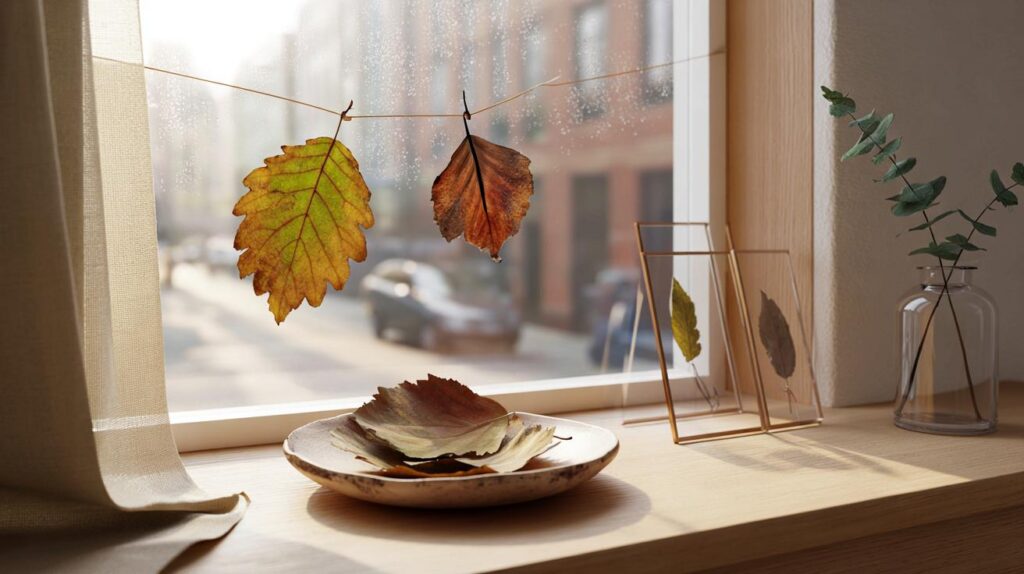
Start with one surface and a single mood. A narrow shelf loves a low line: three pressed leaves in a frame, spaced like haikus. A mantel can take height: tall stems of eucalyptus, then a single oak leaf on the clock for a wink of texture. Try a floating effect with fishing line—two or three leaves at different drops in a window, where sunrise does the gilding for you. Give the display air. Let the edges be imperfect.
Table centrepieces need restraint because plates arrive later and chaos follows. One shallow bowl, a tangle of twine, five leaves, done. If you want something more sculptural, bind a few stems together with florist wire and tuck them into a simple jug, leaving the rim clear. Keep them clear of soup and curious cats. If it helps, set a “three-minute tidy” timer before guests arrive; it turns nerves into a small ritual and the leaves will thank you.
Walls can host transient art. Pressed leaves taped in a grid with washi tape look like a calm moodboard. For a cleaner finish, slip them into slim acrylic frames and lean them rather than hang—no holes, easy changeover. If you crave a wreath, go asymmetrical: a bare hoop, a clutch of leaves gathered on one side, negative space doing the rest. And when the colour begins to fade, don’t argue with it. Compost and begin again.
Let the season speak, then answer softly
When we decorate with dried leaves mindfully, we treat our rooms like listening spaces. We’re not staging autumn; we’re hosting it for a spell and asking what story it wants to tell. Share the labour with the season—light does a lot of styling for free, and quiet always edits well. Put one small thing where your eye can land when you walk in from the rain. Replace it when the air shifts. Pass the leaves on to the soil when they’re done, with thanks. The practice isn’t about craft perfection so much as presence. What could be lighter than that?
| Point clé | Détail | Intérêt pour le lecteur |
|---|---|---|
| Curate your gathering | Pick windfallen leaves with a tight palette and a clear purpose | Fewer, better pieces create calm and coherence |
| Use simple care techniques | Pressing, warm ironing, or a short glycerin bath for suppleness | Longer-lasting displays without fuss or specialist kit |
| Arrange with breath | Leave negative space, play with light and height, rotate seasonally | Rooms feel alive, not staged, and easy to refresh |
FAQ :
- Can I preserve the colour of leaves?Natural pigments fade, but pressing out of direct sun keeps tones richer for weeks. Glycerin helps depth on sturdier leaves, and acrylic frames slow bleaching.
- What’s the quickest way to dry leaves flat?A warm iron between baking paper for short passes works in minutes. Move constantly and let each leaf cool under a book afterwards.
- Is it okay to collect leaves from parks?Yes, if you only take a few windfallen leaves and respect local guidelines. Avoid protected areas and leave habitats undisturbed.
- How do I stop leaves from crumbling?Choose thicker species, don’t overheat, and consider a light glycerin bath. Display away from radiators and open flames.
- What if my arrangement looks messy?Edit. Remove half, group by tone, and add negative space. Step back, change the height of one element, and let light do some of the work.



This made me slow down in the best way. The ‘choose less, notice more’ line hit home, and the glycerin bath tip is gold. I also appreciate the nudge to use low‑tack tape—my last garland took paint with it. Mindful maintenance as a ritual? Lovely. Thanks for a calm, practical read.
Honest question: how is this different from just… arranging clutter? The ‘rule of three’ and leaving negative space sound nice, but in a small flat, even five leaves can look fussy. Maybe I’m missing the point—does the mindful bit actually change the feel, or is it mostly aesthetcs?