
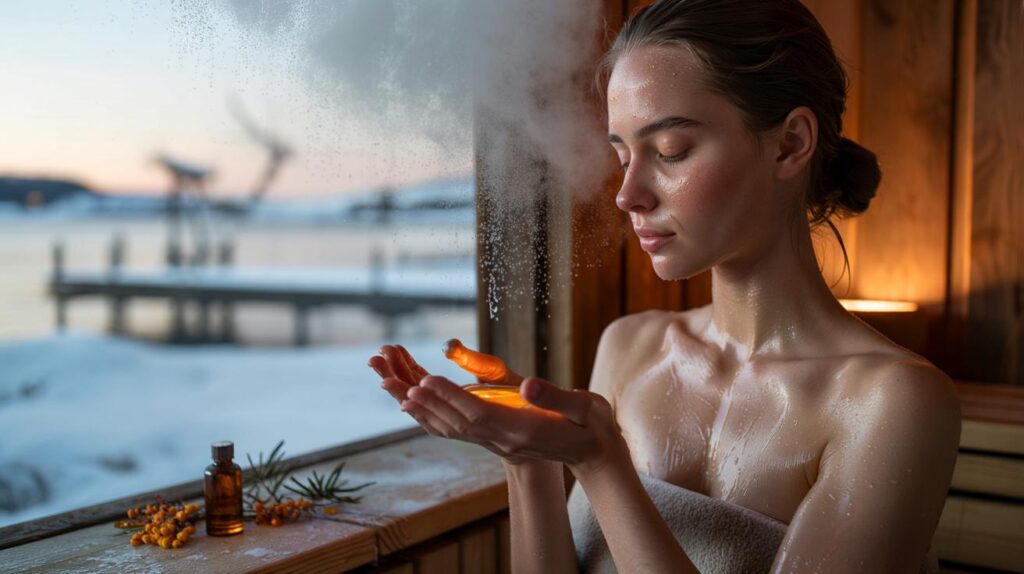
Winter in the Nordics scours skin like wind on stone, which is why so many women there turn to a small, glowing bottle of oil as if it were central heating you can carry.
The ferry dock in Tromsø smells of kelp and cold steel, and the light is the colour of pewter at three in the afternoon. A woman steps from the public sauna, cheeks flushed, and rubs a slow ribbon of amber oil between her palms before pressing it into her face, then her forearms, then the thin skin over her collarbones. Steam eddies, the harbour cranes vanish, and for a moment the room is its own weather.
We’ve all had that moment when your smile feels like it might crack because the air is so dry. She doesn’t rush, she doesn’t fuss; her hands move like someone buttering warm rye bread. The glow isn’t sweat.
Why oil is the Nordic winter’s quiet hero
Nordic women will tell you: creams are fine, but oil is the one that never leaves you stranded in January. Water-heavy lotions evaporate fast in rooms heated to a cosy 22°C with radiators thumping; oil lingers, softens, seals, and eases tightness you didn’t know your jaw was holding. **In the Nordics, oil isn’t a luxury; it’s survival for skin.** It’s also practical. A thumb-length of cloudberry or oat oil weighs nothing in a handbag yet behaves like a blanket once it meets warm, damp skin.
Consider the rhythm of a Swedish evening in Umeå. Boots off, wool socks on, the bathroom fogged from a quick shower, someone puts the kettle on and a small bottle appears by the mirror like a ritual object. A pharmacist there told me face oils fly off the shelves the week the snow sticks. Indoor humidity can plunge below 25% when radiators sing, and that kind of dry steals moisture straight from your cheeks. A few drops of oil turns the tide, not by drowning your skin, but by keeping what’s already there from leaving.
There’s a simple logic behind it. Your skin barrier is mostly lipids, and plant oils speak that language fluently. Linoleic-rich oils such as rosehip and blackcurrant seed feel lighter and can balance congestion; oleic-rich oils such as olive or sea buckthorn seed feel plusher and cocoon dry patches. Oat oil is a quiet star in Sweden because it’s rich in ceramide-like lipids and feels calm on winter-irritated faces. Oil on damp skin forms a soft seal; add a cream on top if you want extra cushioning, or just stop when your face stops pulling at you. No drama, just relief.
How to do the 3‑minute Nordic oil ritual
Think simple, hot, and fast. Step out of the shower or sauna and keep the door closed so the room stays steamy. Pat the water so your skin’s shiny but not dripping, warm 6–8 drops of oil between your palms, and press—don’t rub—over your cheeks, forehead, and chin. Work down the neck and into the chest with long, slow strokes. Then take another 8–10 drops for the body: start at the ankles and move upwards in sweeping motions toward the heart. This is micro-circulation and comfort in one go.
A few common slips make the ritual feel heavy when it should feel like fresh air in a bottle. People use too much, or they go in on bone-dry skin, which leaves a film instead of a cushion. Fragrance can be lovely, yet in deep winter faces can get reactive, so save the scented blends for arms and legs. If you’re oily or acne-prone, try two drops on damp skin and stop; oils aren’t a monolith. Let it be for two minutes before dressing, then enjoy that soft-sweater feeling under your clothes. Let’s be honest: nobody really does that every day.
Nordic friends swear by one last touch: the “water sandwich”. Mist, oil, then cream. The mist wakes up thirsty cells, the oil seals, the cream adds comfort for hours. **It’s five breaths long and oddly grounding.**
“In my grandmother’s house we always kept rapeseed oil by the stove and sea buckthorn by the sink,” a Finnish reader messaged me. “One for hands that never stop, one for cheeks that always meet the wind.”
- Best for faces that flush: rosehip, blackcurrant seed, oat oil.
- Best for bodies that itch: rapeseed (canola), camelina, sweet almond.
- For extra glow: a drop of sea buckthorn seed in your palm blend.
- For sauna nights: apply post-steam while skin is dewy and warm.
More than skin: a winter state of mind
This ritual isn’t a beauty trick as much as a winter posture. In a season that steals minutes of daylight and fast-forwards the evening, oil slows you down just enough to notice your breath, your neck, the way your hands work. The scent—nutty from oat, bright from cloudberry—turns a bathroom into a quiet cabin, even if your neighbours are blasting a football match. **Winter asks for ritual, not rush.** Sharing a small bottle with a friend after a cold walk is oddly intimate; you can pass on warmth without saying a word. It lingers in a way that makes the indoors feel like a choice, not a sentence.
| Point clé | Détail | Intérêt pour le lecteur |
|---|---|---|
| Apply on damp, warm skin | Press 6–8 drops face, 8–10 drops body within 3 minutes of shower or sauna | Maximises hydration and reduces greasiness |
| Choose Nordic-friendly oils | Oat, rosehip, blackcurrant seed, rapeseed, camelina, sea buckthorn seed | Aligns with skin barrier needs in cold, dry air |
| Use long upward strokes | From ankles to heart; gentle presses on face and neck | Boosts comfort, glow, and a sense of calm |
FAQ :
- What oil works best for very dry winter skin?Try richer profiles like oat, rapeseed, or sea buckthorn seed blended with a touch of almond. They feel cosy and tend to cushion flakes without sting.
- Can acne‑prone skin use oils?Yes, in a light hand. Look for linoleic‑leaning oils such as rosehip or blackcurrant seed and apply 2–3 drops on damp skin. Keep it simple and watch how your skin responds.
- Do I put oil before or after moisturiser?For the classic Nordic “water sandwich”: mist, then oil, then cream. If you prefer a lighter feel, go mist, serum, oil and stop there.
- How much is too much?If your skin still feels wet after two minutes, you used too much. Start small, add one drop at a time, and aim for soft, not slippery.
- Can I get the benefits without a sauna?Absolutely. A hot shower, a steamy bathroom, even a warm flannel over the face will do. The heat and humidity are the magic partners.



Tried this right after a steamy shower and wow. I warmed 6-8 drops of oat oil, pressed (not rubbed) into damp skin, then a tiny bit more down the neck—defnitely felt like a soft seal, not grease 🙂 The “water sandwich” (mist → oil → cream) kept my cheeks from that tight, papery pull all afternoon. I used to overdo it and feel shiny; starting small + waiting 2 minutes before clothes was the game‑changer. Cozy, not slick.
Honstly, isn’t straight oil comedegenic for some of us? If indoor air is desert‑dry, wouldn’t a humdifier help more? Also curious about TEWL data—oil vs cream vs both. And does sea buckthorn stain pillowcases (hello orange brows)?