
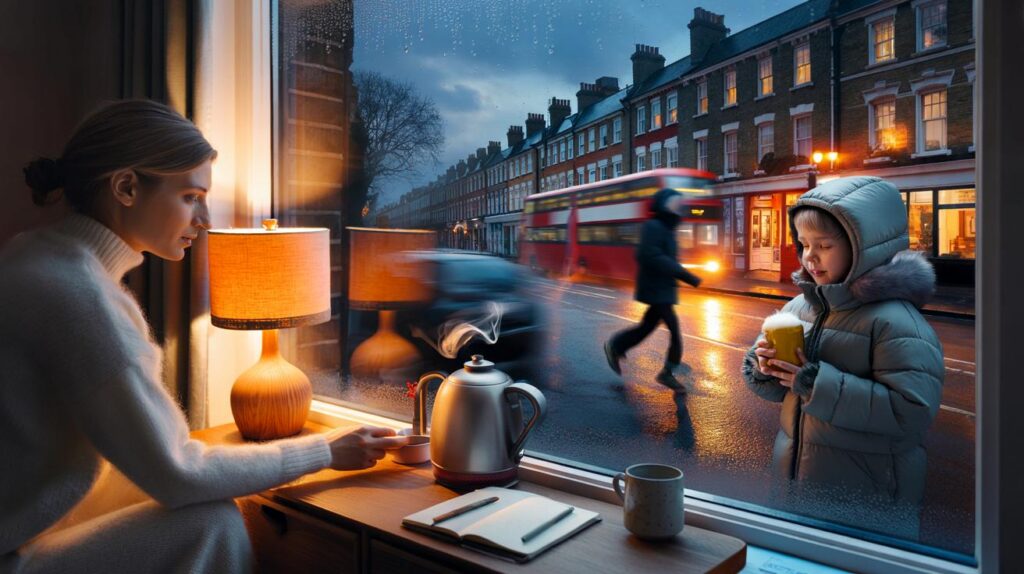
The emails keep coming while the sun packs up at half past three. Your living room becomes the office, gym, and cinema before tea. The mind feels robbed; the body says bed. The season changes the rules, without asking.
On the 4:11 bus, faces glow blue as the driver swings past a row of terraced houses already lit like stage sets. A runner pads by with a head torch, steam rising from their breath, while the chip shop hums and a kid in a puffer coat clutches a hot chocolate that fogs the window. In that dim spill of late afternoon, I watch people choose: home, pub, supermarket, one last loop of the park, or nowhere yet because the inbox still bites. The day feels shorter than it ought to, and somehow louder too, a shuffle of tasks jammed into a shrinking frame. What if that’s the point?
Reframing the early dusk
Shorter days aren’t a moral failing. They’re a shift in light that asks for a shift in rhythm. We’ve all had that moment when you glance up at 3:57 and feel duped by the sky, as if someone pinched an hour from your pocket; the trick is to stop chasing August energy in December.
In London by late December you get under eight hours of daylight, while up in Edinburgh it’s closer to seven. That’s not a vibe, that’s physics. Some days you will still feel flat, and that’s part of the pact. One small, repeatable adjustment beats a grand gesture: a twenty‑minute morning loop round the block, face in the daylight, even if it’s grey and drizzly.
Your body runs on signals, not willpower. Darkness nudges melatonin up; morning light lifts cortisol and sets the internal clock for the next day. Morning light is the single most powerful signal you can give your body. Work with that, and the rest of the day stops feeling like an insult and starts feeling like a different beat.
Rituals that actually work
Set two anchors: one at dawn, one at dusk. In the first hour after waking, get outside or sit near a bright window for 20 minutes, no sunglasses if you can, and move a little while you do it. As the light fades, make a tiny “closing ritual”: switch on warm lamps, put the kettle on, play the same song, and write one line about what mattered today.
Common traps are subtle. You cram the evening with errands and screens, sip coffee at four, and wonder why your brain buzzes at midnight. Front‑load your day and defend your evenings. Let’s be honest: nobody really does that every day.
The point is not perfection; it’s a season you can repeat without hating it. Add one sensory cue you actually enjoy, not a discipline you’ll dodge.
“Treat winter like a project with texture, not a tunnel.”
- Morning light loop: 20 minutes outside within an hour of waking.
- Dusk signal: the same lamp, song, and mug, every evening.
- Midweek anchor: soup night with a friend, no phones on the table.
- Screen sunset: set your phone to grayscale after 9pm.
A season you can belong to
There’s a way to stop wrestling the dark and start giving it a job. You can make dusk the point where work ends, where a quick walk becomes the hinge between roles, where a cheap lamp with a warm bulb stands in for a sun you won’t see again till morning. **Winter isn’t a productivity failure; it’s a different tempo.** You will get fewer outdoor hours and maybe smaller days on paper, and yet inside those hours you can build a winter culture that’s social, practical, and kind to your nervous system.
| Point clé | Détail | Intérêt pour le lecteur |
|---|---|---|
| Morning light anchor | 20 minutes of outdoor light within an hour of waking | Stabilises energy and sleep without extra effort |
| Dusk ritual | Repeatable signal: warm lamps, kettle, one song, one line | Helps the brain switch modes and lowers evening stress |
| Social micro‑habits | Weekly soup night, dusk walk, shared reading hour | Mood lift without big plans or travel |
FAQ :
- How long do I need outside for it to work?About 20 minutes in the morning light most days. Cloudy still counts because daylight is far brighter than indoor bulbs.
- Are SAD lamps worth it?They can help if you can’t get out early. Use a reputable 10,000‑lux light at arm’s length for 20–30 minutes after waking.
- What if I can only exercise after dark?Go for it. Add reflective kit and a head torch, and keep a short, light walk in the morning to bank that daylight signal.
- Will a nap ruin my sleep at night?Keep naps under 25 minutes and before 3pm. Longer or later snoozes can blur your sleep pressure.
- Should I take vitamin D in winter?In the UK, many people take a daily vitamin D supplement through autumn and winter. Speak to your GP or pharmacist if unsure.



Loved the idea of “treat winter like a project,” not a tunnel. The dawn/dusk anchors feel doable, especially the “one line about what mattered today.” I tried 15 minutes outside this morning and felt oddly calmer by lunch. Going to bump it to 20 and ditch sunglasses. Thanks for the gentle nudge 🙂
Compelling, but what if sunrise hits after my night shift ends? Morning light isn’t practical when I’m crashing at 7am in January. Any advice for shift workers beyond “get outside”? Do SAD lamps actually match daylight in effect, or is that oversold? Links to studies would be super helpfull.