
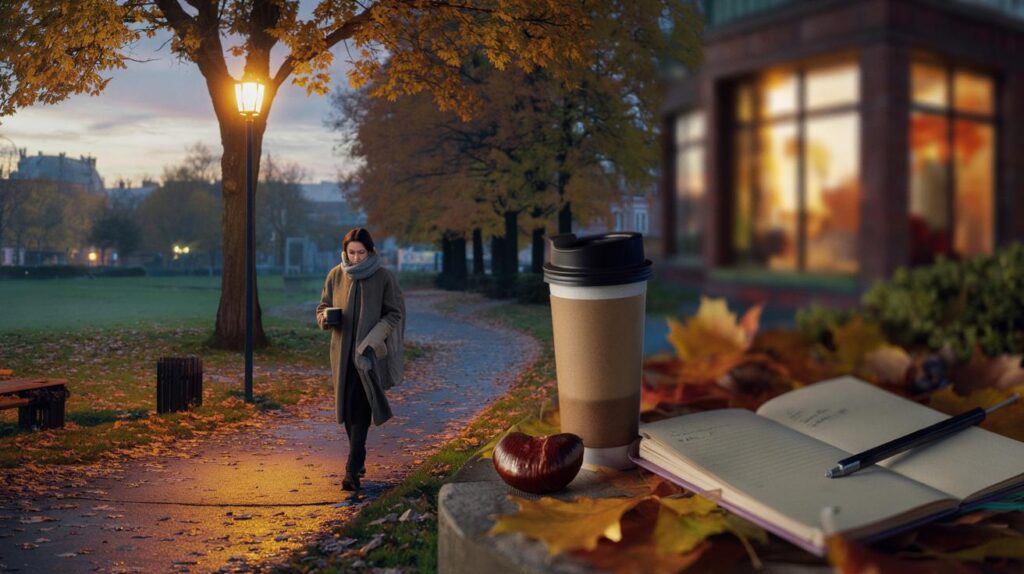
Autumn sits between the rush of summer and the hush of winter, nudging us to take stock. The world slows just enough to hear what our lives have been saying all year.
On a Tuesday evening in late September, the park near my flat was a quilt of amber and rust. People walked home with collars up and hands wrapped round takeaway cups, steam threading the air. A boy kicked a conker down the path and his dad laughed, soft and tired, like the season had made room for gentleness again.
The light thinned and the city noise felt further away. I caught myself noticing small things: the scuff of leaves, the deeper blue over the rooftops, the way strangers were less hurried at the crossing. We’ve all had that moment when the year’s pace finally loosens its grip. The season asks a question.
The seasonal shift that quietens the noise
Autumn reorders the day without asking permission. The earlier dusk trims our calendars, and cooler air invites longer breaths on the walk home. Streets that roared in July now hum, and that hum leaves space for thought.
Routine resets help too. School terms, new projects, wardrobe swaps — the small rituals of September signal change without drama. When the outside world cues a slowdown, the inside world copies it, often without us noticing. That’s where reflection starts, almost by accident.
Think of a commuter stepping off the train into a 6pm twilight, not 9pm daylight. The phone feels less magnetic when the sky has already drawn a line under the day. *You’re meant to be heading in, not scrolling out.* Research suggests even two hours a week in green spaces links with better wellbeing — doable in short, leaf-scented walks after work. Tiny shifts; big room for thought.
There’s a practical side to this softness. Our bodies respond to light changes — melatonin rises earlier, social plans drift inward, kitchens get warmer. Reflection gets easier when energy turns from expanding to gathering. That’s not mysticism. It’s timings doing the heavy lifting.
History agrees. Harvest time has always paired doing with thinking: tallying what was sown, what grew, what didn’t. In a culture that worships momentum, autumn dares to pause and count. Beneath the colour, it’s a season of numbers and notes.
This is a liminal window — not summer, not winter — and liminal windows are powerful. They shake us gently from habit. Your to-do list looks different under a golden streetlamp than it did in the glare of midday. That difference is where clarity slips in.
Turning autumn into a personal retreat you can actually keep
Start with one small anchor you repeat three evenings a week. A kettle, a notebook, and a ten-minute “what was good, what felt heavy” scan. Pair it with a **20-minute dusk walk**: no headphones, just your steps and the day closing around you. The body moving helps the brain file things away.
Add a weekly check-in you’ll look forward to. Sunday soup and a page of notes. Friday lunchtime bench sit. Name three things you’re releasing, three you’re keeping, one you’re curious about. The trick is the size — it’s got to be too small to fail.
Common pitfalls arrive dressed as ambition. Don’t turn reflection into a project plan with perfect stationery and rules. Let’s be honest: no one does this every day. Skip the guilt if a week goes sideways. Swap the phone for paper for ten minutes and watch what returns.
Perfectionism whispers that you need a cabin, a scented candle, and a flawless routine. You need none of that. You need a door you can close for fifteen minutes and a way to begin. Here’s a nudge to keep you company.
“Autumn isn’t an ending; it’s a pause your mind can actually hear.”
- Three prompts: What did I learn? What am I carrying that feels too heavy? What would a kinder pace look like this week?
- One action: schedule a walk with someone who asks good questions.
- One boundary: park your phone in another room during your evening tea.
- One treat: cook something slow on a weeknight and let the simmer do its work.
Let the season move something in you
What shifts in autumn often lasts. When you say no to one thing in October, you’re making space that January you will thank you for. When you edit a routine now, December doesn’t have to break you to get your attention.
This isn’t about becoming a monk. It’s about noticing where the year tired you out and letting the season lend you its steadying hand. Notice the itch to clear a shelf, the urge to text an old friend, the quiet thought that your mornings want to be slower. Follow one thread, not ten. That’s enough.
There’s a lovely democracy to fallen leaves. Everyone gets them on their doorstep, no matter their postcode or title. In that shared mess, life feels a little more honest. Use that honesty. Use the light. Use the warmth of indoors when it rains and the crisp air when it doesn’t. Something in you already knows what to do next, and autumn is very good at helping you hear it. Try one small thing, then see what answers back. **Maybe it’s time to let things go that no longer fit.**
| Point clé | Détail | Intérêt pour le lecteur |
|---|---|---|
| Light shifts guide reflection | Earlier sunsets and cooler evenings nudge routines inward | Clarity rises as external noise drops |
| Rituals that stick | Small, repeatable practices: walks, tea, three prompts | Less decision fatigue, more consistency |
| Letting go as practice | Autumn clean-out of habits, tasks, even expectations | Lighter calendar and more energy for what matters |
FAQ :
- Why does autumn make me feel more reflective?The season compresses daylight, slows social schedules, and signals change. That mix creates mental space where thoughts settle and patterns show.
- How can I reflect if journaling isn’t my thing?Walk without your phone and ask one question as you go. Record a 60-second voice note when you get back. Same insight, different doorway.
- What if autumn makes me sad?Shifts in light can tug mood. Pair gentle routines with daylight where you can, and talk to someone if the heaviness lingers. Reflection doesn’t have to be solitary.
- How much time do I need each week?Think 120 minutes outside across seven days — ten here, twenty there — plus one short sit-down check-in. Small beats heroic.
- Any ideas for families or teams?Try a shared “keep, tweak, drop” conversation over a simple meal. One rule: everyone gets one uninterrupted minute to speak. You’ll leave lighter.



Love how you framed autumn as a ‘pause your mind can actually hear.’ The steam over takeaway cups and that dad’s tired laugh — wow. I tried your ten-minute scan + 20-minute dusk walk tonight and felt the day untangle itself. The harvest-tally metaphor realy clicked; I listed what to keep, drop, and be curious about. Small, human, doable. Bookmarked.
I’m a bit skeptical. Shorter days often tank my mood (SAD is real), so the “earlier dusk trims our calendars” bit feels rosy. Is there research beyond the “2 hours in green spaces” stat that shows autumn specifically boosts reflection without worsening wellbeing? Genuinley curious.