
Household odours cling to curtains and linger for weeks. Busy homes need quicker fixes than unhook, wash and wait.
Windows funnel dust, pollen and cooking fumes straight into fabric. You can refresh curtains in minutes, while they hang, with low-cost tools you already own.
Why curtains smell and trigger sneezes
Curtains sit in the path of warm air rising from radiators and cool air falling from windows. Fibres behave like filters. They trap dust, pet dander and kitchen vapours. Synthetic fibres hold onto odours longer than natural ones. Heavy weaves capture more particles. Blackout linings can seal in stale smells. Regular refreshes reduce buildup and stop allergens circulating every time you draw the fabric.
Think airflow, fibres and frequency: reduce airborne grime, clean the pile, and repeat little and often.
The 7-minute on-the-pole routine
This quick session tackles dust, odour and creases without removing a single hook. It suits most everyday fabrics.
- Open the window for 10 minutes. Fresh air shifts moisture and helps odours dissipate.
- Close the curtains so the fabric lies flat. Set your vacuum to low suction and fit a soft brush tool.
- Vacuum from top rail to hem in straight, vertical strokes. Take the edges and header tape. Aim for 60 seconds per panel.
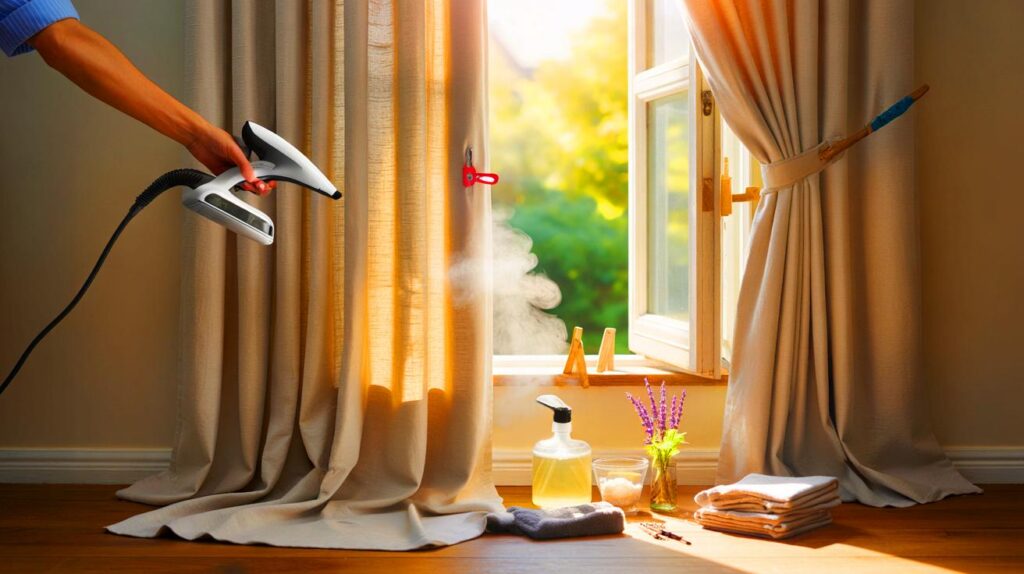
- Steam with a garment steamer, 15–20 cm from the fabric, moving slowly downwards. Target puckered seams and hems for another 60–90 seconds per panel.
- Spot-treat marks: spritz a 1:2 mix of white vinegar and warm water onto a cloth, dab the stain, then blot dry.
- Finish with a light deodorising mist. Use a fabric-safe spray or a home mix (see below). Leave curtains closed while they dry.
Weekly plan: vacuum once, steam lightly every fortnight, and spot-treat the same day stains appear.
Home mixes that actually work
The stain lifter
Mix 1 part white vinegar with 2 parts warm water in a spray bottle. Patch-test on an inside hem. Mist the cloth, not the curtain, and dab from the outside of the mark toward the centre. Vinegar breaks down smoke, cooking film and many water-based stains. The smell fades as it dries.
The odour-neutralising spray
Combine 250 ml distilled water with 1 tablespoon plain vodka in a spray bottle. Add up to 10 drops lemon or lavender oil if household members and pets tolerate fragrances. Shake and mist lightly across the lower half of the curtain. Alcohol speeds evaporation and helps neutralise smells.
If you avoid sprays, tuck small fabric sachets filled with bicarbonate of soda and dried herbs near the pole. Replace the bicarbonate every four weeks.
What works for your fabric
Heat, moisture and fibre type decide which tactic to use. Check care labels before you start.
| Fabric | Vacuum | Steam on pole | Vinegar mix | Notes |
|---|---|---|---|---|
| Cotton/linen blends | Yes, soft brush | Yes, low steam, 15–20 cm away | Yes, patch-test | Avoid soaking seams to prevent stretching. |
| Polyester/microfibre | Yes | Yes, light passes | Yes | Resists wrinkles, holds odours longer, repeat sprays sparingly. |
| Velvet | Yes, in the nap direction | Yes, from the reverse if possible | Minimal, on cloth only | Keep the head 20 cm away to protect pile. |
| Silk or raw linen | Yes, very gently | No direct steam | Rarely, patch-test only | Use a cool hairdryer on the lowest setting for airflow only. |
| Blackout-coated | Yes | Yes, brief, cool-down passes | Yes, avoid coating | Steam from the fabric side, not the coated side. |
How often should you do it?
In a low-traffic room, plan a 7-minute refresh every two weeks. In kitchens, near busy roads or with pets, switch to weekly. During high pollen months, vacuum more often if hay fever flares. If you smoke indoors or fry frequently, add a midweek deodorising mist. Short, regular sessions stop grime settling deep in the weave.
Costs and time that make sense
A 99p bottle of white vinegar lasts months. A 500 g tub of bicarbonate costs around £1 and covers dozens of sachet refills. A typical 1,500 W garment steamer used for seven minutes draws roughly 0.17 kWh. At 28p per kWh, that is close to 5p per session. The routine fits between making a brew and answering an email.
When a full wash still makes sense
Choose a machine wash when fabrics feel sticky, visible grime lines appear along the hem, or a musty smell returns within 24 hours of steaming. Remove hooks and rings. Use a gentle cycle, cool water and a low-spin setting. Dry flat or rehang damp to let gravity pull out creases. Dry-clean if the label says so or the fabric is interlined or embroidered.
Allergy and pet-safe housekeeping
Pollen and dust mites irritate airways. Vacuuming top-to-bottom reduces particles that fall onto sills and radiators. Keep fragrance low if anyone has asthma. Many essential oils bother cats, and tea tree can harm dogs. If in doubt, leave oils out and rely on ventilation, vodka-water spray, and bicarbonate sachets.
Small upgrades that boost results
Give the fabric some weight
Clip a pair of pegs to the hem while steaming to encourage a cleaner drop. Remove them once the fabric cools. Weighted hems hang straighter and crease less between sessions.
Target the hot spots
The header, tieback area and leading edge pick up the most oils from hands and heating. Spend an extra 30 seconds on these zones. Wipe the pole, finials and any metal eyelets with a damp microfibre cloth. Dust above the pelmet where fluff collects.
What to do if you do not own a steamer
Hold a kettle on a safe surface below the hanging curtain and let gentle steam drift up for 30 seconds per section, keeping 30 cm distance. Use short bursts and keep the kettle stable. Follow with a cool hairdryer to speed drying. The aim is to relax fibres, not wet them.
Extra ideas for fresher rooms
Balance humidity between 40% and 60% to slow musty smells. A small dehumidifier in winter reduces condensation on windows and keeps curtains dry. Wipe sills after cooking. Shut the kitchen door when frying. Swap dusty blinds for washable ones in rooms where grease builds quickly.
Plan a seasonal refresh. In spring, hang the curtains on a breezy day and steam with the window open. In autumn, add a moth deterrent sachet near wool curtains. A simple calendar reminder every four weeks keeps the routine alive and the fabric looking and smelling guest-ready.



Quick question: will 99p white vinegar be safe on blackout linings and polyester blends, or could it lift the coating/leave a faint chip‑shop smell? Patch‑test notes say avoid the coating, but how do you keep spray off the lining when spot‑treating seams?
Tried the 7‑minute run while the kettle boiled—vacuum + quick steam and the creases fell out. My living room actually smells neutral now 🙂 Bonus: the vodka‑water mist worked faster than my usual spray. Keeping this on a weekly rota!