
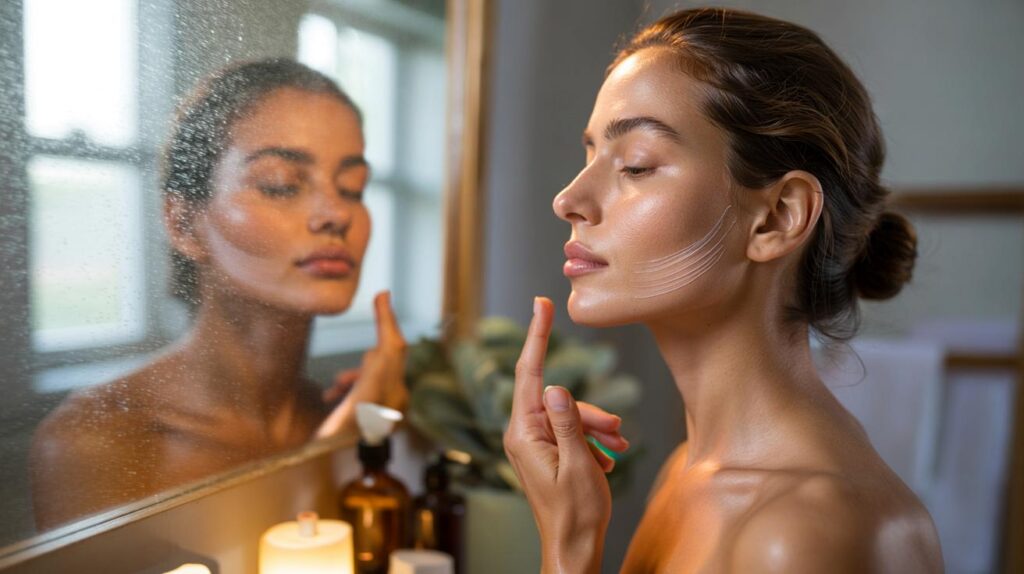
Fillers promise a shortcut, but the mirror is a blunt friend. Between Zoom angles and late-night scrolling, many of us see a softer outline where a firm edge once lived. In the middle of this low-level panic, a quieter trend has slipped in: people pressing, stretching and smiling at their reflection for a brisk daily reset. Not glossy. Not pricey. Just hands, breath and a timer.
The first time I saw face yoga up close was in a steamy locker-room mirror in Hackney. A woman in an oversized hoodie tilted her chin, pressed her tongue to her palate and traced long sweeps from jaw to ear; it looked odd for five seconds, then strangely graceful. Her cheeks picked up a shy lift, like light catching a ledge. She wiped fog from the glass, grinned, and said, “five minutes, then tea.” I tried a minute. Warmth rushed in. Something shifted.
Why Face Yoga Is Having a Moment
In an age of injectables on every high street, a lot of faces are quietly opting out. Not from vanity, but from the feeling of outsourcing expression to a syringe. Face yoga sits in that gap where wellness meets thrift: no clinic, no downtime, just a small daily ritual that nudges tone and posture. People want definition that still moves with them. The appeal is simple: do a little, see if your **jawline** answers back.
Ask around and you’ll hear brisk stories. A barista in Manchester told me her cheeks looked less “tired at 4 pm” after three weeks of lunch-break moves. There’s also a hint of data: a 2018 Northwestern study found that women who practised facial exercises regularly showed improved mid-face fullness and were judged a touch younger by dermatologists. Tiny sample, imperfect world, yet the message is clear. Consistency beats perfection, and five minutes can stack up fast.
What could be happening is both basic and brilliant. You recruit sleepy muscles, coax blood flow, and ease tension that drags features south. The fascia under your skin glides better, lymph has a clearer exit, and your neck stops sulking from phone posture. *Your face is a muscle map you can learn.* It’s not magic. It’s repetition, light touch, and the kind of focus that makes your skin feel like a place you live in, not a project to fix.
The 5-Minute Routine: Moves That Matter
Start with clean hands and a slick of serum or oil. Minute 1: Jaw Sweep. Lips closed, tongue pressed to the roof of your mouth, glide both index and middle fingers from chin centre along the bone to just below the ears; slow, 10 passes. Minute 2: Cheek Lift “O”. Form an “O” with the lips, smile gently with the cheek muscles, and hold five seconds, release; 10 reps to **lift your cheeks**. Minute 3: Tongue Press Under-Chin. Tip of tongue to palate, press and hold eight seconds, release; 8 reps to firm the floor of the mouth. Minute 4: Swan Neck Glide. Tilt chin up, kiss the ceiling, glide one hand from collarbone to jaw; switch sides, 6 passes each. Minute 5: Lymph Flush. Feather-light taps and strokes from centre-face to ears, then down the sides of the neck to the collarbones; breathe through your nose.
Common snags show up fast. People grip too hard, wrinkle the forehead, or chase a burn like they’re at the gym. Ease wins here. Keep shoulders soft, jaw gentle, breath steady. Work with a mirror for the first week so you don’t recruit the wrong muscles. We’ve all had that moment when a front camera flips and your neck shrugs to your ears; remember posture decides a lot. Let’s be honest: no one actually does this every single day. Tie it to kettle time or your evening cleanse and you’ll come close.
Small cues can change everything. Think “lift and lengthen”, not “scrunch and push”. Aim for glide, not drag, and keep any stretch under ten seconds so the face stays calm. A London trainer once told me the goal is “toned softness” — tension takes you the other way.
“Your hands are the cheapest, most portable studio your face will ever have.”
- Use slip: a drop of oil prevents tugging.
- Eyes open: watch for forehead creasing and dial it back.
- Slow count: five to eight seconds beats frantic reps.
- Finish down the neck: give lymph an exit lane.
- Stop if something hurts: warmth is fine, pain is a no.
A Small Daily Ritual With Outsized Payoff
Five minutes is just long enough to meet your face without judgement. No filter, no clinic light, just you, a mirror and a routine that reminds muscles what “up” feels like. Across a month, the edges can look a little tidier, the mid-face a shade bouncier, the neck a touch prouder. More interesting things happen too. Your jaw releases after long emails. Your breath deepens when your fingers move. You look like yourself on a good night’s sleep. The numbers are modest and the feeling is not. This is the kind of low-stakes habit that travels well, costs almost nothing, and slots into real life. Whether you keep fillers on the table or wave them off is your call; the point is choice. Maybe that’s the quiet power — turning a mirror check from a critique into a practice.
| Point clé | Détail | Intérêt pour le lecteur |
|---|---|---|
| Daily time | Just **five minutes** split across five moves | Achievable habit with visible rhythm |
| Key targets | Under-chin, cheeks, jaw path, neck glide, lymph flush | Clear focus where lift and definition show |
| Mindset | Glide, light touch, steady breath, soft eyes | Better results without extra lines or strain |
FAQ :
- Can face yoga replace fillers?They do different jobs. Face yoga can improve tone, posture and puffiness, while fillers add volume. Many people blend approaches or use face yoga to extend time between treatments.
- When will I see changes?Subtle shifts can appear in 2–3 weeks with near-daily practice. Sharper definition often shows by 6–8 weeks. Photos in the same light help you track progress.
- Could it create wrinkles?Over-grimacing and pulling skin can. Work with slip, keep the forehead calm, and stop if you see creasing. Think slow activation, not exaggerated faces.
- Is it safe for everyone?Most healthy people are fine to try gentle moves. Skip if you have recent facial surgery, active skin irritation, or TMJ pain flares, and go lighter if you bruise easily.
- Best time: morning or night?Morning reduces puffiness and sets posture; evening melts jaw tension from the day. Pick the slot you’ll actually keep — habit beats clock.



Tried this while waiting for the kettle — the jaw sweep legit warmed up my face. Bookmarked.
Cool read, but how much of that Northwestern study is placebo? Tiny samples can look impressive on paper. Do you have before/afters controlled for lighting, or is it mostly self-report? Also curious whether tongue-to-palate work risks aggravating TMJ for people who clench.