
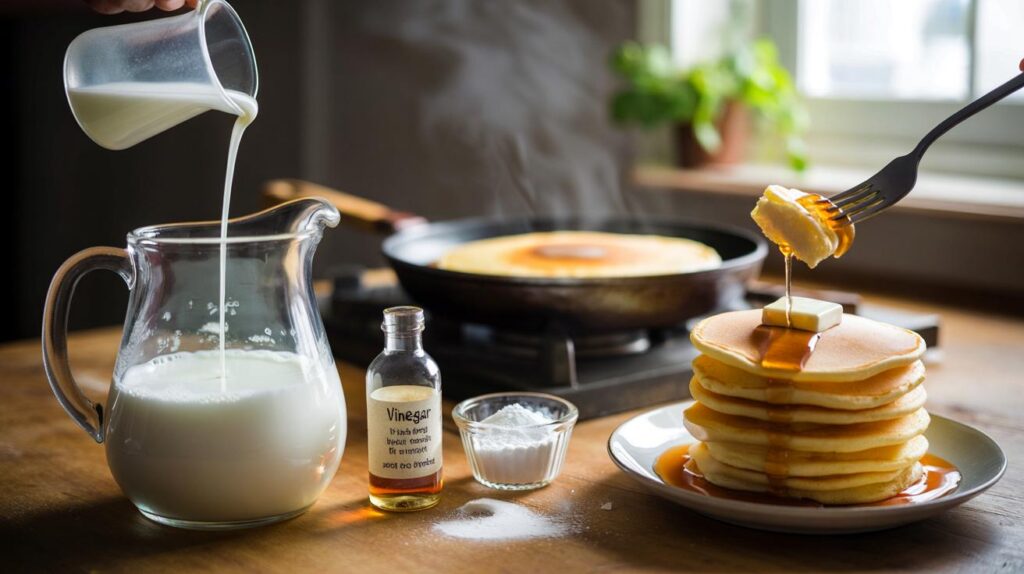
Your pancakes are fine. They look like pancakes. They taste alright. Then you see a photo online of a cloud-thick stack and wonder why yours keep landing with a soft sigh instead of a cheerful bounce. The fix isn’t a fancy pan or a secret whisking ritual. It’s a teaspoon of something you already own.
The kitchen window was fogged, the kettle nursed a soft whistle, and the batter sat like a sulk in a mixing bowl. I’d promised Sunday pancakes and got that familiar dread: the first one will be pale, the second will burn, and by the third I’ll pretend it’s “rustic.” I tipped a teaspoon of vinegar into the milk and watched tiny swirls bloom, the way cream billows in tea. On the hob, the pan ticked warm. The first ladle hit, puffed, and rose like a held breath finally released. *The fork went in and met… air.* The stack didn’t slump. It stood tall.
The one-ingredient twist that changes everything
It’s vinegar. Plain, cheap, hiding-in-your-cupboard vinegar. A teaspoon stirred into your milk is the quiet upgrade your pancakes have been waiting for. The milk sours in a minute or two, just enough to meet the alkaline lift of baking soda and make new bubbles on demand. **Those bubbles are your scaffolding, your soft towers, your reason to reach for a higher plate.** No mad whisking, no separating eggs; just a nudge in the right chemical direction. It feels almost lazy, which makes it even better.
I first heard about it from a café cook in Margate who admitted she was “done pretending” about pancake technique. She poured vinegar into a jug of milk with the flat confidence of someone who has survived six brunch rushes in a row. “We go through twenty litres on a Saturday,” she said, “and if I skip the vinegar, the staff tell me by noon.” Later, I tried it at home with malt, white, and cider vinegar. The best? A clean teaspoon of white vinegar per 240 ml milk, rested for two minutes until faintly thick.
Here’s why it works. Pancake lift is gas meeting structure. Baking powder and a pinch of bicarb release carbon dioxide. The acid in soured milk speeds that up right where you need it: inside the batter as it hits heat. The reaction makes tiny pockets that expand like balloons; the flour’s starch sets to hold them. The result is height without heaviness. No disruption to the flavour, either—just a rounder, richer crumb. Keep the batter relatively thick, so those bubbles don’t escape before their time.
How to do it, step by step, without the faff
Use 1 teaspoon white vinegar for every cup (240 ml) of milk. Stir and leave for two minutes; it will look slightly “broken” or creamy—perfect. Build your batter: 150 g plain flour, 1 tablespoon sugar, 1 teaspoon baking powder, a pinch of bicarb, a pinch of salt, 1 egg, and your soured milk. Fold until just combined. Rest five minutes. Ladle into a lightly oiled, medium-hot pan. Wait for bubbles to pop and edges to dull before flipping. That’s the sweet spot. It’s less dance, more small ritual.
Use any neutral vinegar: white or cider are ideal. Not balsamic, not wine vinegar with a big personality. Keep the heat medium; too hot and your pancake scorches before it sets, too cool and it spreads thin. We’ve all had that moment when the first pancake flops and your confidence goes with it. Save it for the cook to nibble and try again. Let’s be honest: nobody really does that every day. Keep your batter on the thicker side and resist the urge to stir between scoops. Stirring kills lift.
Real talk from a pro and a few guardrails make the difference.
“A teaspoon of acid is the pancake’s warm-up act,” says chef Libby Carr. “It cues the rise right on time, like a conductor tapping the stand.”
**Make it a habit and your stack starts looking like the ones on your phone.**
- Ratio recap: 1 tsp vinegar to 240 ml milk; rest 2 minutes.
- Dry mix: 150 g flour, 1 tbsp sugar, 1 tsp baking powder, pinch bicarb, pinch salt.
- Cook on medium heat; flip when bubbles set and edges look matte.
- Butter the pan lightly; too much fat gives lace, not lift.
- Batch trick: keep finished pancakes on a low oven shelf, uncovered, so they stay proud.
The science in your skillet, and why it feels a bit like magic
There’s a small joy in realising the fix was there all along. Vinegar doesn’t announce itself; it just gathers the batter, steadies the rise, and leaves before anyone clocks its name on the guest list. You taste warmth, not tang. The inside is almost soufflé-soft on day one, and still tender when you sneak a leftover triangle cold from the fridge. **That’s the hallmark of a better batter: lift you can feel, not just see.** It turns a regular morning into a story you might text someone about.
| Key points | Details | Interest for reader |
|---|---|---|
| Vinegar sours milk | 1 tsp per 240 ml, rest 2 minutes to create quick buttermilk | Simple upgrade using a cupboard staple |
| Lift meets structure | Acid speeds CO2 release; starch sets bubbles into height | Fluff without heaviness or extra faff |
| Method matters | Thick batter, minimal stirring, medium heat, flip on set bubbles | Reliable, repeatable stack every weekend |
FAQ :
- Can I use lemon juice instead of vinegar?Yes. Use the same amount; lemon gives a gentler aroma with the same lift.
- Will my pancakes taste like vinegar?No. The acid reacts with leavening and disappears into a clean, rounded flavour.
- Do I still need baking powder?Yes. Use baking powder plus a pinch of bicarb for peak fluff and good browning.
- Which milk works best?Whole milk gives the plushest crumb; semi-skim works fine; oat milk benefits most from the trick.
- Can I make the batter ahead?Up to 30 minutes is fine. Longer and you lose lift—mix fresh for best rise.



Followed your ratios—1 tsp white vinegar to 240 ml milk, rested two minutes—then barely stirred the batter. The lift was real and the crumb was plush, not gummy. The “don’t stir between scoops” tip was the game-changer. Definately adding this to Sunday rotation; even the cook’s pancake was decent!
Isn’t this basically making quick buttermilk? Why not just use store-bought buttermilk and skip the vinegar step—any pros/cons on flavor and rise?