
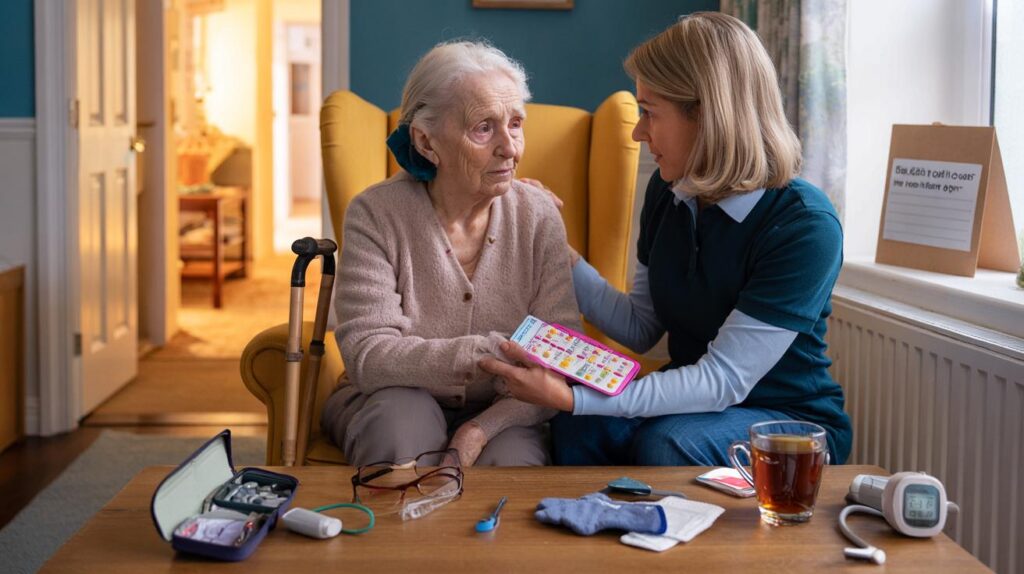
Rising care needs, stubborn bills and confusing rules collide for older people. Many feel stuck, unsure where real help begins.
If you, a parent or a neighbour are struggling with personal care, a little-known payment could ease the pressure without affecting other income.
What the allowance pays and who it helps
Attendance Allowance supports people at State Pension age who need help with personal care or to stay safe at home. The Department for Work and Pensions recorded almost 1.7 million claimants by late August 2024, underscoring the scale of need.
The benefit is tax-free and not means-tested. Savings and income do not affect entitlement. There is no mobility component, so it differs from benefits like Personal Independence Payment.
Weekly rates in 2025/26 are £73.90 (lower rate) or £110.40 (higher rate), usually paid every four weeks.
The payment aims to cover the extra costs that arise when washing, dressing, eating, taking medication, getting in and out of bed or staying safe becomes difficult. You do not need to have a carer in place to claim, only a genuine need for help or supervision.
The full DWP list of 48 health conditions
The DWP tracks the conditions linked to claims to help understand need. This is not a checklist and a diagnosis alone does not decide entitlement. What matters is the help you require during the day and/or night because of a long-term condition.
Your qualifying test is the support you need, not the label on your medical notes.
Shares below show the proportion of Attendance Allowance claims connected to each condition category across the caseload:
| Condition category | Share of claims |
|---|---|
| Hearing disorders | 42% |
| Disease of the muscles, bones or joints | 40% |
| Trauma to limbs | 36% |
| Multiple sclerosis | 52% |
| Learning difficulties | 48% |
| Respiratory disorders and diseases | 33% |
| AIDS | 47% |
| Inflammatory bowel disease | 42% |
| Haemodialysis | 22% |
| Behavioural disorder | 28% |
| Malignant disease | 35% |
| Psychosis | 44% |
| Viral disease (diagnosis not specified) | 13% |
| Heart disease | 50% |
| Frailty | 100% |
| Bowel and stomach disease | 37% |
| Spondylosis | 48% |
| Asthma | 47% |
| Psychoneurosis | 38% |
| Cerebrovascular disease | 42% |
| Skin disease | 37% |
| Haemophilia | 39% |
| Arthritis | 47% |
| Tuberculosis | 53% |
| Chronic pain syndromes | 39% |
| Major trauma (other than traumatic paraplegia) | 45% |
| Dementia | 20% |
| Epilepsy | 44% |
| Cystic fibrosis | 27% |
| Multi-system disorders | 41% |
| Renal disorders | 26% |
| Blood disorders | 39% |
| Peripheral vascular disease | 41% |
| Motor neurone disease | 32% |
| Neurological diseases | 50% |
| Metabolic disease | 38% |
| Cognitive disorder (other) | 22% |
| Diabetes mellitus | 39% |
| Back pain (other/unspecified) | 43% |
| Multiple allergy syndrome | 44% |
| Traumatic paraplegia | 54% |
| Hyperkinetic syndrome | 27% |
| Alcohol and drug abuse | 37% |
| Bacterial disease (diagnosis not specified) | 43% |
| Visual disorders and diseases | 41% |
| Personality disorder | 48% |
| Coronavirus (COVID-19) | 1% |
| Parkinson’s | 30% |
These figures are descriptive. They do not guarantee an award. Decisions turn on your day-to-day care needs, how often support is required, and whether risks arise if you are left without supervision.
How to judge if you might qualify
Daily living needs that count
Consider applying if tasks take a long time, cause pain, require prompting, or you need someone to stand by to keep you safe. This applies to physical and mental health conditions alike, including sensory loss.
- Personal care: washing, bathing, dressing, shaving, hair care and dental hygiene.
- Toileting and continence: getting to the toilet, managing pads or a commode.
- Eating and drinking: preparing simple meals, cutting food, staying hydrated.
- Medication: organising tablets, using inhalers, injections or monitoring devices.
- Getting in and out of bed or a chair, moving around indoors.
- Staying safe: risk of falls, confusion, wandering, leaving the cooker on.
- Night needs: help to change position, manage pain, toilet visits or panic.
People with dementia, Parkinson’s, severe arthritis, neurological conditions or chronic pain often qualify because supervision or frequent help is needed even when they can still walk.
Rates and pay cycles
The lower rate of £73.90 applies where help is needed frequently during the day or at night. The higher rate of £110.40 applies if help is needed both day and night, or if you are terminally ill under the special rules.
Paid four‑weekly, that’s £295.60 or £441.60 per pay period — up to about £5,740.80 across the year at the higher rate.
You can use the money as you wish: taxis to appointments, a cleaner, heating, or a gardener to reduce strain. Many people use it to buy small aids that keep them independent.
Applying without the stress
Claims are made on a paper form. It is long, but help is available from advice agencies and local support organisations. Ask for the pack by post or request a phone claim if that suits you better.
Focus on your worst days. Describe real risks and the time help takes. Include examples from the last month: falls, missed pills, burned pans, sleepless nights, or panic episodes. Keep a short diary for a week to capture patterns.
Useful evidence includes hospital letters, a repeat prescription list, care plans, occupational therapy assessments and notes from your GP or specialist nurse. You do not need a new diagnosis to apply.
Special rules fast‑track claims for terminal illness so payments can start quickly.
How it interacts with other support
Attendance Allowance can open doors to extra help. It may increase means‑tested benefits such as Pension Credit and Council Tax Reduction through disability additions, depending on who lives with you and whether anyone claims a carer’s benefit for looking after you.
Someone who cares for you for 35 hours a week may be able to claim Carer’s Allowance or a carer element. That can affect certain additions in your means‑tested benefits, so check the household position before a relative or friend applies as a carer.
There is no mobility part, so it does not directly grant a Blue Badge or Motability. Local schemes vary; some councils accept strong evidence of mobility problems alongside medical proof.
Practical next steps you can take today
Quick self‑check
- Do you need help or supervision most days with personal care or to stay safe?
- Do you wake at night needing assistance more than once, or for 20 minutes or more?
- Have you had falls, confusion, breathlessness, severe pain, or medication errors recently?
- Would a small budget each week help you avoid risks or buy support?
If you tick yes to any of these, you likely meet the threshold to apply. Request the form, gather evidence and keep a week‑long diary. If writing is difficult, a trusted person can fill in answers for you, but make sure your voice and examples shine through.
Many people delay because they think their condition is “not bad enough”. Awards often go to people managing at home who need regular prompts, supervision or help with routine tasks. Do not wait for a crisis. Starting a claim sooner can protect your independence and give family carers breathing space.



Can someone clarify how AA interacts with other benefits in a real household scenario? Mum (State Pension + small private pension) lives with me; I do roughly 40 hrs caring but dont currently claim Carer’s Allowance. If she gets the higher rate, would my claiming CA reduce her Pension Credit or council tax help? Also, does AA affect her savings thresholds at all? Trying to avoid a paperwork own-goal while still getting support we’re entitled to.
Those “shares of claims” look bizzarre. Frailty at 100% — is that just because it’s a super‑broad label? Without denominators or timeframes, this risks confusing readers more than helping. Source link please?