
Mornings feel colder, arguments simmer, and energy bills loom. The big question returns: when should you actually press ‘on’?
As autumn takes hold, cooler days raise a familiar dilemma for households across Britain. Health advice collides with cost anxiety, and many people want a clear date to end the debate. Fresh analysis blending Met Office data with city-level patterns now points to when most of us will flick the heating back on.
What the data says
Energy specialists working with Met Office records and near-term forecasts have mapped when daytime temperatures typically remain below 15C in major cities. That threshold matters for comfort and for safety. NHS guidance warns that prolonged exposure to cold can harm older adults and those with respiratory or cardiovascular conditions, and living spaces under 15C raise risks.
Use 15C as a practical trigger: when daytime highs stay under it, most homes benefit from a controlled heating schedule.
The dates below are not commands. They are a yardstick for planning, recognising that insulation quality, draught levels, building type, and local microclimates shift reality street by street. If your home loses heat fast, you may need to act earlier. If you live in a well-insulated flat or a sheltered terrace, you might hold off a little longer.
Indicative switch-on dates by city
| City | Likely switch-on date |
|---|---|
| Glasgow | 23 September |
| Cardiff | 6 October |
| Newcastle | 7 October |
| Nottingham | 9 October |
| Hull | 9 October |
| Stoke | 9 October |
| Plymouth | 9 October |
| Leeds | 10 October |
| Edinburgh | 10 October |
| Southampton | 10 October |
| Sheffield | 11 October |
| Bradford | 11 October |
| Birmingham | 15 October |
| Liverpool | 15 October |
| Manchester | 15 October |
| Bristol | 19 October |
| Leicester | 19 October |
| Coventry | 19 October |
| London | 20 October |
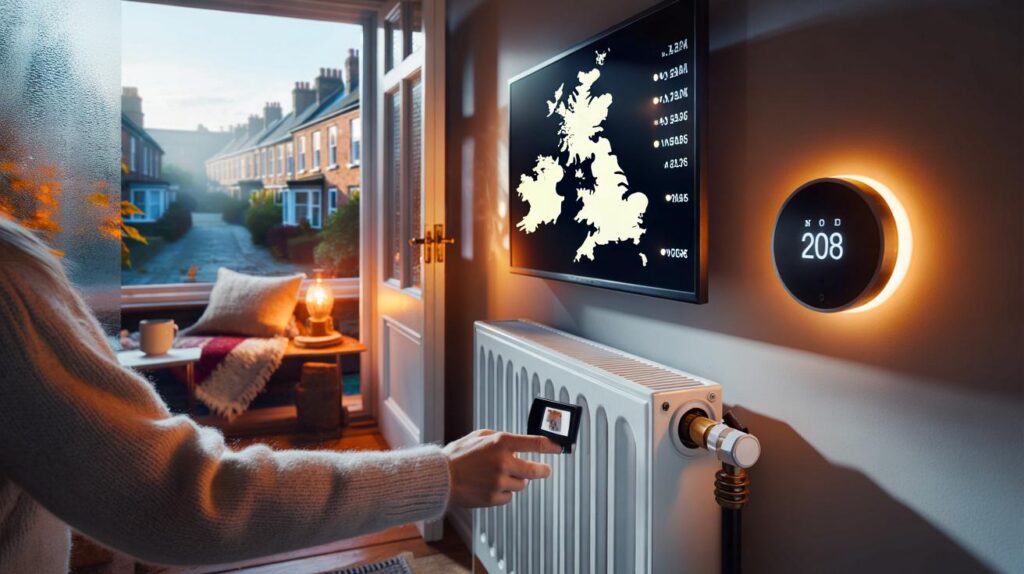
On this map, the north and Scotland reach the “switch-on” point first, with Glasgow leading the pack in late September. The south generally follows in mid to late October, with London among the latest. A northerly snap or an unseasonal warm spell can shift these by several days, so keep an eye on local conditions rather than the calendar alone.
Keep lived-in rooms near 18C and avoid letting indoor temperatures slide into the low teens, especially if anyone is older or unwell.
Cut the cost, keep the heat
Small adjustments add up across the season. Before your date arrives, set yourself up to use less energy for the same comfort.
- Seal the leaks: fit draught excluders, weatherstripping and a bead of caulk around frames and skirting boards.
- Nudge the thermostat: dropping the set-point by 1–2C often trims bills by as much as a tenth with minimal comfort loss.
- Work the curtains: open wide on sunny days, close at dusk to slow heat loss through glass.
- Bleed radiators: release trapped air so every panel warms evenly.
- Service the boiler: an annual check keeps efficiency up and breakdown risk down.
- Zone your home: turn down radiators in unused rooms and shut those doors to keep warmth where you sit and sleep.
- Lower flow temperature: on many modern boilers, reducing flow to around 55–60C improves efficiency while still heating rooms steadily.
- Use smart schedules: pre-heat before you get up, then step down during the day if the home is empty.
- Insulate what you can: jacket the hot-water cylinder and lag exposed pipes to retain heat.
- Add reflector panels: foil behind radiators on external walls bounces warmth back into the room.
Turn it down a notch: a 1C reduction, backed by good draught-proofing, can shave close to 10% off heating costs.
Health first and boiler care
Cold homes can exacerbate breathing problems, arthritis symptoms and heart strain. Aim for 18C in occupied areas, and consider a gentle background setting overnight if anyone is frail. Ventilation still matters. Crack windows briefly to clear moisture and reduce mould risk, then close and reheat efficiently.
Protect the boiler before the chill sets in. Run the heating for 15 minutes on a mild day to wake the system, listen for banging or gurgling, and check pressure is within the manufacturer’s range. Radiators cold at the top usually need bleeding. If you notice frequent pressure drops or leaks, book an engineer visit before busy season.
Smart settings that work in real homes
Try this simple pattern for a typical semi-detached home. Pre-heat to 18.5–19C 30 minutes before waking. Hold 18C through the day if someone’s at home, or let it drift to 16–17C if it’s empty. In the evening, aim for 19–20C in the living room, with bedrooms a touch cooler at 16–18C. Use thermostatic radiator valves to prioritise the rooms you occupy most.
If your annual heating spend sits near £1,200, trimming the thermostat by 1.5C and sealing obvious draughts could save roughly £100–£150 across the season, depending on insulation, boiler type and habits. Savings are larger in leaky homes because the wasted heat drops fastest once you fix the gaps.
What to do before your switch-on date
- Test timers and thermostats so schedules match your routine.
- Move bulky furniture 5–10cm away from radiators to let heat circulate.
- Check that chimney balloons or dampers are fitted if fireplaces are unused.
- Lay a heavy curtain over draughty front doors and letterboxes.
- Set hot water to the lowest comfortable temperature to cut gas use further.
Why your date might differ from your neighbour’s
Two identical houses on the same street can feel different. Corner plots catch the wind. Basement flats stay damper. South-facing windows gather heat, while exposed hillsides lose it. People also vary in how they perceive temperature. Think of the city date as a shared starting point, then fine-tune using a thermometer and your comfort level.
If money is tight, ask your supplier about payment plans and energy efficiency support. Local councils and charities often run schemes for draught-proofing, small insulation measures, or advice for vulnerable residents. Every small upgrade you make before the cold bites stretches your budget and keeps rooms healthier through winter.



15C as a trigger feels arbitary—what about humidity and wind chill? My 1930s semi feels freezing at 17C because of draughts. Any data on indoor temp vs. health beyond NHS 18C guideline?