
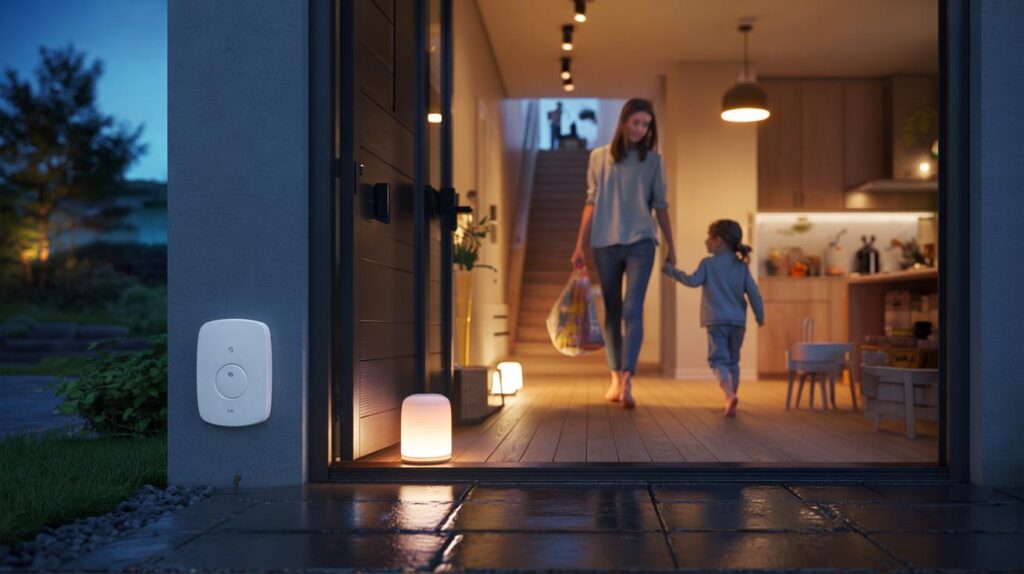
Late-night feeds, muddy school runs, arms full of shopping: those dim corners at home can turn small tasks into hassles.
Now a tiny, battery-powered sensor aims to make those awkward moments easier by putting light exactly where you need it, precisely when you move.
What just landed
IKEA has launched the VALLHORN wireless motion sensor, a compact unit priced at £7 that switches compatible lights on when it detects movement. It works indoors or outdoors, attaches with the included double‑sided tape, and runs on two AAA rechargeable batteries. You can link up to 10 lights, choose a day or night mode, and set the lights to remain on for one or five minutes.
The £7 VALLHORN sensor links up to 10 lights, offers day/night modes and one or five‑minute timers, and sticks on—no drilling.
For busy households, that means safer hallways, gentler nursery lighting at night, and fewer scrabbles for a switch when your hands are full.
How it works day to day
Place VALLHORN on a wall, a shelf edge or near a doorway. When you walk past, your chosen lamps or bulbs snap on automatically. Because the unit can live inside or by a front door, you can step onto the path and see the porch light greet you, or cross a landing and have a soft glow follow you to the bathroom.
The day/night setting helps avoid lights firing when sunlight is already doing the job. The one- or five‑minute timer defines how long your lights stay on after the last detected movement, which helps reduce wasted energy.
Where it makes the biggest difference
- Night feeds and nursery checks without harsh overhead glare.
- Hallways and stairs that feel safer for children and older relatives.
- Front porches and back doors that light up as you approach.
- Pantries, utility rooms and understairs cupboards with hands‑free light.
- Rentals where drilling is off the table and tidy removal matters.
Set-up in minutes
- Unbox the sensor and insert two AAA rechargeable batteries.
- Clean the surface; stick the unit using the supplied tape.
- Pair it with compatible IKEA lighting; link up to 10 devices.
- Select day or night mode and choose a 1‑ or 5‑minute timer.
- Test the coverage by walking past and adjusting placement if needed.
Smart home integration
VALLHORN works on its own, but it gains more control when used with IKEA’s DIRIGERA hub and IKEA Home smart app. That combination lets you chain actions across rooms, build routines, and blend motion with schedules. For instance, you can have the hallway lamp switch on at dusk via the motion trigger and gently cue a living room lamp to glow as you come in with the weekly shop.
Pairing VALLHORN with the DIRIGERA hub turns a simple motion cue into layered lighting routines across multiple rooms.
Because you can link up to 10 lights, one sensor can orchestrate a short path of light from front door to kitchen, or a soft route from landing to bathroom for night‑time trips.
Who benefits most
Households with children get predictable, reassuring light where it matters. Renters avoid holes in plaster yet gain automation that usually requires wiring. Older relatives or anyone with reduced mobility can move more confidently, as lights respond without reaching for a switch. Even pet owners gain from hands‑free convenience when heading out to the garden after dark.
| Setting | When to use |
|---|---|
| Day mode | Corridors with blinds open or rooms that get bright daytime light. |
| Night mode | Nurseries and bedrooms where you only want after‑dark triggers. |
| 1‑minute timer | Quick pass‑through spaces such as stair landings and pantries. |
| 5‑minute timer | Porches, utility rooms or kitchens where you linger briefly. |
Costs, rivals and value
At £7, VALLHORN undercuts many motion add‑ons from rival ecosystems, which often sit in the £20–£40 bracket depending on features. If you already own IKEA smart bulbs or lamps, the economics are straightforward: one small sensor can automate the lights you’ve got without replacing switches or hiring an electrician.
Energy savings are modest per fitting but add up. A 10 W LED triggered for 30 minutes a day uses roughly 0.005 kWh daily, about 0.15 kWh per month. At typical UK unit rates, that’s only pennies, but the main gain is having lights off when they’re not needed—automatically and consistently.
Practical notes and caveats
- Batteries: it uses two AAA rechargeable batteries (not included). Keep a charged spare pair to avoid downtime.
- Placement: angle the sensor away from windows to reduce false triggers from passing cars or wind‑moved branches.
- Pets: if a cat keeps setting it off, mount slightly higher or narrow the sensor’s view using its position.
- Weather: for outdoor use, choose sheltered spots such as porches to protect the unit from direct rain and splashback.
- Adhesive: clean with isopropyl alcohol before sticking. On fresh paint, allow proper curing time to prevent peeling when removed.
- Compatibility: you’ll get basic motion‑to‑light control out of the box; advanced routines require the DIRIGERA hub and IKEA’s app.
A quick placement guide
Start at shoulder height in a hallway and test the trigger path by walking naturally. Aim for a line of sight along the route rather than directly perpendicular to the doorway. In bedrooms, position it so movement toward the door sets a lamp to a gentle scene rather than blasting an overhead. On porches, tuck it near the door frame to catch approach without facing the street directly.
Why families will care
Small conveniences shape the daily rhythm. When a landing lights up at night without a click, you move calmly. When a porch lamp greets you with shopping bags and sleepy children in tow, you feel safer at the threshold. When a soft glow replaces a harsh glare during a night feed, everyone settles more quickly. That’s the kind of quiet upgrade households tend to keep.
Extra ideas to get more from it
Pair motion with warm, low‑brightness scenes after 9pm to reduce alertness before bed. For the morning rush, have the same pathway ramp up a touch brighter to keep everyone moving. If you’ve got sensors near entrances, consider combining them with a gentle lamp in the living room so the house never feels stark as you walk in.
If you’re curious about costs, try a simple simulation: count your typical triggers per evening, multiply by the chosen timer, and compare that total to leaving a 10 W bulb on for an hour. Most people find the motion‑based approach cuts idle minutes without compromising comfort. And because the VALLHORN uses rechargeable AAAs, you can rotate batteries with other household gadgets, which keeps waste down and running costs predictable.



£7 to trigger up to 10 lights is wild. The day/night mode and 1‑ or 5‑minute timers sound perfect for hallways. If the tape actually holds, this is a no‑drill win for renters. Definitley grabbing two for the porch and landing.