
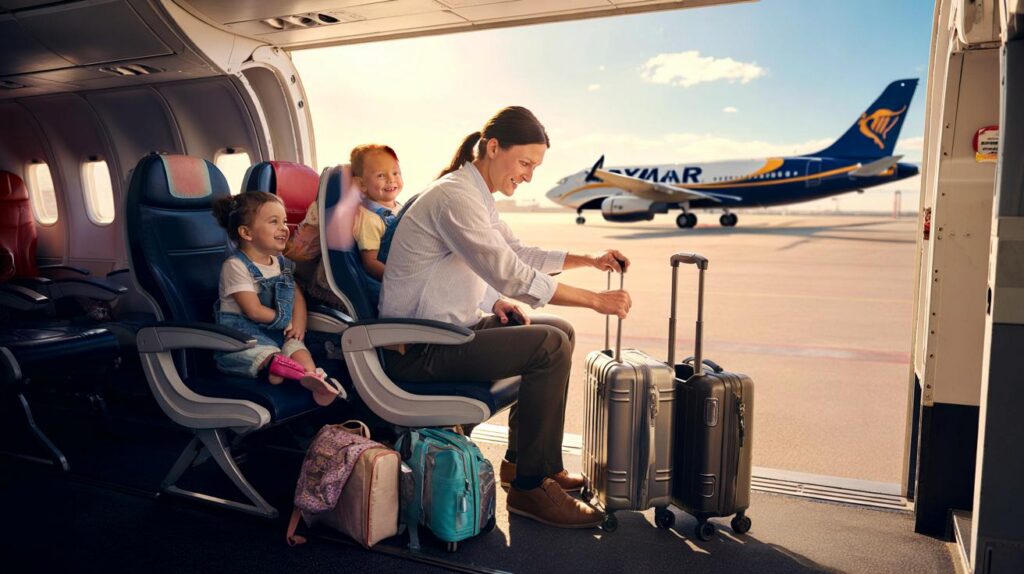
Families juggle bags, buggies and fees on budget flights. A quiet policy push in Europe now hints at easier trips.
Talks in Brussels are gathering pace on new consumer rules for air travel. The headline idea would reshape hand luggage on low-cost carriers and end the scramble to keep children close to parents without paying extra.
Why rules on hand luggage are under review
Airlines have spent years monetising overhead bin space. Travellers learned to game the system with soft bags, early boarding and paid add‑ons. Regulators now argue that core cabin items should not trigger surprise charges. Lawmakers want clear, consistent entitlements that work across carriers and routes.
EU lawmakers are weighing a standard that grants every passenger two cabin items without an extra fee.
The push follows complaints about opaque pricing and last‑minute gate charges. Families felt those costs most. A nappy bag, snacks and a spare jumper can turn into a bill bigger than the seat.
How current policies hit families
Most budget fares include only a small personal item. Anything larger sits behind a paywall. That limits flexibility when travelling with children. It also drives anxiety at the gate, where a tight sizer can mean a costly upsell.
- One small bag per person often leaves no space for kids’ essentials.
- Gate measurements can trigger fees that exceed the seat price.
- Parents sometimes split items across bags and risk non‑compliance.
- Boarding slows when passengers negotiate space after paying for priority.
Ryanair and easyJet today
Ryanair
Ryanair increased its included personal bag to 40 x 30 x 20 cm. That helps when packing wipes, toys and snacks. A cabin‑sized wheelie case still sits in a paid tier. Many families buy priority boarding to secure that extra bag and overhead space.
easyJet
easyJet’s included personal item already aligns with current European expectations. A larger cabin bag remains an add‑on. Families either pay for the bigger item or consolidate into the under‑seat allowance and a child’s small backpack.
What could change under the proposal
The draft approach would guarantee two cabin pieces at no extra charge on routes covered by EU law. In practice, that means a personal item under the seat plus a standard cabin bag in the overhead bin. Airlines could still set fair size and weight limits, but the second item would not require a fee.
Two free cabin bags would end the gamble at the gate and stop routine add‑ons for a basic overhead case.
There is more for families. MEPs want carriers to seat children aged 12 and under next to at least one adult in their booking. That would remove the pressure to buy assigned seats just to avoid separation.
Children aged 12 and under would sit next to an adult in their group as a legal right on covered flights.
When might changes arrive
The plan still needs debate and a vote. At least 55% of EU countries must back the measure before it becomes law. If adopted, the rules would apply on flights within the EU and flights to and from the EU. Airlines would then adjust fare bundles, boarding processes and cabin bag policies.
What this means if you fly from the UK
UK travellers would feel the shift on EU routes. A UK airline operating to or from the EU would need to follow the new cabin rules for those legs. Domestic UK flights would sit under UK policy unless Westminster chooses to align. The UK Civil Aviation Authority already supports keeping young children with a parent without a fee. A binding duty on EU routes would give that principle legal force across affected journeys.
What to do while you wait
- Check your booking for the exact personal bag size and measure your bag at home.
- Use soft‑sided bags that compress into sizers and under seats.
- Pack kids’ medicines, food and spare clothes in the under‑seat bag to avoid gate checks.
- Take screenshots of luggage rules at purchase in case of disputes at the airport.
- If buying a larger bag, compare the cabin fee with a shared checked bag for the whole family.
A quick savings check for families
Charges vary by route and date, so treat this as a guide. The point is the scale.
- If a cabin bag add‑on costs €25 each way, a family of four saves €200 on a return trip if the second bag becomes free.
- If you also pay €10 per person each way to sit together, that adds another €80 saved on a return journey if seating becomes guaranteed.
- Total potential saving in that scenario: €280 for one holiday, before any food or parking costs.
Possible trade‑offs to watch
Airlines could tweak base fares to offset lost ancillary revenue. That could spread costs across all passengers rather than only those buying extras. Overhead bins may fill faster, so weight limits and boarding groups may tighten. Expect stricter checks on dimensions, even if fees drop. Gate staff may enforce one overhead case per person to keep turnarounds on time.
Free extra bags would not mean free‑for‑all packing; size and weight caps would still apply and be policed.
The family seating angle
Seating children next to an adult in their group reduces stress for parents and crew. It also shortens boarding delays caused by seat swaps in the aisle. Under the proposal, families would no longer feel pushed to pay for seat assignments just to stay together. Carriers would retain flexibility to seat the family across a block and could still charge for exit rows or extra‑legroom seats, as long as a standard seat next to a parent is guaranteed.
How this could change your packing plan
If the rule passes, think in two bags per person. Put valuables, medicines and a change of clothes in the under‑seat bag. Place bulkier items, nappies and spare shoes in the overhead case. Keep liquids small and accessible. For short breaks, a family could skip checked luggage completely and still travel comfortably with children.
Extra context that helps you plan
Regulatory timelines can stretch. Airlines also need time to update booking flows, fare families and crew training. Watch for phased rollouts tied to travel seasons. If you book months ahead, policies in force on your travel date will apply, not the rules on your purchase date. Keep a note of any transitional guidance your airline publishes.
Think about the upside beyond cost. Less anxiety at security and boarding makes a tangible difference with children in tow. More predictable seating reduces meltdowns and awkward mid‑air swaps. If you have a tight connection, lighter and simpler cabin packing can speed your walk through the terminal. The proposal aims to deliver that comfort without forcing families into fee traps at the last minute.



Finally! If the EU standardises two free cabin bags AND seats kids next to a parent, budget trips might stop feeling like a booby trap. Any timeline hints for summer 2025? We’re flying MAN–AGP with easyJet and I don’t want to pay €120 just to keep our overhead case and sit together.