
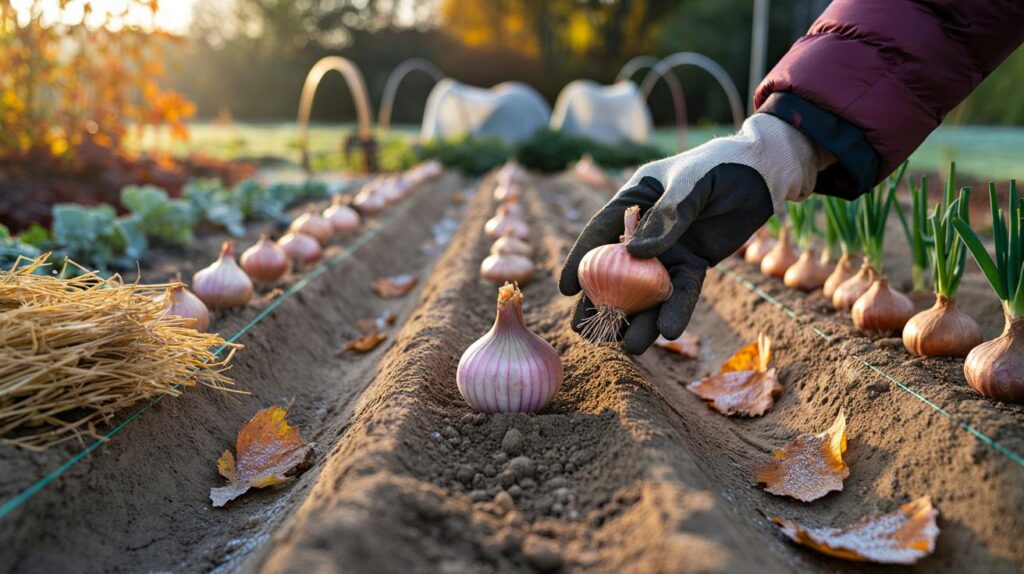
Frost lurks on the forecast, yet one small job could change how your kitchen tastes for months to come.
As leaves slick the paths and soil cools, a narrow window opens for a bulb prized by chefs and old hands. Move now and a modest patch could return clusters of aromatic bulbs just as spring plates need lift.
The small, fragrant bulb with rare kitchen power
Grey shallot, with its silvery skin and violet blush, is the quiet star of classic sauces and pan juices. Its flavour is deeper and more refined than red or pink types. Supply often runs short in shops. Planting a few rows at home brings a pantry of fine alliums within reach, from early salads to slow braises.
One planted bulb can yield a tight cluster of 4–8 new bulbs, often ready by late April or May if the autumn start is right.
A tight autumn window before the real cold bites
Late October into the first days of November offers just enough warmth in the soil for roots to establish. Delay and cold, waterlogged ground can stall growth. Early rooting sets up an easy winter and a fast break into spring.
Soil and site: drainage first, sun second
Standing water is the grey shallot’s worst enemy. Choose a sunny bed with light, well-drained soil. Sandy loam is ideal. On heavy clay, lift the bed, add coarse sand and mature compost, and form ridges to shed winter rain. Aim for crumbly tilth that does not clump in the hand.
Planting method that pays off
- Spacing: 10–15 cm between bulbs, 25–30 cm between rows.
- Depth: set the bulb with the tip just below the surface, covered by 2–3 cm of soil.
- Orientation: tip pointing up; do not snap the nose.
- Finish: firm the soil lightly; if conditions are damp, skip heavy watering.
Keep bulbs near the surface. Deep planting delays emergence and can reduce the number of offsets.
Common errors that cut yields
- Planting too deep, which slows sprouting and invites rot.
- Choosing shade, which encourages disease and soft growth.
- Ignoring drainage, so bulbs sit in cold, wet soil.
- Damaging the tip, which is the growth point.
Aftercare from now to first thaw
Rooting boosters without fuss
Loosen the surface around the rows with a light rake to prevent capping. If the season turns very dry, water gently once to settle soil around the base. Avoid saturating the bed. The aim is consistent moisture, not soggy ground.
Protection that breathes
Lay a thin mulch of straw or dry leaves to buffer temperature swings and reduce splashback. In harsher districts, float a fleece over hoops for the coldest nights. Remove covers as soon as growth resumes in late winter to avoid damp stems.
| Task | Target | Reason |
|---|---|---|
| Planting window | Late Oct–early Nov | Warm enough for roots, early spring lift |
| Row spacing | 25–30 cm | Airflow reduces mildew and rust |
| Cover depth | 2–3 cm | Fast emergence, less rot risk |
| Mulch | 2–4 cm straw/leaves | Temperature buffer, fewer weeds |
What to expect through winter and spring
Early signs that growth is on track
By late winter, green spears will pierce the mulch. Steady, upright leaves signal healthy rooting. Browning tips or stunted growth often point to saturated soil. Ease compaction with a gentle fork near the rows, keeping tines well clear of the bulbs.
When to lift for peak aroma and storage
Harvest when foliage yellows and starts to flop. In mild seasons, this may be late April or early May; cool districts lean later. Lift with a fork, handle clusters by the base, and cure for several days in a dry, airy shed out of direct sun. Once skins rustle and necks are dry, trim and store in a cool, ventilated place. Properly cured grey shallots hold flavour and texture for many months.
Why grey shallot earns a row in any small garden
Flavour, scarcity and reliable keeping
Grey shallot brings a clean, savoury bite to vinaigrettes, pan sauces and roast vegetables. Supply can be patchy in supermarkets, so a home crop guarantees a steady stash. Cured bulbs keep well, giving winter stews and weekday omelettes a lift without a last-minute shop.
Kitchen ideas that make the most of a small haul
- Slice raw into endive and walnut salad with sharp mustard dressing.
- Roast whole with thyme and butter to spoon beside chicken or cod.
- Sweat finely chopped bulbs for quiches, tarts and pilafs.
- Pickle petite bulbs for a sharp, crunchy condiment.
Extra gains: rotation, spacing tricks and cost maths
Keep disease at bay with simple rotation
Move alliums yearly. Leave three to four years before returning shallots to the same bed. This lowers pressure from white rot, downy mildew and rust. Avoid fresh manure. Feed the bed ahead of time with mature compost to support even growth without lush, disease-prone leaves.
Companion tactics and tight plots
Interplant with spring lettuce or lamb’s lettuce to use spare space between rows during winter. Keep companions shallow rooted and low-growing to protect airflow. Avoid proximity to overwintering broad beans in very wet sites, as dense canopies can hold damp over the shallot rows.
What a small patch returns to your plate and purse
A 3 m row, planted at 12 cm spacing, takes roughly 25 bulbs. With a typical cluster producing 4–8 new bulbs, you can pocket 100–200 kitchen-ready shallots by late spring. That covers months of sauces and salads, and often costs less than two supermarket nets of premium shallots.
Plan B if your soil is heavy, cold or you garden on a balcony
Raised beds and containers that actually work
Build a 20–25 cm high bed and fill with free-draining mix: two parts loam, one part coarse sand, one part compost. For containers, choose 20–30 cm deep troughs with large drainage holes. Set bulbs as you would in open ground, and water sparingly through winter. Containers warm quickly in spring, often giving an earlier lift.
Fast checklist: sunny spot, sharp drainage, shallow planting, light mulch, three-year rotation. Do that, and spring pays you back.
If you are late by a week, plant anyway during a mild spell and focus on drainage. In very cold districts, hold a few bulbs back for late winter planting as a backup. That split approach spreads risk, keeps the kitchen supplied, and turns a narrow October window into a season-long plan.



Just put in a row of grey shallots after reading this—12 cm spacing, tip barely under 2–3 cm of soil, and a light straw mulch. I finally resisted the urge to water. Hoping for those 4–8 bulb clusters by late April. Thanks for the clear steps!
‘5x yields’ sounds like marketing. Compared to what—supermarket sets, spring planting, or red types? In my soggy clay (zone 8b), rot is brutal. Do you have trials or numbers to actually back the late April harvest claim? I’m not convinved, definately curious though.