
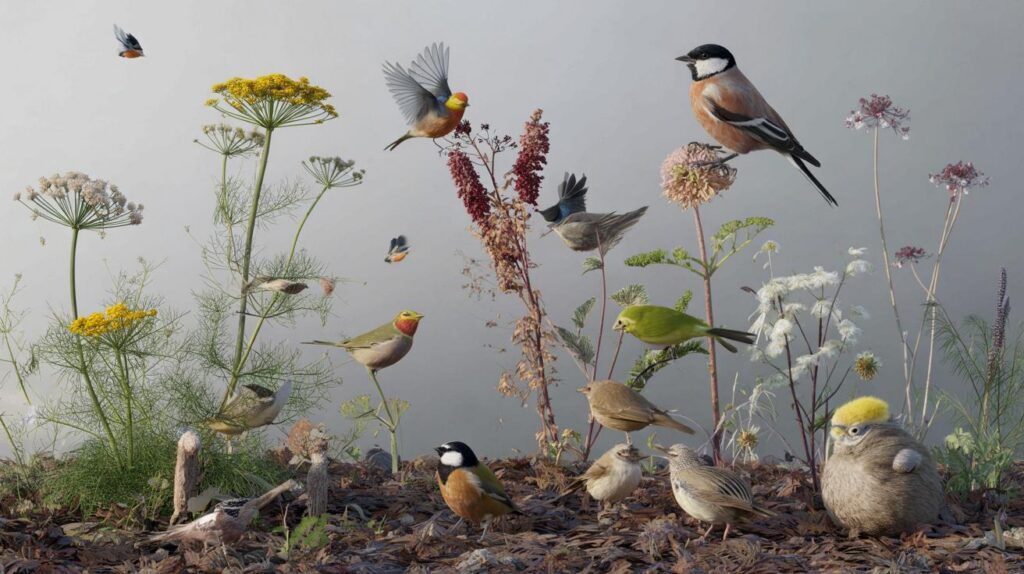
As the nights lengthen and budgets tighten, a quiet shift in your borders could change winter for your birds.
Instead of topping up plastic feeders, you can plant once in October and let the soil’s lingering warmth and steady rain do the hard work. Perennials set deep roots now, hold seed through winter, and turn every frost-tipped stem into a snack bar for finches, tits and sparrows.
Why october changes the rules
Soils across the UK stay around 10–15°C in early autumn, while rainfall rises and heat stress fades. Young perennials respond by pushing roots rather than leaves, which makes them tougher before the first real cold snap. Planting now also sidesteps next summer’s hosepipe angst, because established roots tap moisture deeper down.
Plant when soil is warm and rain is regular; roots knit before frost and you cut next summer’s watering to near zero.
There’s another gain you can bank today. Seedheads formed after flowering become winter feed, if you resist the shears. Leave those sculptural umbels standing and birds will harvest them at beak-height when natural pickings are scarce.
The perennial short list that feeds birds for months
These reliable perennials carry summer pollinators, then convert spent blooms into seed-rich buffets that goldfinches, greenfinches and chaffinches raid through winter.
| Plant | Height | Soil and light | Prime seed months | Birds you’ll see |
|---|---|---|---|---|
| Scabiosa (pincushion flower) | 40–70 cm | Free-draining, full sun | Oct–Jan | Goldfinch, linnet, house sparrow |
| Eupatorium (Joe Pye weed/hemp-agrimony) | 1.2–1.8 m | Moist, sun to light shade | Oct–Feb | Siskin, greenfinch, dunnock |
| Verbascum (mullein) | 80–150 cm | Dry, sunny, thin soils | Nov–Feb | Goldfinch, chaffinch |
| Achillea millefolium (yarrow) | 40–80 cm | Poor to average, sun | Oct–Dec | Sparrow, greenfinch |
| Foeniculum vulgare (bronze fennel) | 1.5–2 m | Well-drained, sun, coastal friendly | Oct–Jan | Goldfinch, blue tit |
| Centaurea (knapweed/cornflower) | 40–90 cm | Lean soil, sun, drought-tolerant | Sep–Dec | Goldfinch, linnet |
What makes them work
Each plant offers dense seedheads that stay upright in wind and rain. Finches can cling and pick through the bracts while using the stems for cover. Their root systems suit October’s conditions: scabiosa and verbascum love dry spots; eupatorium and fennel relish that slightly wetter border where lawn run-off gathers.
Don’t deadhead: every “spent” flower is a winter ration pack. Cut back in late February, not autumn.
Plant once, water less
October planting is simple and quick. You need a fork, a bucket of composted bark or well-rotted manure, and a bag of leaf mould if you have it. Work the soil to a spade’s depth, remove perennial weeds, and set plants at the same depth as the pot collar.
- Spacing: 30–40 cm for scabiosa and yarrow; 45–60 cm for centaurea; 60–90 cm for fennel, verbascum and eupatorium.
- One settling drink: 3–5 litres per plant at planting, then let October rain take over.
- Mulch: 5–7 cm of leaves, chipped prunings or bark; keep a palm-width clear around stems.
- No fertiliser this month: strong roots beat soft sappy growth before frost.
From November to March, you won’t need to water established perennials unless you’re in a rain shadow or have very fast-draining sand. In most gardens, spending takes a dive: fewer seed bags, fewer trips to the garden centre, and fewer feeder cleans.
Design ideas for small spaces and balconies
No lawn? No problem. Containers can carry a seed-rich display without daily fuss. Choose a 35–45 cm pot for verbascum or fennel, and a 25–30 cm pot for scabiosa or yarrow. Mix peat-free compost with 20% grit for drainage. Position in full sun, water once after planting, then let rain do the rest.
For a stylish, wildlife-first look, pair bronze fennel with blue scabiosa and a drift of yarrow. Their seedheads contrast beautifully in frost, and the mix feeds finches for weeks.
A safer, cleaner alternative to feeders
Feeding stations concentrate birds, which can spread disease if hygiene slips. Natural seedheads scatter diners across the border, reducing risky contact. You still get the views, just without the scrubbing and the late-night dash for more seed.
Spread food across plants, not perches. You lower disease risk while boosting cover from cats and wind.
Five mistakes to avoid
- Cutting everything down in autumn. Leave at least 70% of stems until late winter.
- Over-enriching the soil. Rich compost gives weak stems that snap in gales.
- Monoculture planting. Mix heights and species to avoid boom-bust feeding.
- Forgetting cover. Thread in evergreen structure—holly, ivy or a dense shrub—for safe perches.
- Ignoring local stock. Plants from nearby nurseries track your climate and settle faster.
What you’ll see, week by week
By late October, goldfinches test the knapweed heads. November brings mixed flocks of finches and sparrows flitting along verbascum wands. In cold snaps, blue tits and great tits pry at fennel umbels for late seeds and overwintering insects. Robins and dunnocks forage below for fallen fragments, safe under a mulch of leaves.
Numbers that help you plan
Budget one scabiosa or yarrow per 0.25 m², one centaurea per 0.3 m², and one fennel, eupatorium or verbascum per 0.6–0.8 m². A 4 m² border holds roughly 10–12 plants and can support visiting flocks of 10–20 finches during lean weeks. Leave 20% of the garden a little “untidy”—leafy and stick-rich—and watch insect numbers rise, which adds protein to the winter menu.
Practical add-ons you can start this weekend
Lay a shallow log pile at the back of the border to break the wind and harbour beetles. Thread a single bird-safe water dish at ground level, refreshed weekly, to pair seeds with moisture. If cats patrol, insert a knee-high brushwood hedge or low twig fence 40–60 cm from the border edge; birds gain reaction time and predation drops.
For keen gardeners who want more
Try a “succession strip” along a fence: centaurea and scabiosa for early seed, yarrow for mid-season, and fennel plus eupatorium for the late run. Stagger flowering and you stagger feeding, which spreads visits across three to four months. If wind exposure worries you, set the tallest plants downwind and anchor with discreet canes before the first December gale.
If you prefer a test run, simulate next year’s need with a two-plant trial: one verbascum and one scabiosa. Track visits for 30 days after first frost. If bird traffic doubles compared to your feeder corner, expand the scheme in a grid of 60 cm spacings and skip summer watering once the plants have taken.



Brilliant guide—thank you! Planting once in October to save water and feed finches is genius. Any specific scabiosa varieties you’d reccomend for windy balconies?
0 litres sounds a bit optimisitc—what about those of us on sandy, fast-draining soils or in a rain shadow? Would you advise a backup soak in December if we hit a dry spell?