
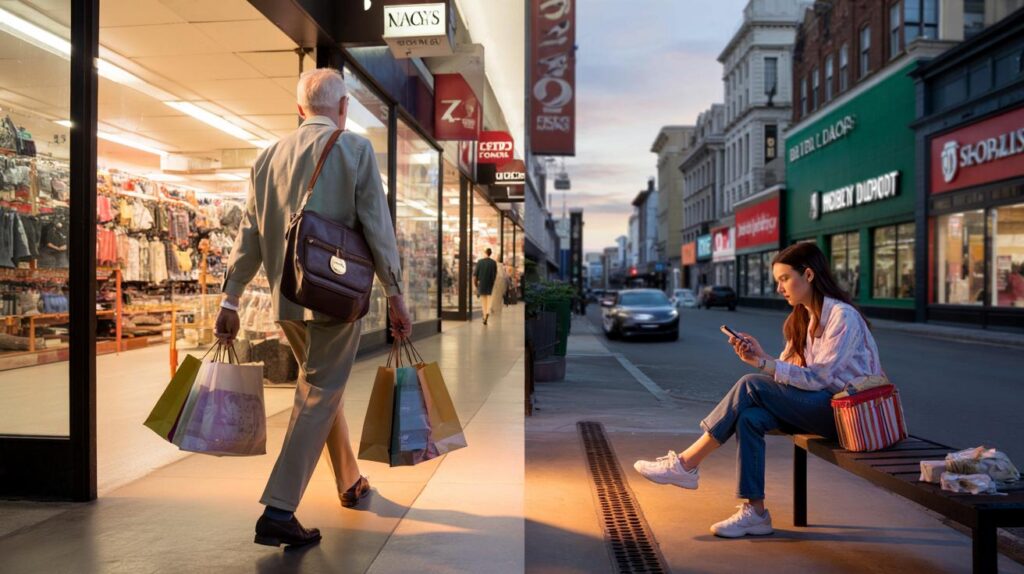
Two shoppers, one high street. Different habits are reshaping which tills ring, which brands languish, and who even shows up.
The tug-of-war between touch-and-feel tradition and tap-to-buy convenience now decides which chains thrive. It’s not just taste. It’s values, time, and how people define identity, trust, and “a good deal”.
Why the generational split is widening
For many baby boomers, a shop visit is part errand, part ritual. Staff know their names. Loyalty cards sit in leather wallets. Seasonal sales are pencilled into calendars. The store delivers reassurance as much as product.
Gen-Z sees friction where their parents see comfort. They filter choice online, buy directly from brands, and prefer tight edits to sprawling floors. Price transparency, sustainability, and alignments with identity trump store loyalty. Malls feel like time sinks. Algorithms feel like concierges.
One generation wants an afternoon out. The other wants ten minutes in and a parcel by Friday.
The ten shops creating the biggest gap
These names still draw boomers, yet leave younger shoppers cold. The reasons vary—clutter, price perception, politics, or simply an aesthetic that no longer lands.
- Macy’s and JCPenney: once the all-in-one promise; now criticised for busy racks, mixed pricing, and a lack of a clear brand voice online.
- Sears: a catalogue-era titan whose dwindling footprint reads as decline, not dependability, to younger eyes.
- Kay Jewelers and Zales: mall sparkle that feels mass-produced; Gen-Z leans towards lab-grown, indie designers, and transparent sourcing.
- Payless ShoeSource: practical value for families, yet at odds with a sneaker culture that treats footwear as identity and art.
- Pier 1 Imports: curated “global” décor that now looks staged; younger buyers favour thrift, upcycling, and genuine provenance.
- Bed Bath & Beyond: choice overload in blue-coupon aisles; minimalists prefer direct-to-consumer and reviewed-to-death essentials.
- Dillard’s: formal, structured, and safe; clashes with a preference for comfort, fluidity, and brands with social purpose.
- Hobby Lobby: craft heaven for some; others reject it for both digital-first creativity and its contentious public image.
- Talbots: polished prep that reads like a uniform; younger shoppers prioritise personal flair and gender-fluid cuts.
- Staples and Office Depot: stationery romance meets cloud-native habits; pens and paper lose to apps and shared drives.
Stores built for “everything for everyone” now struggle in a world trained to filter down to “this, for me”.
What each side is actually buying
| Priority | Boomers | Gen-Z |
|---|---|---|
| Value | Coupons, bundles, in-store exclusives | Transparent pricing, resale value, low returns friction |
| Assortment | Wide choice in one destination | Curated edits, fewer SKUs, strong brand story |
| Trust | Familiar chains, long warranties | Peer reviews, creator recommendations, sustainability receipts |
| Experience | Personal service, tactile try-on | Speed, clarity, easy returns, click-and-collect |
| Identity | Classic, dependable style | Individuality, comfort, values-aligned labels |
Department store nostalgia versus curated clicks
Chains like Macy’s, JCPenney and Dillard’s once promised everything under one roof. The modern feed promises the right thing on one screen. Younger shoppers say crowded rails and inconsistent store design make it hard to find what they want quickly. They gravitate towards brands that tell a consistent story across Instagram, checkout, and delivery box.
Catalogue-era convenience meets same-day delivery
Sears embodied “we’ve got it”. That proposition now belongs to marketplaces and next-day logistics. When your washing machine breaks, a trackable van and a three-hour window beat fluorescent aisles and aisle maps. The old promise of reliability has shifted from signage to service-level agreements.
Sentimentality versus authenticity in jewellery
For boomers, a ring is picked under bright lights with a salesperson, a loupe, and a handshake. For Gen-Z, authenticity—design provenance, recycled metals, lab-grown stones with clear certificates—feels more romantic than mall gloss. The mall jeweller’s finance plan is replaced by a buy-now-pay-later widget and a designer’s studio video.
From bargain basics to status sneakers
Payless taught families to kit everyone out for less. Today’s youth culture treats shoes as mood boards and investments. Sneaker drops, resale prices, and limited editions make “cheap for all” sound like “not for me”. Even value-led brands win only when they show a point of view.
Décor that looks staged versus lived-in
Pier 1’s bamboo and mosaics once added “worldly” charm to suburbia. The modern habit is thrift, DIY, and platforms that surface real provenance. A scuffed oak table with a story beats mass-market “eclectic” that arrives in identical cartons.
Too much choice, too little calm
Bed Bath & Beyond stood for abundance. Younger shoppers call it noise. Search bars, best-seller tags, and creator lists do the heavy lifting that used to happen on Saturday afternoons with a trolley. Less is more when every extra click risks a bounce.
Paper trails versus cloud-first kits
Staples and Office Depot remain catnip for stationery fans. But course notes, revision cards, and to-do lists now live on phones and laptops. Organisation moved to the cloud; the tidy desk became a tidy homescreen.
The new luxury is time saved, not square footage browsed.
Are you losing hours and pounds to old habits?
Here’s a quick reality check. If you spend 45 minutes in-store every fortnight on “bits and bobs”, that’s roughly 19 trips a year. Add travel and queues and you hit around 37 hours. At a modest £6.50 in fuel and parking per trip, that’s about £124. If in-store temptation adds one unplanned £6 item per visit, the yearly drift reaches nearly £240. The maths won’t fit everyone, but the trend is hard to ignore.
What retailers can do next
Bridging this gap doesn’t require ripping up history. It means rebalancing the experience.
- Cut visual clutter; signpost edited ranges that solve specific problems.
- Blend store rituals with digital speed: reserve online, try in 10 minutes, decide in five.
- Publish sourcing, repair options, and resale pathways next to product tags.
- Switch credit cards and coupons for clear, dynamic pricing and easy returns.
- Carve out “creator corners” where local designers rotate monthly, keeping floors fresh.
How shoppers can make the mix work for them
Start with intent. For big-ticket items—appliances, jewellery, furniture—use online research to narrow to two. Use the store to check fit, finish, and feel, not to start from zero. For everyday essentials, build a list, set a budget, and compare a direct-to-consumer basket to a multi-brand cart. Track your time and spend for a month, then switch the channel that costs less in both.
A quick sanity check you can try today
Pick one of the ten categories above. Set a timer and buy the item twice this season: once in-store, once online from a brand you trust. Note minutes spent, total cost including extras, and how happy you are a week later. The better route for you will usually show up in the numbers—and in your mood.



Online saves time until you have to repackage returns, schedule pick‑ups, and wait for refunds. Do those hours count? Feels like we’re swapping queues for cardboard.
The 37 hours + £240 math hit me like a brick. I’m going to log every “bits and bobs” trip for a month—then cut the ones that don’t earn thier keep. Great prompt, cheers.