
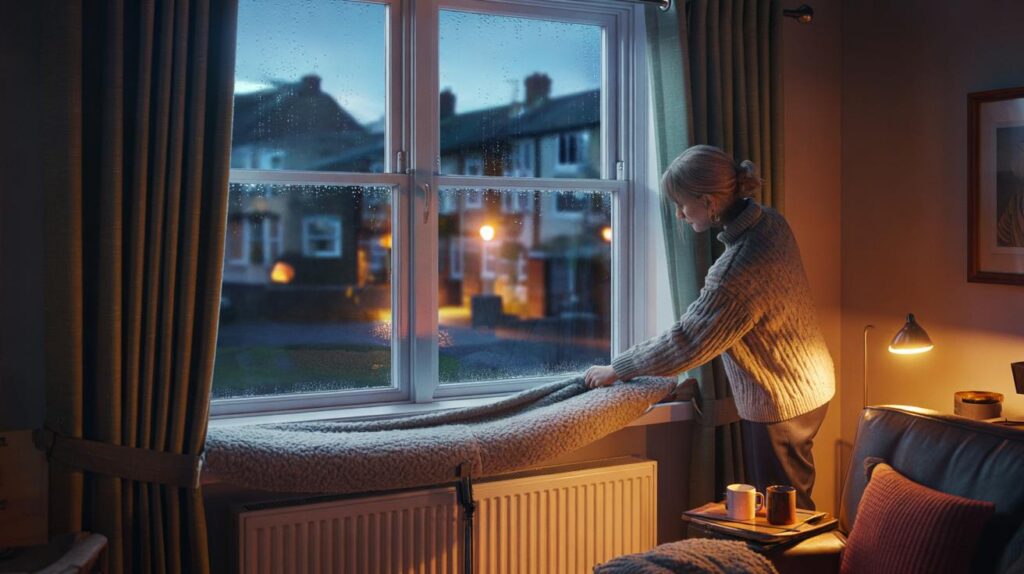
As nights draw in and bills bite, a simple daily habit is quietly helping households hold onto precious warmth this winter.
Consumer champion Martin Lewis has revived a cold‑weather routine that costs nothing and can delay switching on the heating. His so‑called 6pm rule is back in focus after Ofgem’s latest price cap rise, and it centres on one everyday object most homes already own: curtains.
What the 6pm rule asks you to do
It’s straightforward. When the light fades, close your curtains across every external window to trap the day’s free heat indoors. In mid‑October, sunset falls shortly after 6pm in much of the UK, so a 6pm cut‑off works as a daily prompt. As the month ends and the clocks change, shift earlier with the dusk.
Shut curtains the moment daylight fades. Keep them tight to the wall. Add a fleece lining if you can. Repeat it every day.
- Open curtains fully while the sun is out to let in light and heat.
- Close them as soon as it turns dark to hold warmth and block draughts.
- Make sure curtains overlap the frame and reach the sill or floor.
- Tuck them behind radiators, not in front, so heat still moves into the room.
- Line existing curtains with a fire‑safe fleece throw if new thermal curtains are out of budget.
Suggested times as the evenings shorten
Times vary by location, but this guide keeps you ahead of the chill.
| Date | Sunset (approx.) | Suggested curtain time |
|---|---|---|
| 16 October | 18:09 | 18:00 |
| 23 October | 17:52 | 17:45 |
| 30 October | 16:38 | 16:30–16:45 |
| 6 November | 16:28 | 16:15–16:30 |
Why thermal curtains work
Windows leak heat through three routes: conduction through glass, convection as warm air brushes the pane and drops, and radiation outwards. Thick, well‑fitted curtains slow all three. A fleece lining adds tiny air pockets that act like a winter coat, boosting insulation without a big spend.
Tests by energy researchers show heavy, well‑fitted curtains can curb window heat loss by roughly 10–20%.
For maximum effect, bring the fabric close to the wall, cover the entire frame, and avoid gaps at the top or sides. A snug fit helps block cold downdraughts that make rooms feel chilly even when the thermostat reads fine.
How much could you save?
Warmth saved equals money saved, because you can delay switching on the boiler or lower the set point without feeling colder. The scale depends on your property, your boiler, and how you heat your space. Here’s a worked example to show the maths.
- Typical gas unit rate: around single‑digit pence per kWh, depending on region and tariff.
- Many homes need 7–12 kWh of gas per hour to heat the whole house on a cool evening.
- One hour of whole‑house heating can therefore cost roughly 50–90p on gas.
If closing curtains at dusk lets you delay heating by 60–90 minutes on five evenings a week through a 20‑week season, the saving sits in this ballpark:
- 60 minutes saved × 5 days × 20 weeks × ~70p/hour = about £70
- 90 minutes saved × 5 days × 20 weeks × ~70p/hour = about £105
Homes with bigger heat demand or higher local unit rates can see more. Add in smaller gains from draught‑proofing and radiator tweaks, and a realistic seasonal range lands between £70 and £180 for a typical three‑bed semi. Flats with fewer external walls will sit lower; detached homes higher.
Make a small change every night, and you could trim £70–£180 from winter heating costs without feeling colder.
Can’t buy new curtains? Try this
You do not need designer drapes. You need a barrier and a good seal.
- Line existing curtains with a cheap fleece throw. Check the label for fire safety and keep it clear of naked flames.
- Stick self‑adhesive hook‑and‑loop tape along the window reveal so the curtain edge fastens tight to the wall.
- Add a simple pelmet (even a stiff cardboard strip wrapped in fabric) to block warm air rising behind the curtain and escaping at the top.
- Use a tension rod behind blinds to hang a second thin layer for extra still air.
- For doors, fit a weighted draught excluder and brush strip along the threshold.
Other quick wins Lewis backs
Heat the human, not the home
- Heated blanket or throw: 50–100W on low, pennies per hour, perfect for sofa evenings.
- Layer up: thermal base layers trap still air close to skin, cutting shivers at lower room temps.
- Portable seat pads or heated gilets keep one person cosy without running the boiler.
Help radiators heat the room, not the wall
- Slip reflective foil panels behind radiators on external walls to bounce heat back into the room.
- Keep curtains and furniture clear of radiators so convection can circulate.
- Use thermostatic radiator valves to dial down rooms you rarely use.
Stop the sneaky draughts
- Seal gaps around frames with low‑cost foam strip.
- Fit a letterbox brush and keyhole cover.
- If you have an unused fireplace, consider a removable chimney balloon to halt cold air.
Common mistakes to avoid
- Letting curtains fall over a radiator. Tuck them behind or tie them back so heat reaches the room.
- Drying clothes directly on radiators. This throttles heat output and raises humidity, which can trigger condensation.
- Shutting every vent all day. A small amount of background ventilation helps keep condensation and mould at bay.
- Blocking trickle vents permanently. Open them a little when cooking or drying laundry to purge damp air.
Practical add‑ons for colder snaps
Add a low‑cost digital thermometer in the coldest room to gauge real temperatures, not guesswork. Try running the thermostat 1°C lower once your 6pm curtain routine is bedded in; many households find 18–19°C feels comfortable with good layering and no draughts. That single degree can shave roughly 5–10% off heating energy use across a season.
If you use portable electric heaters, treat them as targeted tools for short bursts, not all‑evening replacements for a gas boiler. Electricity usually costs more per kWh than gas. Use them to warm one person in one room, then switch off.
For those buying new, many high‑street retailers stock thermal or fleece‑lined curtains at a range of price points. Heavier fabrics with a dense weave and a proper lining perform better. Measure generously to ensure the fabric overlaps and drops low enough to seal.
Finally, think about safety and moisture. Keep fabric away from open flames and hot cooker tops. Watch for condensation on panes after you tighten up the room. If you see beads of water, open a window on latch for ten minutes in the morning, or run an extractor, to purge damp air before it feeds mould.
A tight evening routine, a lined curtain, and a few draught fixes can nudge your heating back by an hour—every single night.



Does shutting curtains bang on 6pm really shift the dial if you’ve got decent double glazing and TRVs? Ofgem’s cap rise hurts, but does this definately get you near £180, or is that a best‑case for draughty semis?
Tried this last week and the living room stayed warm for an extra hour. The fleece throw lining tip was ace—cost me £6 and took 10 mins. Thanks Martin, my curtians are finally doing some work.