
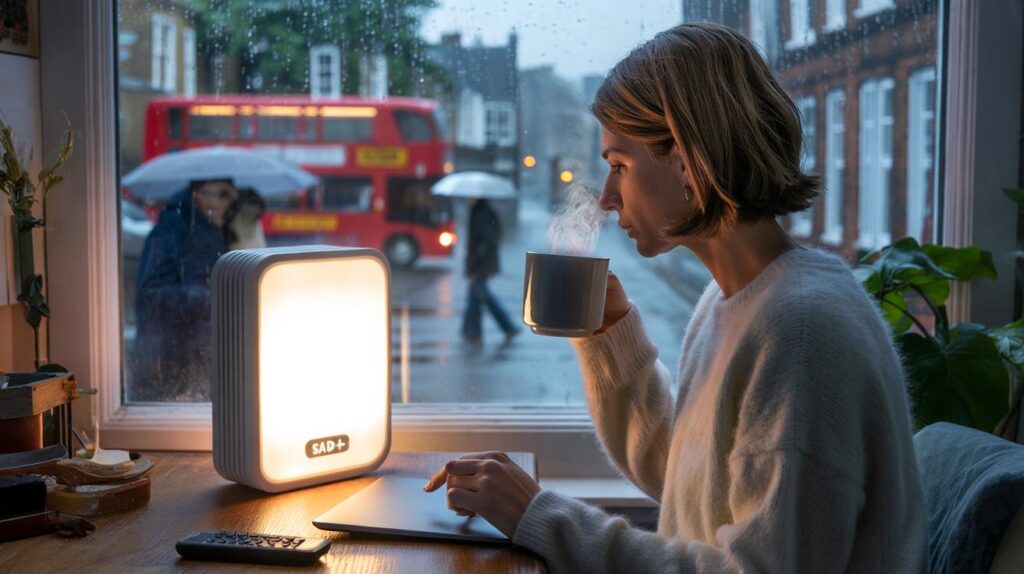
Grey dawns have arrived, and households are hunting quick fixes. A budget light box is quietly reshaping morning routines across the UK.
As clocks change and daylight shrinks, a small, bright panel has become a morning ally for parents, commuters and remote workers. Amazon’s current crowd-pleaser is the Caromolly SAD Light Therapy Lamp, a compact unit promising up to 10,000 lux for £42.99. It sits on a desk, bathes you in white light, and aims to make bleak starts feel less heavy.
Dark mornings, brighter desks
Britain faces short days and long commutes under cloud. Many people report lower energy and motivation in this period, with seasonal mood shifts affecting a sizeable slice of the population. Light therapy tries to replicate the timing and brightness of outdoor morning light, signalling to the brain that it’s time to wake and get going.
Estimates suggest around 1 in 15 people in the UK feel seasonal mood changes. Morning bright-light exposure is a simple, at-home way to nudge body clocks back on track.
What makes this winter different is the rise of low-cost, desk-friendly panels. At the lower end of the price spectrum, the Caromolly model packs a set of features usually seen in pricier units, and that combination has driven a wave of positive buyer feedback.
What the Caromolly lamp actually offers
This lamp is built to deliver bright, evenly diffused light without UV. It’s designed for use at arm’s length while you read, work or eat breakfast, and it can sit on a bedside table or beside a laptop without hogging space.
| Feature | Detail |
|---|---|
| Maximum brightness | Up to 10,000 lux at close range |
| Colour modes | Warm white, natural, daylight white (3 presets) |
| Timers | Four built-in options for hands-off sessions |
| Controls | Touch panel on the unit + remote control |
| Remote battery | CR2025 coin cell required (purchased separately) |
| Placement | Freestanding on a desk or bedside table |
Three colour temperatures, four timers and dual controls at £42.99 put this unit in the “feature-rich for the price” bracket.
Many buyers park it next to a monitor during early emails. Others pair it with a smart plug so it springs into life with the alarm, providing a bright cue that helps them sit up and shake off the duvet.
Everyday hacks people actually use
- Set a 20–30 minute timer and keep the lamp just off to the side, at roughly arm’s length.
- Choose “daylight white” in the morning to feel alert; switch to warmer tones after lunch.
- Link to a smart plug to turn on automatically before your first brew.
- Keep the panel angled towards your face while you read or work, without staring into the LEDs.
- For shift workers, use a session after waking to anchor your body clock to your working schedule.
Does bright light actually help in winter?
SAD (Seasonal Affective Disorder) and milder winter blues share a timing problem: not enough morning light reaches the retina in the darker months. Bright-light therapy aims to bring forward internal time, stabilising sleep, appetite and mood. Clinical guidelines often reference 2,500–10,000 lux for daily sessions, with many people reporting easier mornings after a week or two of steady use.
Not everyone responds the same way. Some feel benefits within days; others need a longer, regular routine. Light boxes don’t replace therapy or medical care for depression, but they can sit alongside other supports and daily habits like consistent bedtimes, short walks at midday, and regular meals.
Most users start with 20–30 minutes in the first hour after waking. Consistency beats intensity: small, daily sessions often work better than occasional blasts.
How to use a light box safely
Using bright light requires simple precautions. If you have eye conditions, take photosensitising medication, or live with bipolar disorder, speak to a healthcare professional first. For most healthy adults, the routine is straightforward and low hassle.
- Distance: keep the lamp at about 40–60 cm, angled towards your face.
- Timing: morning is usually best; late-night sessions can delay sleep.
- Duration: start at 20 minutes; extend to 30–45 minutes if needed.
- Glare: do not look directly into the LEDs. Use off-axis while you read or type.
- Consistency: daily use for several weeks produces steadier effects than sporadic sessions.
Value for money and the small catches
At £42.99, this panel undercuts many branded light boxes while matching the headline brightness figure. The inclusion of adjustable warmth makes it more comfortable for longer sessions, and the timer reduces faff. The remote is handy for bedside use, but it needs a CR2025 coin cell that isn’t in the box, so add one to your basket to avoid day-one frustration.
The build is compact and desk-friendly, though the light footprint is smaller than premium, larger panels. If you sit further away, expect the effective brightness to fall off—distance matters with lux.
Who might consider it right now
- Parents facing dark school runs who want a predictable morning lift without extra caffeine.
- Remote workers starting before sunrise and seeking steadier focus during the first emails.
- Students juggling early seminars and late library sessions who need a sharper wake window.
- Shift workers who need a controllable light cue after waking on irregular schedules.
What it won’t do
This is not a cure-all, nor a substitute for daylight walks or professional support. It won’t push away every symptom on its own. It also can’t replace a sunrise alarm clock’s gentle wake sounds, although pairing the lamp with a smart plug creates a reliable, bright “go-time” signal that many people prefer.
Desk-tested tweaks that amplify results
Anchor the session to a fixed habit: first cup of tea, a short journal entry, or your inbox scan. Keep the lamp at the same spot and distance to remove decision-making. If you work across rooms, consider two placements—bedside in the first 10 minutes of the day, then onto the desk while you plan tasks.
Add a short outdoor walk at lunchtime on brighter days. Even 10 minutes under grey skies beats indoor lighting for circadian cues, and it complements your morning light box session rather than replacing it.
SAD light or sunrise alarm: what’s the difference?
A sunrise alarm uses progressive light to simulate dawn and stir you from sleep gently. A SAD lamp offers sustained bright light after you’ve woken. Some people use both: the alarm to reduce grogginess, the light box to deliver the strong cue that locks in energy for the next few hours.
| Device | Main goal | Typical brightness | Best used |
|---|---|---|---|
| SAD lamp | Boost alertness, stabilise winter mood | 2,500–10,000 lux | First hour after waking |
| Sunrise alarm | Gentle wake, reduce sleep inertia | Lower, gradual increase | In the 30–60 minutes before wake time |
The bottom line for this winter
The Caromolly SAD Light Therapy Lamp combines key specs people ask for—10,000 lux headline brightness, three colour modes, four timers, touch and remote control—at a price point that feels manageable in a tight budget year. It slides into a morning routine, pairs well with a smart plug, and supports consistent wake signals when daylight is scarce.
If you want a practical, low-fuss step that can lift energy and focus in November and December, 30 minutes of bright light beside your breakfast or keyboard is a strong place to start.
If you want to widen the effect, stack habits: regular wake times, a brief midday walk, and screens dimmed after 9 pm. For those who feel their mood or sleep drift hard each winter, speak to a GP about options that combine light, talking therapies and, where appropriate, medication. A small lamp won’t bring back June, but it can give your mornings a fighting chance.



Is the 10,000 lux only at nose-to-lamp range? At arm’s lenght, what are we really getting—2,500–5,000? How far do you actually sit—40–60 cm? Otherwise the headline number feels a bit like marketing.
Picked up the Caromolly for £42.99 last week. Paired with a smart plug, 25-minute morning session on daylight white; after three days, mornings felt lighter and I skipped the extra coffee. The CR2025 remote battery was the only gotcha—thanks for the practical tips.