
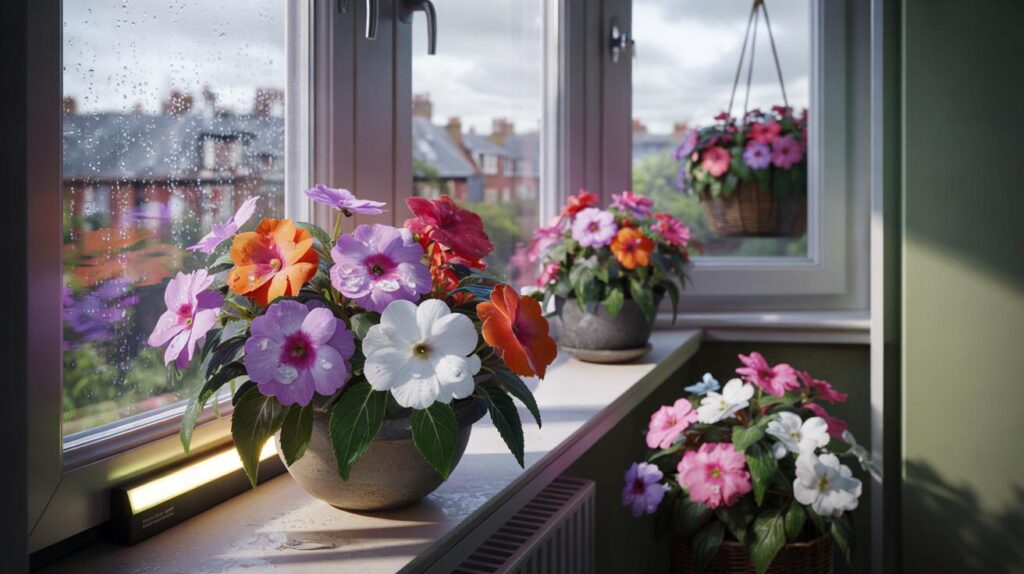
Grey skies need not dull your plot; a quiet star keeps colour going when showy favourites give up for winter.
Thousands of UK gardeners chase summer bursts, then watch bare soil through the cold months. A humble bedding staple can stretch the season, settle into shade, and flower on when others stall.
The plant hiding in plain sight
Impatiens—often called Busy Lizzie—earn their keep in Britain’s unpredictable weather. They bring near-constant flowers if you keep them above 10–12°C and give them bright shade. Outdoors, they light up cool corners from spring to first frost. Indoors, they tick along for twelve months with steady watering and indirect light.
You get choice without faff. Soft lilacs, coral oranges, clean whites and punchy pinks appear on compact plants with sturdy stems. Those stems shrug off gusts, crowded pavements and curious pets. Pet owners can relax: impatiens are non-toxic to cats and dogs.
Keep impatiens above 10–12°C, in bright shade with moist, free-draining compost, and they can flower every month of the year indoors.
Why impatiens beat fair-weather favourites
Geraniums bask in sun and drop their pace in cool spells. Petunias sulk in rain and wind. Impatiens keep blooming in conditions that defeat both, especially where light stays gentle. You can pack them into window boxes, baskets or table-top bowls and they won’t demand daily grooming.
| Plant | What it likes | Weak point | Best use |
|---|---|---|---|
| Impatiens (Busy Lizzie) | Bright shade, 12–18°C, even moisture | Frost; stagnant, soggy compost | Shady pots, indoor sills, under trees |
| Geranium (pelargonium) | Full sun, drier compost, warmth | Cold snaps, deep shade | Sunny balconies, south-facing beds |
| Petunia | Sun, frequent deadheading | Persistent rain, wind | Sheltered hanging baskets |
Where they thrive in Britain
Shade, balconies and north-facing rooms
Give impatiens dappled light or morning sun. Two to four hours of gentle rays suit them; harsh midday sun bleaches petals and wilts leaves. They shine below deciduous shrubs, beside a garden wall, or on balconies shaded by neighbouring buildings.
Flats with north- or east-facing windows get ideal light. Place pots 30–60 cm from the glass to avoid draughts. In darker rooms, a small 8–12 W LED grow bar at 4,000–6,500 K run for 10–12 hours can maintain buds without raising bills.
Think bright shade, not deep gloom. Filtered light grows tighter plants with more buds than a sun-baked sill ever will.
Year-round care made easy
Water, feed and potting mix
Impatiens want consistent moisture, not wet feet. Use a peat-free multipurpose compost mixed 4:1 with perlite for drainage. Line containers with a thin layer of pebbles, then fill and firm lightly. Water when the top centimetre feels dry. In flats with heating, that may mean every 3–4 days; outdoors in cool weather, once a week may do.
Feed little and often. A balanced liquid fertiliser at half strength every two weeks in spring and summer keeps flowers coming. Switch to monthly feeds indoors from October to February. Pinch faded blooms to push new buds. Rotate pots fortnightly to prevent lopsided growth.
Seven simple tricks for 365-day colour
- Hold temperatures at 12–18°C indoors; move pots inside before nights dip below 10°C.
- Water to keep compost evenly moist; never leave saucers full for more than 15 minutes.
- Use bright shade; aim for 2–4 hours of soft morning light or filtered daylight.
- Feed lightly and often; avoid heavy, nitrogen-rich feeds that push leaves over flowers.
- Pinch tips every 4–6 weeks to make bushier plants with more blooms.
- Repot in fresh compost every spring; choose 20–30 cm bowls for compact, dense displays.
- Take 7–10 cm cuttings in late summer to make free winter plants on a bright windowsill.
Keep them flowering through winter
Bring patio impatiens indoors before the first frost. Check for pests, trim by a third, and place in bright shade. If natural light drops, set a timer for 10–12 hours of cool-white LED light. Maintain humidity by grouping plants or placing trays with water and pebbles nearby, not under pots. Good air flow reduces disease.
| Month | Action |
|---|---|
| Oct–Nov | Move pots inside; trim, inspect, and reduce feeding to monthly. |
| Dec–Feb | Keep at 14–16°C; water sparingly but consistently; add LED light if stems stretch. |
| Mar–Apr | Increase feeding to fortnightly; take fresh cuttings; repot before pushing growth. |
| May–Sep | Shift outside after frost; water more often; deadhead twice weekly. |
Smart buys and varieties to seek
Choose mildew-resistant lines for low-fuss colour. ‘Beacon’ and ‘Imara XDR’ handle downy mildew better than older types. New Guinea impatiens carry larger blooms and showy foliage; they tolerate brighter light if kept moist. SunPatiens—bred for sun—cope with exposed patios in summer, but they still need frost-free winters indoors.
Price points stay friendly. Garden centres often sell six-packs from about £3.50–£6. A single 30 cm bowl looks full with three to five plants. One small flat can hold four bowls without clutter, which gives layered colour from sofa to sill.
Risks you can avoid
Downy mildew (Plasmopara obducens) can strip leaves in humid, stagnant air. Space plants, avoid overhead watering, and water in the morning. Pick up fallen leaves. If you’ve had issues before, start with ‘Beacon’ or ‘Imara XDR’ and keep a fan moving air on still days.
Cold snaps scorch foliage. Move containers before 10°C nights and protect doorways with draft excluders. Heatwaves cause wilting; add deep mulch outside, or move pots into deeper shade during hot afternoons. Indoors, keep plants away from radiators to prevent crispy edges.
Mildew-resistant series, steady airflow and morning watering cut disease risk dramatically in small city spaces.
Cost, spacing and a quick plan for small homes
For a one-bedroom flat, budget for 12 plants and four 30 cm bowls. Expect to spend roughly £15–£30 on plants and compost. Space plants 15–20 cm apart in each bowl. Place two bowls on a bright, north-facing sill and two in the living room near an east window. Add a compact LED bar on a timer for winter. This layout keeps colour visible from the sofa, the desk and the kitchen without blocking light.
On a shaded patio, hang two baskets beneath a balcony above, and tuck three bowls at knee height along the wall. The upper baskets catch more sky brightness; the lower bowls soften brick edges and fill gaps under taller shrubs.
Extra ideas to push the effect further
Pair impatiens with ferns, heucheras and hostas for layered shade planting. The foliage contrast keeps interest when flowers pause. Choose single, not double, impatiens blooms if you want more pollinator visits in summer; singles offer easier access to nectar.
Try a quick propagation session with children or neighbours. Cut non-flowering tips, strip lower leaves, and root them in water for 10–14 days, then pot on. A single summer plant can supply a dozen winter companions. This approach spreads cost, reduces waste and keeps colour moving from room to room without extra shopping.



Brilliant breakdown! My north-facing balcony is a gloom fest; will “Beacon” really handle the usual damp and gusts? I can keep temps around 12–15°C but I’m worried about downy mildew—do you recomend a small fan outdoors, or is spacing alone enough?