
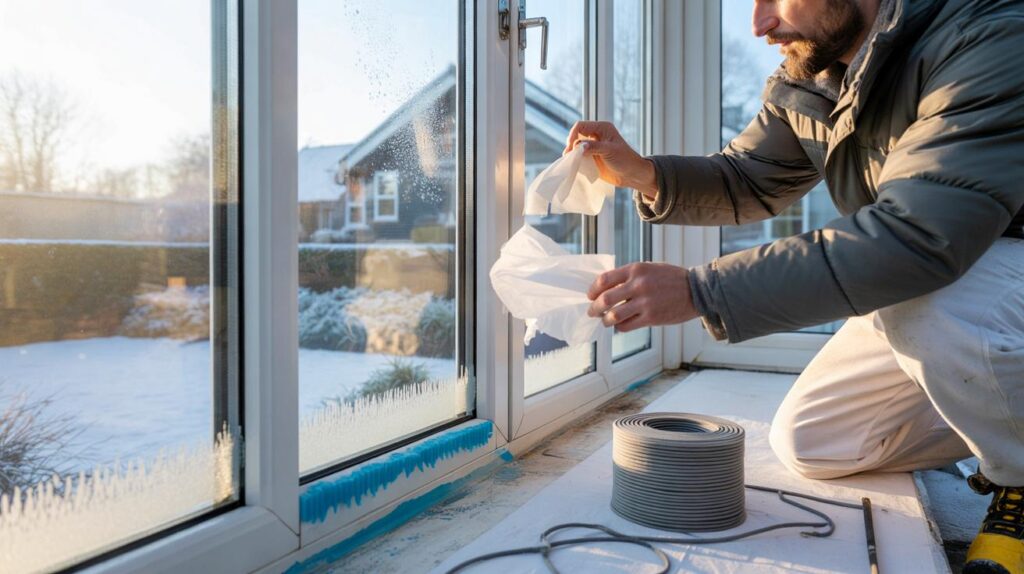
Energy bills aren’t getting kinder, and conservatories leak warmth like a loose pocket leaks coins. The culprit is rarely dramatic. It’s the tiny gaps around frames, tired gaskets, hairline cracks in old silicone. A builder I spoke to laid it out plainly: fix the seams, tame the draughts, and your conservatory stops feeling like a chilly bus stop. Winter doesn’t have to bully that room into silence.
The frost was still on the lawn when a local builder stepped into my neighbour’s conservatory and exhaled a small cloud. He didn’t reach for a gadget. He pulled a tissue from his pocket and held it along the uPVC frame. The paper fluttered like a nervous bird, right where glass met bead. “There,” he said, nodding at the sliver of sky you couldn’t see. He traced a fingertip along the cold line and smiled. Heat was slipping out through a gap no wider than a fingernail. He talked about sealant that had shrunk, gaskets gone flat, hinge screws that had loosened over years of sunshine and storms. The fix wasn’t what I expected.
Where the warmth goes, and why it matters
Stand in a conservatory on a breezy evening and you can feel the edges breathe. Joints flex with seasons. uPVC contracts on icy nights and expands under summer glare. Old silicone hardens, microscopic cracks grow, and gaskets lose their spring. What you hear as a faint whisper around the frame is your heating drifting outside to meet the wind. This is quiet work, and oddly satisfying. You don’t need to rip out windows to feel the difference. You need to close the pathways air loves.
Take Karen, who lives in a semi in Leeds with a north-facing conservatory. She’d stopped using it in winter, except to stash boots and plants. A Saturday of patient sealing, a couple of new EPDM gasket lengths, and a minor hinge tweak lifted the room by 2 to 3°C on similar days. She noticed the change at breakfast, not on a spreadsheet. Estimates put window-related heat loss around 18% in a typical home, and conservatories often fare worse because of their large glazed areas. Small gaps, big bills. Karen started reading again at the little bistro table by the garden door.
Heat escapes three ways in a glassy room: air sneaks through gaps, warmth conducts through glass and frames, and radiant heat heads for the cold sky. You can’t change physics, yet you can reduce the first part dramatically. Seal the airflow and your radiators don’t have to shout. You’ll feel fewer cold eddies around your ankles, and the room’s temperature stabilises. Keep ventilation where it belongs: trickle vents for fresh air, weep holes for drainage, and doors that open without a battle. The trick is to be selective, not heavy-handed.
How a builder seals conservatory windows, step by step
Start with a slow inspection. Run a hand around every frame, bead and corner, especially at the sill and the meeting points between frames and brickwork. Use a tissue or incense stick for a simple draught test. Then strip out failed sealant using a plastic scraper and a gel remover. Clean the joint with methylated spirits and let it dry. For uPVC and aluminium, a low-modulus neutral-cure silicone is your friend; it stays flexible and won’t attack the frame. For timber, use a paintable acrylic caulk and overcoat it once cured. If the gap is wider than 6 mm, tuck in backer rod so the new bead has the right shape. Tape both sides, gun a steady, continuous bead, tool it smooth with a damp finger or a caulking tool, then pull the tape away for crisp lines.
Work on a dry day above 5°C, or the sealant sulks. If the joint is damp, warm it gently with a hairdryer, keeping the heat moving. Don’t rush corners; overlap them for a continuous seal. Replace perished gaskets like for like: bring a 5 cm sample to the merchant, match the profile, and cut square ends with a sharp blade. A dab of silicone grease helps new rubber seat neatly. Check hinges and locks while you’re there. A quarter-turn on a friction stay screw can stop a sash rattling in a crosswind. We’ve all had that moment when a window never quite shuts flush and you just live with it. Let’s be honest: nobody does that every day.
Think of this as a chain of small fixes rather than one big hero move. Re-seat loose glazing beads with a glazing shovel, and check wedge gaskets are snug. Clear weep holes at the bottom of the frame with a cotton bud or a pipe cleaner. Never seal over a drainage hole, or you’ll trap water and grow a garden of mould. Tidy up, then step back and do the tissue test again across each seam.
“Seal the air, not the house,” says builder Tom Akers, who’s been rescuing chilly conservatories for twenty years. “You want tight frames and free drainage. That balance is the whole game.”
- Builder’s quick kit: low-modulus neutral silicone, acrylic caulk for timber, backer rod, masking tape, plastic scraper, sealant remover, methylated spirits, silicone grease, glazing shovel, spare gaskets, cotton buds.
- Budget: from £25 to £80 for a typical conservatory’s worth of joints and gaskets.
- Time: one steady afternoon, or two short sessions with a tea break.
Smart extras that boost warmth without spoiling the space
If your gaskets are fine and the beads are tight, add temporary draught-proofing where frames meet old brick reveals. Self-adhesive foam strip or V-strip can tame a stubborn gap for the season. Secondary glazing film is surprisingly effective for winter only: stick the clear film around the recess and shrink it with a hairdryer until taut. Magnetic secondary glazing panels are a nicer reusable step-up if you have the budget. Even a snug thermal blind, dropped at dusk with a neat pelmet at the top, slows radiant heat loss to the night sky. Pair these with a low-profile door brush on any external door into the space, and you’ve created layers without turning it into a cave.
There are traps to avoid. Don’t block trickle vents; they keep air fresh and reduce condensation on cold mornings. Don’t bridge the cavity with heavy beads of sealant between frame and wall; you want a flexible joint, not a rigid weld. Avoid acetoxy silicone on uPVC; it can damage the surface. If you suspect a blown double-glazed unit (milky or wet inside), sealing won’t fix that mist. Call a glazing specialist for a new unit when funds allow. If the polycarbonate roof or old glass is the cold driver, window sealing still helps, yet consider reflective roof inserts or a thermal roof blind later. One step at a time, and spend where it counts.
There’s a quiet joy in making a room stop leaking. After you’ve sealed and tweaked, measure the difference with your senses, not just a thermometer. Is the floor less of an ice rink at 7am? Do you sit nearer the glass without a jumper? A careful afternoon with a caulking gun can turn a “no-go” room into a place you actually use in January. If you love toys, a cheap thermal camera add-on for your phone will show the before-and-after glow. If you don’t, a candle will do. Either way, you’ll feel the change in the bite of the air.
What happens next, when the room stops sighing
Once the draughts are tamed, the conservatory changes its voice. The corners feel calmer. Plants perk up because the night temperature doesn’t plunge. You stop cranking the thermostat for a space you weren’t using anyway. Friends drop by and you end up drinking tea in the glassy light instead of migrating to the lounge. It’s not a renovation, it’s a reset. You can still hear the rain tap the roof, still watch the fox cut across the garden, yet the room is yours again. Spread the word to the person who keeps saying their conservatory is “just for summer”. That story can shift, and fast.
| Key points | Details | Interest for reader |
|---|---|---|
| Find and map the leaks | Tissue or incense test around frames, beads, and sills; feel with the back of your hand on windy days; note gaskets that look flat or brittle | Zero-cost checks that reveal the worst gaps in minutes |
| Seal and adjust with the right materials | Low-modulus neutral silicone for uPVC/aluminium, acrylic caulk for timber, backer rod for wide joints, hinge and lock tweaks for tight closure | Practical fixes you can do in an afternoon, with a builder’s method |
| Add simple winter upgrades | Secondary glazing film, magnetic panels, thermal blinds, door brushes; keep trickle vents and weep holes clear | Extra comfort without expensive new windows, and fewer condensation dramas |
FAQ :
- What sealant should I use on uPVC conservatory windows?Pick a low-modulus neutral-cure silicone. It sticks well to uPVC and glass, stays flexible, and won’t attack the frame. Avoid acetoxy (smells like vinegar) on plastics.
- Can I seal windows in cold weather?Yes, as long as it’s dry and above roughly 5°C. Warm the joint gently if it’s damp, and allow longer curing time. If it’s freezing or wet, wait for a better window.
- Should I close or block trickle vents to stop draughts?No. Keep them working; they’re for controlled fresh air and help limit condensation. Target the gaps around frames and beads instead of removing ventilation.
- How do I know if a gasket needs replacing?If it’s flat, cracked, or slips out easily, it’s tired. Doors or windows that rattle in wind also point to weak seals. Bring a small sample to match the profile at a merchant.
- Will sealing everything cause condensation?Not if you keep proper ventilation. Leave trickle vents open, don’t block weep holes, and consider a small dehumidifier if your household produces lots of moisture.



Brilliant walkthrough—used the tissue test and found a sneeky draught by the bead. Low-modulus neutral sillicone did the trick, and the room’s actually usable at breakfast now. Thanks! 🙂