
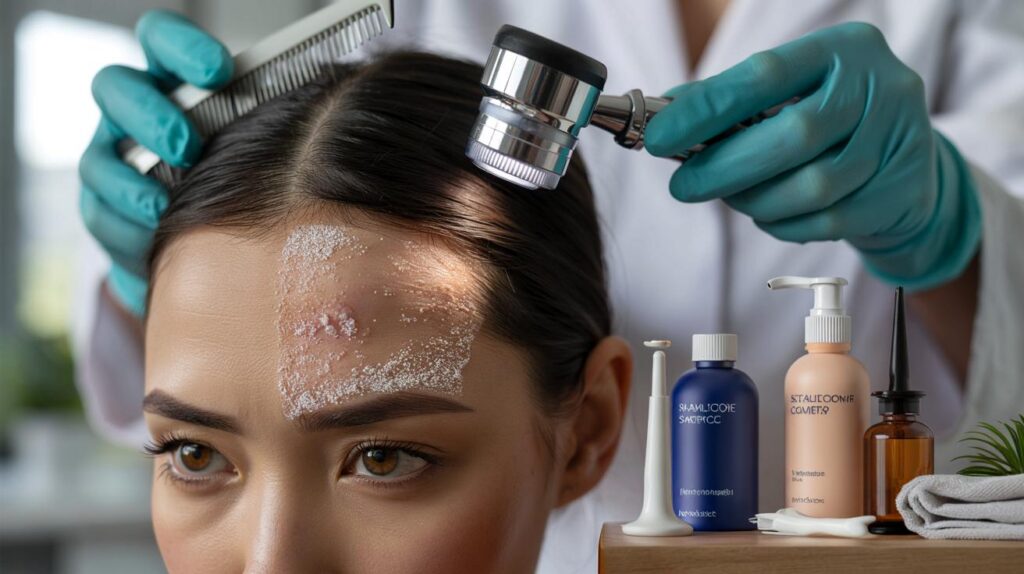
Flakes on your shoulders, an itch that wakes you at 3 a.m., hair that feels limp by lunch yet tight at the roots by evening. The scalp is a small patch of skin with a big personality, and it keeps the receipts. When it grumbles, it’s not random — it’s a message.
On a damp Tuesday in London, a woman on the Overground shifts her parting and winces. The carriage light catches a scatter of fine flakes on her navy coat; she brushes them away with a practiced flick. A faint, sweet-sharp odour drifts when she tucks her hair behind one ear — not unpleasant, but not her. By the salon later that afternoon, a stylist runs a comb and pauses at faint pink patches no one had seen last week. He suggests a “fix-all” scrub. She wants a reason. A dermatologist opens a notebook, calm as you like. What if your scalp is simply telling a story?
What your scalp is trying to tell you
Your scalp is alive with oil glands, nerves and a bustling community of microbes. It reacts to weather, stress, hormones, and what you do in the shower. Tightness after washing can mean your cleanser is too harsh; shine at the roots with roughness at the ends hints at split priorities. Big, yellowish flakes that cling are different from fine, snow-like dust. They’re not all “dandruff”. Patterns matter, and they’re oddly consistent once you start paying attention.
Take Emma, 32, who doubled down on clarifying every other night because “clean” felt safe. Her scalp burned, her part looked pink, and the flakes looked fatter by Friday. She didn’t have a dirty scalp; she had seborrhoeic dermatitis, a yeast-driven condition that loves oil but hates chaos. After switching to a rotation of ketoconazole and gentle cleanser, and giving each wash three minutes to work, her itch dropped within a fortnight. Dandruff touches up to half of adults worldwide, yet so many treat it like dust on a shelf.
Here’s the logic. Dry scalp tends to shed tiny, light flakes and feels tight, especially in winter heating. Oily scalp often shows clumpy, waxy flakes and an afternoon slick. Itch that feels burn-y points to irritation; itch with relief after washing leans towards oil and yeast. A sharply defined, silvery border at the hairline can hint at psoriasis, while scattered, red, oozy patches suggest contact reactions. Ring-shaped scale with hair breakage can mean a fungal infection, especially in children. The map and the texture are clues; the calendar is another.
Tailoring a routine that actually fits
Start with a simple test week. Wash on a set schedule — say, every two or three days — and change one thing only: contact time. Apply shampoo to the scalp, not the hair lengths, and let it sit for 3–5 minutes while you do something else. Rinse with lukewarm water and use conditioner only from mid-length to ends. Your scalp is skin before it is hair. If you’re using a medicated option (ketoconazole, piroctone olamine, selenium sulphide or salicylic acid), rotate it with a gentle, fragrance-light cleanser.
Step away from the nails. Vigorous scrubbing can rip the barrier you’re trying to heal. Hot water inflames, so keep it cosy. Heavy oils can trap yeast and stale odours on some scalps, especially if they sit overnight. Dry shampoo is handy, but it’s not a shower in a can. Product build-up breeds confusion — breakouts, odour, flares. Let’s be honest: nobody really does that every day. So make the things you do count: rinse well, keep a wash rhythm, and if you colour your hair, schedule medicated shampoos on different days.
“Your shampoo is a treatment, not a perfume,” says consultant dermatologist Dr Laila Khan. “Change one variable at a time, give it two weeks, and remember: contact time counts. And if a product stings or your ears itch, that’s data — you might be reacting.”
Try **patch testing** new leave-ins on the forearm 48 hours before they meet your scalp. Build a small, sane kit and stick with it for a month.
- A gentle, fragrance-light daily shampoo for baseline cleans.
- A medicated shampoo (e.g., ketoconazole or piroctone olamine) twice weekly during flares.
- A soft silicone scalp massager for application, not for scrubbing.
- A nozzle bottle to dilute shampoo for even spread on dense hair.
- A microfibre towel to reduce friction on the hairline.
A kinder way to think about your scalp
We’ve all had that moment when a white collar betrays us in a meeting, or a date leans close and we worry they’ll catch a whiff of “scalp day”. That’s not vanity talking; that’s comfort, social and real. Your scalp is outdoors more than you think — sun, sweat, beanies — and it remembers stress faster than your calendar. Treat it like you would your face on a busy week: gentle cleanse, targeted actives, time, patience. The aim isn’t silence. It’s understanding. The routine that works is the one you can live with, in the shower you actually have, with the hands you have at 7 a.m. If things aren’t settling, that’s not a failure. It’s a sign to change the script, not tighten the screws.
| Key points | Details | Interest for reader |
|---|---|---|
| Read the signs | Flake size, texture, odour and pattern point to different issues | Faster self-triage without guesswork |
| Make contact time count | 3–5 minutes on scalp turns shampoo into treatment | Better results without extra products |
| Build a calm rotation | Gentle cleanser plus targeted medicated wash during flares | Fewer flare-ups and less spend long-term |
FAQ :
- How do I tell dandruff from a dry scalp?Dry scalp sheds fine, light flakes and feels tight after washing. Dandruff often shows larger, waxy clumps with itch that eases after a wash and can carry a faint odour.
- How often should I wash my hair if my scalp is flaky or oily?Most oily or flaky scalps do well with every other day. Use a gentle shampoo on most days and a targeted formula twice a week, leaving it on for 3–5 minutes.
- Is oiling the scalp good or bad?It depends. Some dry, tight scalps like a light pre-shampoo oil. Oily, itchy scalps can worsen with heavy oils that feed yeast. Try small amounts and observe the next 48 hours.
- When should I see a dermatologist or GP?Book in if you have patchy hair loss, bleeding or crusting, severe pain, swollen glands, fever, or if a flare doesn’t settle after four weeks of a sensible routine.
- Do supplements or probiotics help the scalp?Evidence is mixed. A balanced diet and addressing iron, vitamin D or ferritin issues can help hair health. For the scalp’s **microbiome**, topical routine usually matters more.



This was defintely the clearest breakdown I’ve read. The “contact time counts” idea finally explains why my anti-dandruff shampoos never worked. Thank you for the sane, do-able routine!